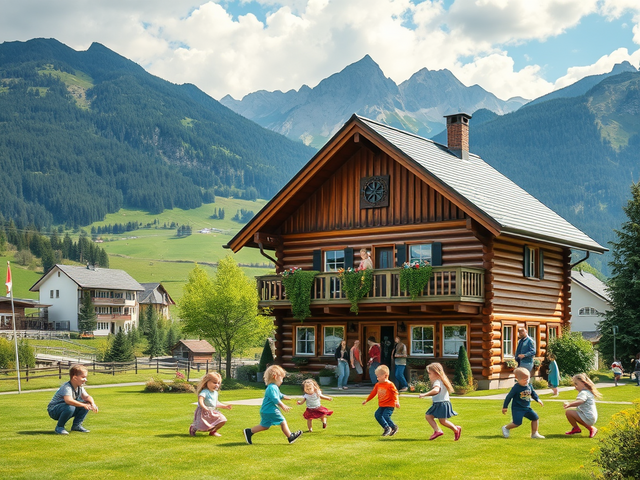
Operational measures in Austrian kindergartens: extension of agreement 📅
In the context of a shortage of qualified staff in Austrian kindergartens, especially in Salzburg, the authorities are taking steps to improve the situation. According to the latest news, ten institutions have taken advantage of a special regulation that allows additional employees to manage groups. This temporary solution has been extended for a year, and further simplification of the law on child care is planned. What are the consequences of this initiative and how will it affect children's education in the country? Let's find out! 🇦🇹
Reasons for the introduction of emergency measures
Shortage of staff in kindergartens 😟
The main problem faced by Austrian kindergartens is the lack of qualified teachers. In some institutions, the norm of 22 children per group cannot be met, and the number of children often exceeds 25. A professional group of teachers expresses concern about this, emphasizing that increasing salaries will not solve the problem, since high-quality working conditions are important.
Support from the authorities 🏛️
Deputy Minister of Education Marlena Svázek (FPÖ) is actively working on a new version of the Child Care Act, which is intended to be more flexible and adapted to the current reality. Educators welcome the opportunity to work from home for training, which could also help improve the situation.
Application of emergency measures
Extension of exceptions 📌
Under the new regulation, the temporary exception allowing support workers to lead groups is extended until August next year. This decision is intended to ensure that institutions can operate more reliably in the face of staff shortages. However, it is important to understand that such measures are temporary and cannot replace a full solution to the problem.
Impact on children and parents 👶
With the introduction of emergency measures, some children whose parents are not working may be forced to stay at home. This situation is causing concern among parents, as not everyone can afford to leave their children unattended. Some articles mention that additional measures may be taken due to the current problems, such as reducing the number of children in groups or changing work schedules. Read more about current conditions in kindergartens here.
Development Prospects
The situation in kindergartens requires a comprehensive approach to address the shortage of staff. In Lower Austria, for example, 250 new groups of children are planned to open from September 2024, which will significantly increase the number of places in educational institutions. The total funding for the program is 750 million euros until 2027, and most of the funds will be provided by municipalities. This project aims to create more favorable conditions for families and children in the region.
Examples of successful initiatives 💪
According to the latest report from Statistics Austria, the attendance rate of children under three in Lower Austria was 36.3%, which is above the national average. This confirms that despite the existing difficulties, efforts to improve children's education are ongoing in the country.
Conclusion and findings
However, the problems with the shortage of staff in kindergartens require immediate solutions. The extension of emergency measures is only a temporary measure, and in the future, attention must be paid to real problems such as the quality of teachers' work and working conditions. This will ensure a decent educational space for children and their parents in Austria.
What do you think about the current situation in Austrian kindergartens? Your thoughts may be important for the further development of this topic! 💬
If this article was helpful, please share it with your friends! 📢
Subscribe to our blog to stay up to date with new articles about life in Austria! 📨
SEO Meta Description: Find out about emergency measures in Austrian kindergartens and the extension of regulations in the context of staff shortages.


