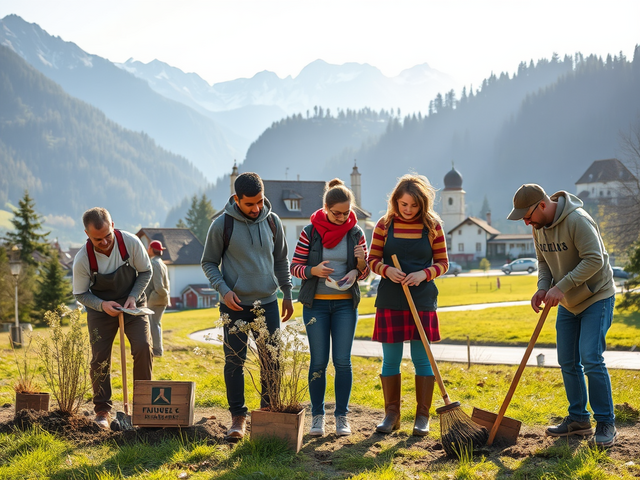
Since July 2023, refugees in Austria have completed around 250,000 hours of community service. 📊 This fact not only clearly demonstrates the active participation of asylum seekers in society, but also raises important questions about social responsibility and integration. However, it is surprising that around 30% of them refused to do this work. Why is this happening? Let's find out! 👇
Statistics and facts about refugee work 📈
According to the latest figures, 3,115 refugees have registered for community service in Austria since the beginning of July 2023. Of these, 70% have successfully fulfilled their obligations, providing assistance in the following areas:
- Maintenance of green areas 🌳
- Maintenance of sports facilities 🏟️
However, 210 people decided to give up their jobs, which in turn affected their financial support. The Austrian Ministry of the Interior emphasizes that participation in such programs is voluntary, but non-participation may result in a reduction of the benefit to 40 euros per month.
Reasons for participation and refusal
Why do 70% work?
The main reasons for the successful implementation of public works are:
- Desire to integrate into society 🤝
- Understanding the importance of contributing to the community
- Gaining experience needed for future employment
Why are 30% being rejected?
Among those who refused to fulfill their obligations, several factors can be identified:
- Unwillingness to work on a voluntary basis
- Health issues 🏥
- Personal circumstances that prevent participation in the program
Thus, refusal can be caused by both personal and social factors.
Responsibilities of refugees and consequences of refusal
Participation in the community service program has become mandatory for refugees receiving financial assistance from the state. Exceptions are those under 16 and those who cannot work for medical reasons. For others, a minimum of ten hours of work per month is required.
Currently, 3,115 refugees are actively participating in the program, and more than 66,000 are living under state care. Interior Minister Gerhard Karner emphasizes the importance of social responsibility for refugees and believes that such an initiative will help them to repay their debt to society.
Recommendations and future steps
Importantly, the involvement of refugees in community work has also attracted the attention of the European Council, which recommends that Austria open up its labour market to asylum seekers. This could contribute to the integration of refugees and reduce social exclusion.
The overall report highlights Austria's achievements in combating human trafficking and the need to improve access to employment and education for asylum seekers.
Conclusion and findings
The successful completion of 250,000 hours of community service by refugees in Austria demonstrates their willingness to integrate and contribute to society. 🎉 However, the refusal of 30% to work also raises serious questions about the reasons that should be examined more closely. Could this program become the basis for a deeper integration of refugees into Austrian society? 🤔
If you liked the article and want to learn more about the life of refugees in Austria and their integration, subscribe to our blog! 📨
SEO Meta Description
Find out how refugees in Austria have completed 250,000 hours of community service since July 2023 and why 30% opted out.


