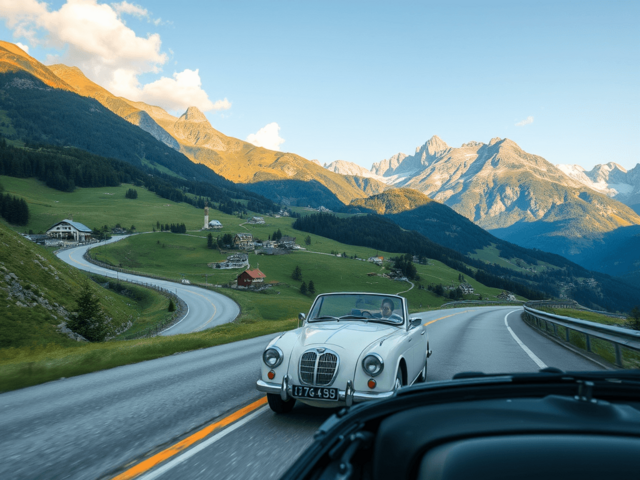
Are you dreaming of a perfect holiday full of freedom and adventure on Austrian roads? 🇦🇹 Imagine: picturesque Alpine serpentines, cozy cities with a rich history and culture, and most importantly - complete independence from public transport schedules. But before you start the engine and hit the road, let's figure out how much such a pleasure will cost - your perfect Standard Auto Prices.
A road trip through Austrian cities is a unique opportunity to see the country in all its glory and visit places that are not always easy to reach by train or bus. However, when planning such a holiday, it is important to take into account all the costs to avoid unpleasant surprises. In this article, we will take a detailed look at the main cost items so that you can plan your ideal Standard Auto Prices and enjoy an unforgettable journey.
Fuel costs ⛽
One of the main expenses on any road trip is fuel. Petrol and diesel prices in Austria can vary depending on the region and the petrol station.
- Advice: Fill up at chain gas stations located away from large cities and highways – prices are usually lower there. 💰
To accurately calculate fuel costs, use online calculators that take into account your car's consumption and the distance between cities.
Road tolls and vignettes 🛣️
In Austria, most motorways and expressways are toll roads. Passenger cars must purchase a vignette.
Vignette: This is a sticker that needs to be attached to the windshield of the car. Vignettes are available for 10 days, 2 months or a year.
Price: The price of the vignette depends on the period of validity. For example, a 10-day vignette costs about 9.90 euros.
Where to buy: The vignette can be purchased at petrol stations, tobacco kiosks and online.
In addition to the vignette, additional charges apply for driving on certain road sections, such as tunnels and passes.
- Example: The Arlberg Tunnel costs around 11 euros.
✅ Helpful tip: Plan your route in advance and take into account toll roads to avoid unexpected expenses.
Parking in cities 🅿️
Parking in Austrian cities, especially in the city centre, can be expensive and difficult.
Short-Term Parking: Most cities have short-term parking zones where you can leave your car for a certain amount of time by paying a parking ticket.
Parking garages: In large cities there are many parking garages where you can leave your car for a longer period. Prices in parking garages vary depending on the city and location.
P+R: If you plan to visit the city center, it is better to use the P+R (Park and Ride) system. Leave your car in a parking lot on the outskirts of the city and get to the center by public transport. This is usually cheaper and more convenient.
📌 Important: Pay attention to signs and parking rules to avoid fines. Fines for illegal parking in Austria can be quite high.
Accommodation 🏨
The cost of accommodation is another important expense in any trip. In Austria, you can choose from a variety of accommodation options:
- Hotels: Hotel prices vary depending on the city, location and level of comfort. In Vienna and Salzburg, hotel prices are generally higher than in smaller cities.
- Apartments: Renting an apartment is a great option for those who prefer more freedom and independence. Apartments often offer better prices, especially if you are traveling with a family or a group.
- Hostels: Hostels are the most budget-friendly accommodation option. They offer shared rooms and are suitable for young travelers and those looking to save money.
- Campsites: If you love nature, consider camping. Austria has many campsites located in picturesque places.
📅 Advice: Book your accommodation in advance, especially if you are planning to travel during high season.
Nutrition 🍽️
Austrian cuisine is a real treat for gourmets. However, eating out can be quite expensive.
- Restaurants: Prices in restaurants vary depending on the level of the establishment. On average, lunch in a restaurant will cost 15-30 euros per person.
- Cafe and bistro: Cafés and bistros offer more affordable dining options, with sandwiches, salads and traditional Austrian cakes available.
- Supermarkets: Buying groceries at the supermarket and cooking your own meals is a great way to save money on food.
🥨 Advice: Try traditional Austrian dishes such as schnitzel, goulash and Sacher cake.
Entertainment and attractions 🎫
Austria is a country with a rich history and culture. Here you will find many attractions, museums and galleries.
- Museums: Entrance to museums usually costs between 10 and 20 euros.
- Attractions: Some attractions may be free to visit, such as parks and gardens.
- Excursions: Tours are a great way to learn more about the history and culture of a city.
🎵 Advice: Many cities offer tourist cards that give free entry to museums and public transportation.
As the article notes www.adac.de, the cost of a trip to the city depends on many factors, including the choice of transport, accommodation and food.
According to information on www.merkur.de, planning your budget in advance will help you avoid unpleasant surprises during your vacation.
As reported by www.reisereporter.de, it is important to take into account all possible expenses in order to accurately estimate the total cost of the trip.
Conclusion and findings
A road trip through the cities of Austria is a great opportunity to see the country in all its glory and get unforgettable impressions. However, it is important to carefully plan your Standard Auto Prices and take into account all possible expenses: fuel, road tolls, parking, accommodation, food and entertainment.
Careful planning and accounting of all expenses will help you enjoy your trip without stress and financial worries. Are you ready for your adventure? 🌍
If this article was helpful, please share it with your friends! 📢


