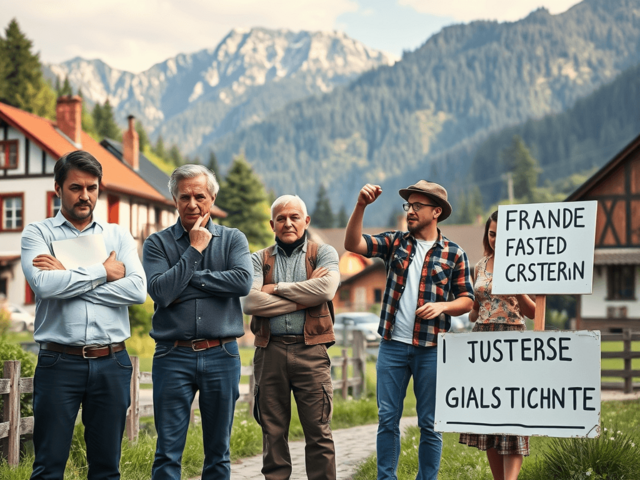
Imagine this: people sign a petition to... ban other petitions! 🤯 It sounds like a plot for an absurd comedy, but it is reality in Austria. Recently, a movement against the so-called Volksbegehren – popular initiatives. Why did the Austrians, known for their love of democracy and order, rebel against one of its instruments? Let's look into this curious phenomenon, which at first glance seems completely absurd, but in fact reflects deep processes in Austrian society.
Why did Austrians rebel against popular initiatives? 🤔
Volksbegehren – is a form of direct democracy in Austria, allowing citizens to initiate consideration of certain issues in parliament. To do this, it is necessary to collect a certain number of signatures. It would seem that what could be bad about giving people more voice? However, as practice shows, not everything is so clear-cut.
Why do we need people's initiatives at all? 🇦🇹
People's initiatives, or Volksbegehren, in Austria, are a powerful tool for citizens to influence the political agenda. They allow issues that may be overlooked or ignored by traditional political forces to be brought up for discussion in parliament. This is a way to draw attention to important issues and achieve changes in legislation.
"Garbage" initiatives and abuses 🗑️
One of the main reasons for discontent is the so-called "garbage" nature of some initiatives. We are talking about petitions that do not have real support in society, but nevertheless take resources from the state for processing. In addition, some groups use Volksbegehren to advance their narrow interests or to misinform the population.
Procedural flaws ⚙️
Critics also point to shortcomings in the procedure for organizing and conducting popular initiatives. Signature collection may be dishonest, and the wording of questions may be ambiguous or misleading. This undermines trust in the institution. Volksbegehren generally.
"Mann lehnt sich auf": What is this movement? ✊
The movement "Mann lehnt sich auf" ("Man resists") is one of the organizations speaking out against abuses in the sphere of popular initiatives. They believe that the current system allows public money to be wasted on pointless petitions and to manipulate public opinion. As reported in an article on Oe24, the initiators call for reform of the system Volksbegehrento make it more efficient and transparent.
What do they demand? 📣
The basic requirements of the movement include:
- ✅ Tightening requirements for the content and wording of petitions.
- 📄 Introduction of stricter rules for collecting signatures.
- 📅 Increasing the threshold for the required number of signatures for an initiative to be considered in parliament.
Do they have support? 🤔
Despite the apparent absurdity of opposing popular initiatives, the "Mann lehnt sich auf" movement finds support among a certain part of the Austrian population. Many citizens share their concerns about the abuses and inefficiencies of the current system.
What's next? 🔮
The question of reforming the system Volksbegehren in Austria remains open. Perhaps the "Mann lehnt sich auf" movement will push the authorities to reconsider the rules and procedures for holding popular initiatives. In any case, this curious situation once again underlines the importance of critical thinking and conscious participation in democratic processes. As the article on Heute, it is important that the authorities pay attention to these problems and develop a strategy to solve them.
Conclusion and findings
The phenomenon of "Volksbegehren gegen die Volksbegehren" is a vivid example of how even the most democratic instruments can be subject to abuse and need constant improvement. It is important to remember that democracy is not only the right to vote, but also responsibility for the decisions made. The key word here is responsibility. A conscious and critical attitude to popular initiatives will help make them a truly effective instrument of citizens' influence on the political life of the country.
If this article was helpful, please share it with your friends! 📢


