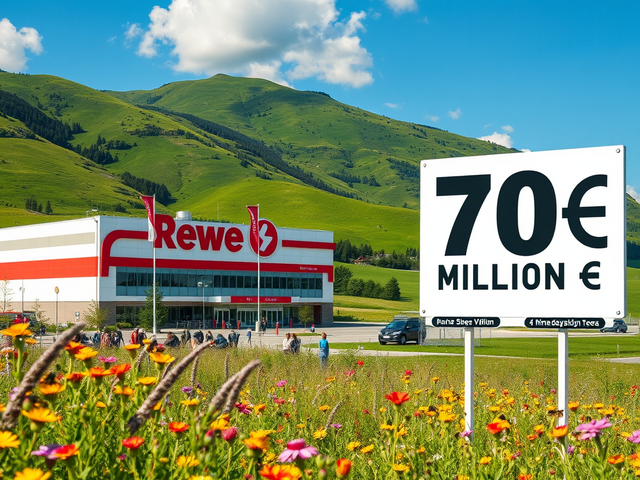
Record fine for Rewe: What is the reason for the 70 million euro sanction?
Austria recently saw a landmark antitrust case: Rewe, the company that runs the well-known Billa supermarket chain, was fined a record €70 million. 💰 This is the highest fine for cartel violations in the country's history and the result of an investigation initiated in connection with an unauthorized merger in 2018. This step has become the subject of loud discussions in society and the business community. What exactly happened, and what does this decision mean for the market? Let's find out!
Reasons for imposing a fine: What happened? 📈
In 2018, Rewe failed to notify the Federal Competition Authority about a merger involving the rental of retail space in Wels. This action was found to be a violation of antitrust law. The fine was initially 1.5 million euros, but the Supreme Court increased it to a record amount based on the company's market position. According to the information, Rewe has an annual turnover of 92 billion euros, which essentially serves as the justification for such a high penalty.
Rewe's reaction to the fine 👎
Rewe expressed dissatisfaction with the court's decision, calling the fine "disproportionately high." 🚨 The company's representatives assured that they would consider appealing the fine, as they believe that the violation did not affect the competitive environment. However, antitrust experts say that even small violations, such as failure to notify a merger, can have serious consequences for market competition.
For a deeper understanding of the situation, you can read the details in the articles:
- Rewe muss 70 Mio. Euro zahlen: Bisher höchste Kartellstrafe in Österreich
- Rekord-Strafe für Rewe: So viel musste noch nie ein Unternehmen bezahlen
Impact on the market and legislators 📊
The case has also sent a message to lawmakers and regulators, who are emphasizing the importance of upholding antitrust rules and the need for stricter merger controls in the future. The case is expected to prompt a tightening of antitrust laws in Austria, similar to the stricter rules in Germany and the UK. 🇩🇪🇬🇧
The Federal Office for Competitiveness (BWB) has issued recommendations for more effective merger control systems. This will help prevent similar situations in the future and protect the market from a lack of competition that could lead to higher prices.
For more information on Rewe's response to the fine, please see news on this topic.
Fines as a prevention tool ⚖️
High fines for violations of antitrust laws serve not only as a punishment, but also as a warning to other companies. Courts emphasize that the size of the fine should reflect the company's annual turnover in order to create a deterrent effect for potential violators.
As the Supreme Court has emphasized, the need to enforce antitrust laws in the long term is linked to maintaining a healthy competitive environment that ultimately benefits consumers.
Conclusion and findings 📝
The record €70 million fine imposed on Rewe is a major development in Austrian antitrust regulation. The decision highlights the importance of antitrust compliance and the importance of merger notifications to ensure fair competition. 👥 Could this case be the starting point for stricter competition laws in Austria? Time will tell!
If you liked the article, don't forget to share it with your friends! 📢 Subscribe to our blog so you don't miss new articles about life in Austria! 📨
SEO Meta Description
Rewe fined record €70 million in Austria for antitrust violations. Find out what happened!


