

Austrian Airlines demonstrates impressive billion-euro growth, marking a new era in the national carrier’s history. In 2026, the company strengthens its position in the international market, showing consistent financial growth and expanding its route network. This success became possible through strategic fleet investments, innovative services, and partnership alliances.
Table of Contents
- Current Status of Austrian Airlines: Financial Records
- Passenger Growth and New Destinations
- Fleet Modernization: Path to Efficiency
- Partnerships and Global Alliances
- Sustainable Development and Environmental Initiatives
- Prospects for 2027 and Beyond
Current Status of Austrian Airlines: Financial Records
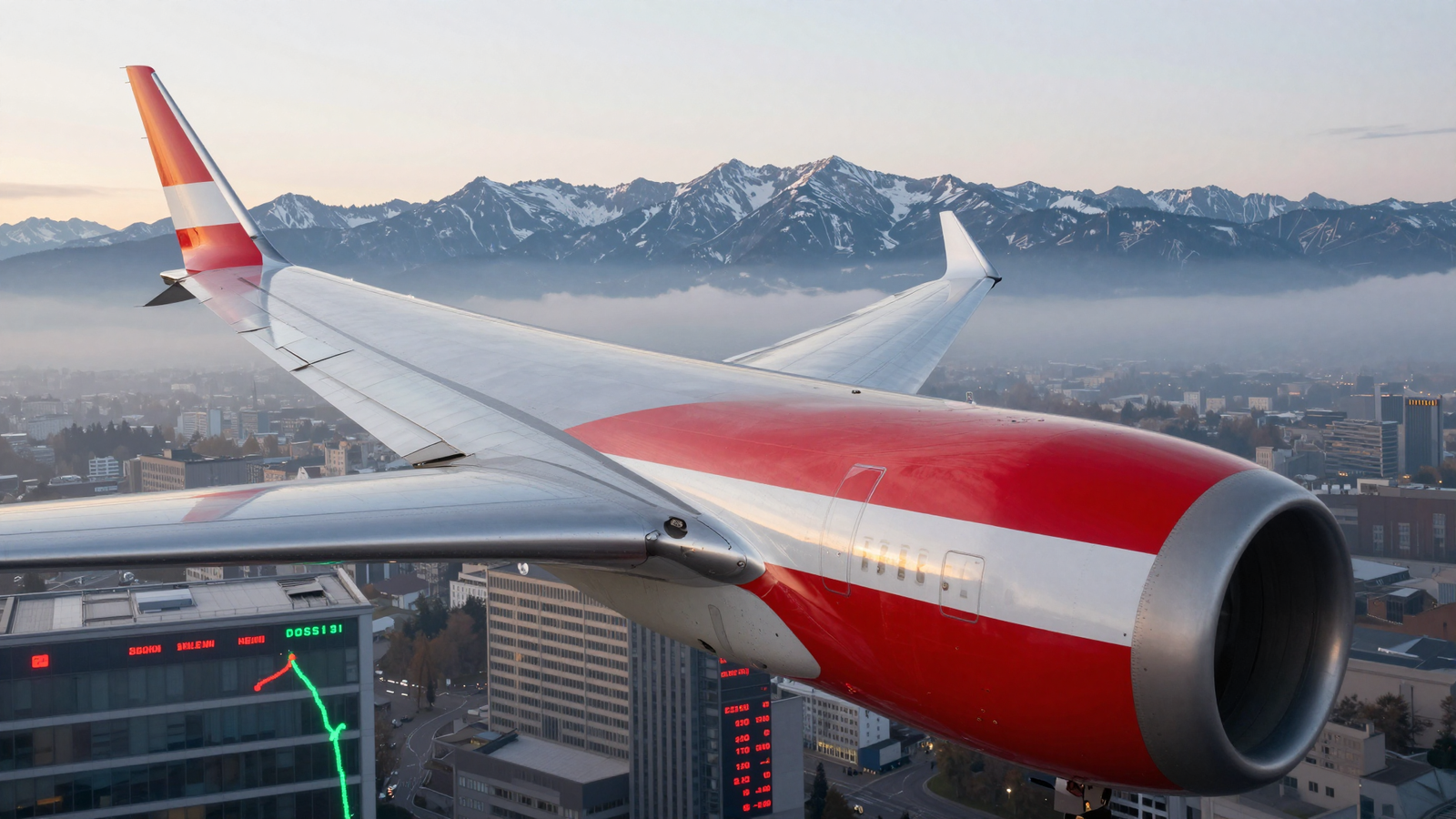
Austrian Airlines, a Lufthansa Group subsidiary, concluded the 2025 fiscal year with record profit of €1.2 billion. This result exceeds 2024 figures by 34%. Operating margin reached 12%, demonstrating high efficiency of the business model. The company is actively recovering from the pandemic crisis, partly thanks to government support and strict cost optimization.
According to Statista data, the aviation industry as a whole makes a significant contribution to the global economy. Although specific figures for Austria vary, the overall trend is positive. Austrian Airlines has not only regained lost positions but also surpassed pre-crisis levels. Revenue growth from commercial activities became the main driver of financial results.
Passenger Growth and New Destinations
In 2025, Austrian Airlines transported 15.3 million passengers, an 18% increase over 2024. Flight load factor averaged 82%. The company restored its full route network, including long-haul flights to North America and Asia. Particularly notable is the growth on US routes, where demand has returned to pre-crisis levels.
Flüge.de notes that global passenger traffic has returned to levels previously seen only in the best years. The Austrian carrier leverages this trend by launching new flights to destinations like Dubai, Doha, and Istanbul. This strengthens Vienna’s hub as a key transfer point between Europe and the Middle East. Moreover, the company expands cooperation with other Star Alliance members, offering passengers more connections through Frankfurt and Munich.
Additionally, Austrian Airlines invests in improving the customer experience. In 2025, the mobile app interface was completely redesigned, a new automatic check-in system was implemented, and premium lounges in Vienna Airport were expanded. These measures help increase loyalty and repeat bookings.
Fleet Modernization: Path to Efficiency
A key success factor was the fleet renewal program. Austrian Airlines took delivery of 15 new Airbus A320neo and A321neo aircraft in 2025. These aircraft consume 15-20% less fuel, reducing operational costs and environmental footprint. By 2027, the company plans to retire all old Boeing 767 and Airbus A330 models.
As noted by DLR, the production of modern wide-body aircraft like the A380 represents a complex process that combines efforts of manufacturers across Europe. Although Austrian does not operate A380s, the principles of global cooperation apply to its narrow-body aircraft orders. The new aircraft batch is produced in different countries, then assembled in Hamburg, requiring complex logistics and quality control.
Our billion-euro growth is not just a number in a report. It’s the result of the daily work of 7,000 employees and the trust of our passengers. We intend to continue this trajectory, making air travel more convenient and sustainable.
— Anna Maria Katalin, CEO of Austrian Airlines
Partnerships and Global Alliances
Austrian Airlines actively develops partnership relationships within Star Alliance and beyond. In 2025, codeshare agreements were expanded with United Airlines and Air Canada, opening more routes through Vienna for passengers. Additionally, Austrian joined the CO2 emissions data sharing initiative to increase transparency of the environmental footprint.
These collaborations allow Austrian Airlines to compete with major European hubs by offering alternative routes with shorter connections. For example, passengers from Eastern Europe can fly to North America via Vienna instead of Frankfurt, saving time and often money. This approach is particularly attractive for business travelers.
Sustainable Development and Environmental Initiatives
Amid growing attention to climate change, Austrian Airlines has committed to achieving carbon neutrality by 2050. A key step was increasing the use of sustainable aviation fuel (SAF). In 2025, the company became the first in Austria to launch regular SAF-blend flights on the Vienna-Zurich route. The goal is to reach 10% SAF usage in total fuel volume by 2030.
Austrian Airlines also actively works on optimizing operations. Thanks to new ground procedures (faster servicing, single-engine taxiing) and improved flight trajectories, the company reduced CO2 emissions by 5% over the past two years. These efforts receive positive feedback from both regulators and environmental organizations.
Prospects for 2027 and Beyond
For 2027, Austrian Airlines plans to increase passenger traffic to 17 million people. To achieve this, the company will add 10 new destinations, primarily in Baltic countries and the Balkans. Additionally, further growth in cargo transportation is expected, which will become an additional revenue source.
Austria’s economy, while facing challenges (inflation, rising cost of living), remains resilient. This creates a favorable environment for developing air transportation. Austrian Airlines intends to use this momentum to strengthen its position as the flagship carrier. Investments in digitalization and personnel will remain priorities.
Overall, Austrian Airlines is at the peak of its history. The company has transformed the challenges of recent years into opportunities, demonstrating adaptability and strategic wisdom. Billion-euro growth is not an end goal but a stage on the path to long-term success.