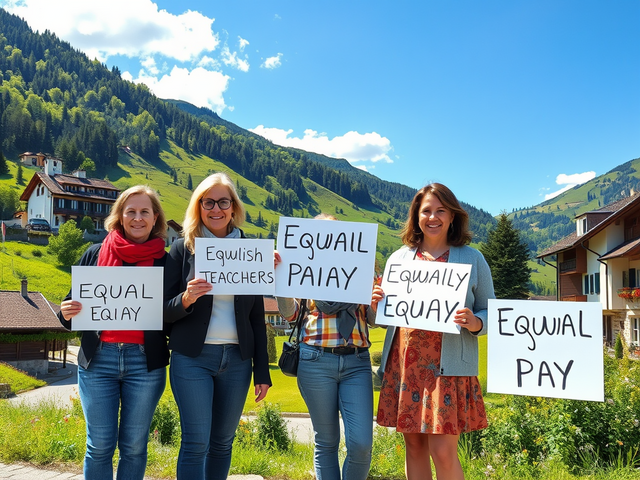
Have you ever wondered why English-speaking teachers working in Austrian schools are paid less than their local colleagues? 🤔 This question is becoming increasingly relevant, especially since many of them are highly qualified and experienced. Research shows that the salary gap between English-speaking teachers and their Austrian colleagues remains significant. In this article, we will look at the reasons for this problem, as well as ways to solve it.
Understanding the Problem: The Wage Gap 💰
According to recent research, English-speaking teachers in Austria complain about the wage gap with local educators. Pay levels in education play a key role in attracting and retaining qualified professionals. However, despite having high-quality degrees and long experience, many English-speaking teachers face non-recognition of their qualifications and, as a result, lower salaries.
Reasons for the pay imbalance
1. Differences in qualifications 📜
One reason why English-speaking teachers may earn less is because of differences in education systems. For example, the Austrian system requires certain qualifications and certifications that foreigners do not always have. This means that English-speaking teachers often have to make compromises when it comes to salary.
2. Incomplete recognition of qualifications 🌍
Some Austrian schools do not recognise foreign diplomas and certificates. This creates additional difficulties for English-speaking teachers who already have experience. This may put them at a disadvantage compared to their local colleagues.
3. Trade union support 👥
Unions play an important role in the fight for pay equality. Austria has taken steps to create a fairer pay system, but many English-speaking teachers lack support from local unions. This creates a sense of isolation and helplessness.
Direction for Change: Joint Efforts 👩🏫👨🏫
To address the pay inequality issue, English-speaking teachers and local educators need to work together. Joint initiatives can help develop recommendations for reform:
- 💡 Creating a platform for discussion: Communication between representatives of different groups can raise awareness of issues.
- 🗣️ Interaction with trade unions: English-speaking teachers can begin to engage with local unions to push for a level playing field.
- 📈 Strategy for professional development: Developing professional development programs for foreign teachers can help to have their credentials and skills recognized.
Statistics and Research 📊
According to the article "Bildungsstandards und Lehrerfortbildung in Österreich", the implementation of educational standards and the need for further training are important aspects for Austrian teachers. This highlights the need for all teachers, including English-speaking teachers, to be aware of new requirements and standards.
Also in the protocol "855. Sitzung des Bundesrates der Republik Österreich" The need for equal pay for equal work is discussed. This once again confirms the importance of fair pay for all teachers in the country.
Conclusion and findings 📝
The issue of fair pay for English-speaking teachers in Austria requires careful consideration and active discussion. It is necessary to find ways to eliminate the wage gap through joint efforts of teachers and trade unions. Every teacher deserves fair pay for their work and contribution to education. Are you ready to support this initiative?
If this article was helpful, please share it with your friends! 📢
SEO Meta Description
English-speaking teachers in Austria demand equal pay with local colleagues. Find out the reasons and solutions!


