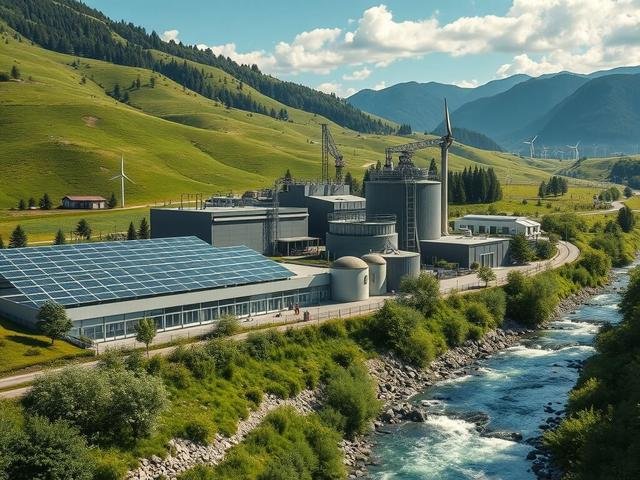
Have you ever wondered how much heat is simply lost to the atmosphere from industrial plants? 🤔 In Austria, a country with high environmental standards, they are actively looking for ways to reuse this heat to make waste recycling more efficient and environmentally friendly. 🇦🇹 In this article, we take a closer look at how the concept of Recycling mit Abwärme (recycling with waste heat) is changing the approach to waste disposal and what benefits it brings to the environment and the economy.
Waste heat: a hidden resource 🌡️
Waste heat is heat that is generated by industrial processes and is usually released into the environment. However, instead of simply getting rid of it, it can be used for other purposes, such as heating buildings, generating electricity or, most interestingly, improving the efficiency of waste recycling.
Recycling with waste: what is it? 🔄
Waste heat recycling is a process in which waste heat from industrial plants is used to provide energy for waste treatment processes. This reduces the consumption of primary energy sources such as fossil fuels and reduces greenhouse gas emissions.
Benefits of using waste heat in processing: ✅
- Energy saving: Reducing energy costs for processing.
- Reducing emissions: Reducing the carbon footprint of businesses.
- Improving environmental sustainability: A more environmentally friendly recycling process.
- Improving competitiveness: Reduction of operating expenses.
Examples of successful application in Austria 🇦🇹
In Austria, there are several successful examples of using waste heat in waste recycling. Many industrial companies cooperate with recycling companies to provide them with heat for their operations. For example, heat from a steel mill can be used to heat a nearby plastic recycling plant.
How does it work in practice? ⚙️
- Waste heat collection: Heat is captured from industrial processes.
- Transportation: The heat is transferred to a waste processing plant.
- Usage: Heat is used to power recycling processes such as sorting, shredding and remelting.
Challenges and Prospects 🧭
Despite the significant advantages, the use of waste heat in processing also involves certain challenges. One of them is the need to create an infrastructure for collecting and transporting heat. It is also important to consider that the availability of waste heat may depend on the production cycles of enterprises.
What can be done to develop Recycling with Disposal? 💡
- Government support: Providing subsidies and tax incentives for companies implementing such technologies.
- Promoting cooperation: Supporting partnerships between industrial enterprises and waste recycling companies.
- Innovative technologies: Developing new technologies to use waste heat more efficiently. As the article on platform "Umweltbundesamt", it is important to constantly develop and implement new technologies for waste processing in order to meet the challenges of the time.
- Informing the public: Raising awareness of the benefits of recycling with waste.
Recycling with the Environment in the Context of the Circular Economy 🌍
The concept of Recycling with waste fits perfectly into the principles of the circular economy, which involves reusing resources and minimising waste. Using waste heat closes the loop, turning waste into a valuable resource and reducing dependence on primary energy sources.
As the article points out on the klimaaktiv website, efficient recycling and reuse of waste are key elements of the circular economy and an important step towards sustainable development.
Conclusion and findings
Recycling with waste heat is an innovative and forward-looking approach to waste management that reduces energy costs, reduces greenhouse gas emissions and improves environmental sustainability. Austria is actively implementing this approach, demonstrating its commitment to sustainability and the circular economy. Recycling waste with waste heat is an important step towards creating a greener and more sustainable future for all of us. 🌏
If you liked this article, please share it with your friends and colleagues! 📢 Follow our blog to stay up to date with the latest news and innovations in sustainability in Austria! 📨


