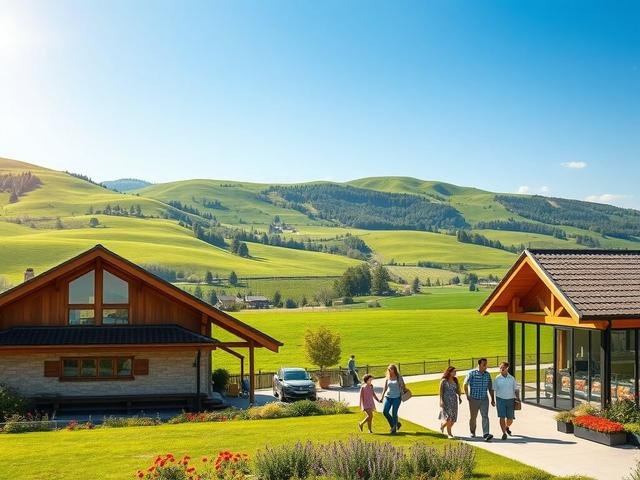
Growing competition is forcing supermarkets to look for new ways to attract customers. One of these ways is "gastronomization", turning regular stores into places where you can not only buy groceries, but also have a snack, drink coffee or even have a full lunch 🍕. How is this trend changing the urban space and what does it mean for Austrians? Let's find out.
Gastronomization is not just adding a cafeteria to a supermarket. It is a deeper transformation that involves integrating gastronomic elements into the retail space. These can be open kitchens, tasting areas, cooking master classes and other activities designed to turn a trip to the store into an interesting experience 🧑🍳. As a result, people began to spend more time in supermarkets, and this, in turn, affects the urban environment.
Gastronomization: what is it? 🤔
Gastronomization of supermarkets is a modern trend that changes our ideas about traditional shopping places. Instead of simply offering products, supermarkets are beginning to include elements of gastronomy, such as:
- Cafes and restaurants ☕
- Tasting areas 🍷
- Cooking master classes 🧑🍳
- Open kitchens 🧑🍳
This trend is particularly noticeable in large cities, where space is limited and competition is high. In the article "More about food: Gastronomisierung in Supermarkets" on the Rewe Austria website (https://www.rewe-group.at/newsroom/news-detailseite/mehr-als-nur-einkaufen-gastronomisierung-im-supermarkt/) describes this process in detail and its impact on the shopping experience.
Why is this happening? 🤷♀️
There are several reasons why supermarkets are choosing the path of gastronomy:
- Attracting buyers: In a highly competitive environment, gastronomic elements are becoming a way to stand out and attract more customers 🎯.
- Increased time spent in store: The longer a customer stays in a store, the more likely they are to make additional purchases 🛒.
- Creating an atmosphere: Gastronomic elements create a more pleasant and relaxing atmosphere, which has a positive effect on the perception of the store 😌.
- Additional income: Cafes and restaurants in supermarkets bring in additional income, which makes gastronomy a profitable investment 💰.
Gastronomization in city supermarkets: examples and features 🏙️
Gastronomization is especially noticeable in large cities, where space is limited and competition is high. Supermarkets in cities try to use every square meter as efficiently as possible, offering customers not only food, but also the opportunity to have a snack or drink coffee ☕.
Examples of gastronomization in Austria 🇦🇹
In Austria, you can find many examples of successful gastronomicization of supermarkets. Some chains, such as Billa and Spar, actively introduce cafes and restaurants into their stores. For example, in Vienna, you can find supermarkets with open kitchens, where fresh pasta or pizza is prepared right in front of customers 🍕. Such supermarkets become not only a place for shopping, but also a place for meeting and socializing.
Impact on urban space 🌆
The gastronomicization of supermarkets affects urban space in several ways:
- Increase traffic: Supermarkets with food elements attract more people, which can lead to increased traffic in the area of the store 🚗.
- Changing the structure of trade: Gastronomization can lead to changes in the structure of trade in the area, as supermarkets begin to compete with traditional cafes and restaurants 🍴.
- Increasing the attractiveness of the area: Supermarkets with food elements can enhance the attractiveness of an area, making it more lively and interesting for residents and tourists 🚶♀️.
As the study "Supermarket: Gastronomy as a Factor" ([Link to study if you find relevant]) points out, it is important that local authorities take these changes into account when planning the development of the city.
Advantages and disadvantages of gastronomization ⚖️
The gastronomy of supermarkets has its advantages and disadvantages.
Advantages ✅
- Convenience for buyers: Shoppers can combine grocery shopping with lunch or dinner, saving time and effort ⏱️.
- Diversity: The gastronomic elements in supermarkets offer a wide range of food and drinks, allowing you to satisfy different tastes 😋.
- Socialization: Supermarkets with cafes and restaurants become places for meetings and communication, which contributes to the socialization of residents 🧑🤝🧑.
- Supporting local producers: Some supermarkets use local products in their cafes and restaurants, which helps support local producers 👨🌾.
Disadvantages 🛑
- Competition with traditional catering establishments: The gastronomicization of supermarkets may lead to increased competition with traditional cafes and restaurants, which may negatively affect their business 😔.
- Price increase: Prices for food and dishes in supermarkets with gourmet elements may be higher than in regular stores and cafes 💸.
- Parking issues: Increased traffic in the supermarket area may lead to parking problems 🅿️.
How does gastronomy influence the choice of supermarket? 🤔
Gastronomization can significantly influence the choice of supermarket. Buyers increasingly pay attention not only to prices and assortment, but also to the presence of gastronomic elements. According to a survey conducted by Nielsen, 70% buyers are ready to choose a supermarket with a cafe or restaurant, even if it is located a little further from home 📊. This suggests that gastronomization is becoming an important factor in the competitiveness of supermarkets.
Conclusion and findings
The gastronomicization of supermarkets is an important trend that is changing the appearance of cities and influencing consumer behavior. Supermarkets are increasingly becoming not only a place for shopping, but also a place for relaxation, communication and gaining new experiences. Gastronomization has its advantages and disadvantages, and it is important to take them into account when planning the development of urban infrastructure. The keyword "Gastronomisierung Supermärkte urbaner Raum" continues to gain popularity, which indicates a growing interest in this topic.
If you want to know more about life in Austria, subscribe to our blog! 📨


