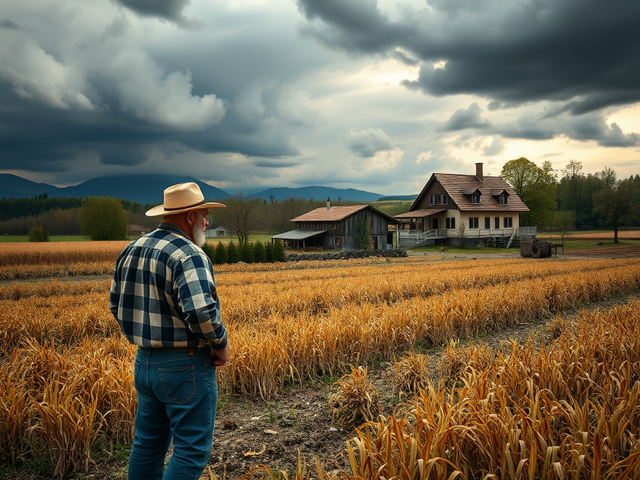
In recent months, Austrian farmers have faced serious challenges that could lead to millions of euros in damage. Epidemics that threaten livestock and crops have become a real threat to agriculture. Against this background, natural disasters such as heavy rains and hail also cause significant damage. What is happening in the Austrian agricultural sector and what measures are being taken to eliminate the consequences? 🇦🇹
Damage from natural disasters 🌦️
The issue of damage is most acute in the regions of Styria and Burgenland. As a result of heavy rainfall and hail, damage to agriculture is estimated at millions of euros. According to studies, in Styria alone, damage from the loss of corn, pumpkin and hop crops amounted to around 4 million euros. Moreover, thousands of birds were affected by the floods, and around 7,000 of them died.
Local authorities are actively working to assess the damage and are bringing in various services to help with the recovery. Following heavy rainfall, more rain is expected, which could worsen the situation. For more information on the damage caused by natural disasters, see the article Millionenschäden für Bauern durch Hagel und Hochwasser.
The impact of epidemics on livestock 🐄
In addition to natural disasters, Europe is also threatened by various epidemics, such as bluetongue disease, bird flu and African swine fever. The situation is particularly acute in Austria's neighbouring countries, such as Hungary. The spread of these diseases could have catastrophic consequences for Austrian farmers and their livestock.
According to experts, if the situation is not promptly controlled, significant losses are possible. In a crisis, farmers must adapt to new realities and find alternative sources of income.
Prospects for Austrian agriculture 🌱
According to the research presented in the article Perspektiven für Österreichs Landwirtschaft bis 2025, traditional business practices in the agricultural sector are expected to become obsolete. The decline in the number of agricultural enterprises and changing consumer habits make it imperative for farmers to adopt innovative approaches.
While food sales continue to grow, farmers are struggling to increase production due to the loss of farmland. This creates pressure to find new sources of income and reduce costs on tight budgets. Alternatives such as forestry, direct sales, and agritourism may be important options for smallholders.
European Commission Strategy 📊
On 19 February 2025, the European Commission presented its "Vision for Agriculture and Nutrition" aimed at making the rural sector more sustainable and attractive. The strategy focuses on creating better working and living conditions for farmers, supporting young people and protecting animal rights.
These measures can help Austrian farmers cope with current challenges and move towards more sustainable and efficient farming. Simplification of the legal framework and the introduction of digital technologies should also play a role in the future of the agricultural sector. More information on future plans can be found in the publication Vision für Landwirtschaft und Ernährung.
Conclusion and findings
Austrian agriculture has found itself in a difficult situation in recent months due to a combination of natural disasters and epidemic threats. Farmers are facing multi-million dollar losses and must find new sources of income. The strategies proposed by the European Commission can help overcome these difficulties and help adapt to the new conditions. What measures do you think could be most effective in protecting the agricultural sector in the future? 🌍
If this article was helpful, please share it with your friends! 📢


