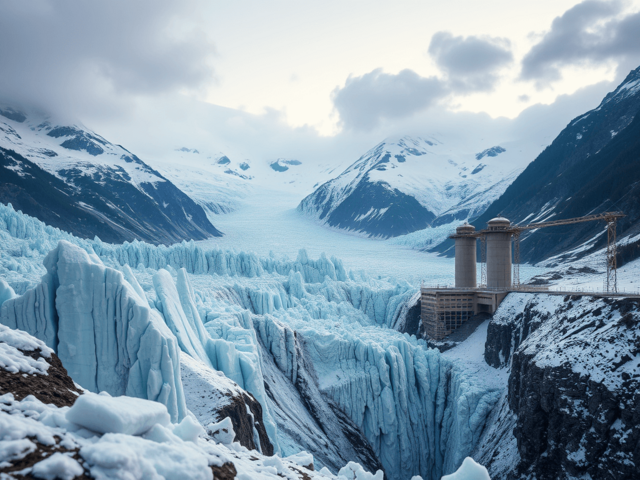
In recent years, Austria, like many other Alpine countries, has faced a serious problem - the rapid melting of glaciers 🏔️. This is not just an environmental disaster, but also a potential threat to the country's energy security. After all, a significant part of electricity in Austria is produced by hydroelectric power plants, which directly depend on water reserves fed by glaciers. What awaits the Austrian energy sector in the near future and what measures need to be taken now? Let's figure it out!
Consequences of melting glaciers for Austria's energy sector
Austria has long been famous for its mountain rivers and lakes, which are the basis for the development of hydropower. Hydroelectric power plants provide a significant part of the country's electricity needs. However, global warming and the resulting melting of glaciers are threatening this source of energy.
Hydropower's dependence on glaciers 💧
Glaciers act as natural reservoirs of water, gradually releasing it throughout the year, ensuring a steady flow of water into rivers. Melting glaciers lead to increased runoff in the spring and summer, which can cause floods and landslides. But most importantly, in the long term, the reduction in glacial mass will lead to a decrease in river runoff in the summer months, when energy consumption is highest.
Impact on electricity production ⚡
As the article on the website notes ORF, Austria is already seeing changes in the volume of electricity produced by hydroelectric power plants. If the trend of melting glaciers continues, the country may face a power shortage in the future, especially in the summer months. This could lead to higher electricity prices and increased dependence on imports from other countries.
Alternative energy sources and adaptation
Recognising the seriousness of the threat, Austria is actively developing alternative energy sources and developing strategies for adaptation to climate change.
Development of renewable energy sources 🔆
Austria has ambitious goals to increase the share of renewable energy sources in the country's energy balance. Along with hydropower, solar ☀️ and wind 🌬️ energy are actively developing. Investments in these technologies allow diversifying energy sources and reducing dependence on glaciers.
Hydropower adaptation measures ✅
To mitigate the effects of glacier melting, hydropower adaptation measures must be taken. This includes:
- ✅ Modernization of existing hydroelectric power plants to increase their efficiency.
- ✅ Construction of new reservoirs to accumulate water during periods of excess runoff.
- ✅ Development of river flow forecasting systems to optimize the operation of hydroelectric power plants.
International cooperation 🤝
The problem of melting glaciers is global in nature and requires international cooperation. Austria is actively involved in international projects to study the climate and develop adaptation strategies. As reported Austrian government website, it is important to exchange experiences and knowledge with other countries in order to jointly solve this complex problem.
Conclusion and findings
Melting glaciers pose a serious threat to Austria's energy security. The country's dependence on glaciers for hydropower makes it vulnerable to climate change. However, the active development of alternative energy sources and measures to adapt hydropower can mitigate the negative consequences. It is important that authorities and society recognize the seriousness of the problem and actively participate in the development and implementation of strategies to combat climate change and ensure sustainable energy development. As the article on website of the Institute of Geography of the University of Innsbruck, without active action the consequences may be irreversible.
If this article was helpful, please share it with your friends! 📢


