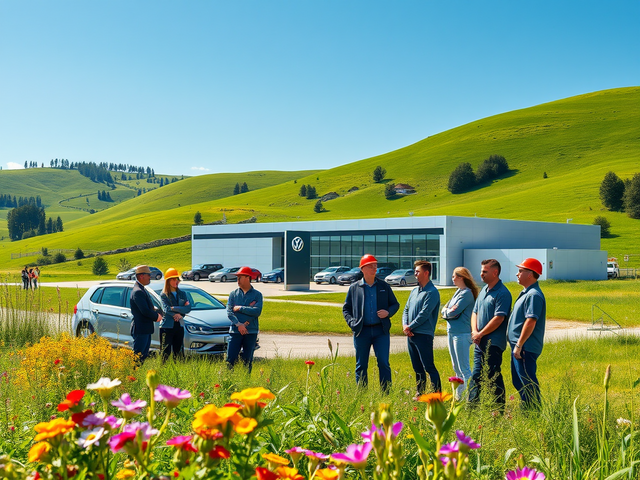
Volkswagen in Austria: 35,000 jobs by 2030 🇦🇹
Automotive giants like Volkswagen have faced a number of major challenges in recent years, including adapting to a changing market and the transition to electric vehicles. 🚗 In light of this, Volkswagen has announced plans to cut 35,000 jobs in Germany by 2030, raising questions about the impact of these changes on Austria and its automotive industry. What can we expect in such a difficult situation, and what steps are being taken to secure the future of workers? Let's find out!
1. The situation with jobs at Volkswagen 🚧
Volkswagen, one of the world's largest carmakers, has announced significant changes to its operations. As part of a cost-cutting initiative, the company plans to cut 35,000 jobs in Germany, which will include moving production of models such as the Golf from Wolfsburg to Mexico. 📦 The measures are aimed at saving more than 15 billion euros a year and ensuring the brand's competitiveness in the global market.
As noted in the article Automotive Logistics, VW also plans to reduce production by 734,000 vehicles. However, despite the cuts, the transition to electric vehicles opens up opportunities for new jobs, especially in the battery and low-emission mobility sectors.
2. The transition to electric vehicles and its impact on Austria 🔋
Austria is working hard to develop its automotive industry in light of global changes. According to a study by Klima- und Energiefonds, the transition to electric vehicles could lead to the creation of up to 33,900 new jobs in the country by 2030. This would create new opportunities for workers and provide a significant economic return of 3.1 billion euros. 🌍
Infrastructure Minister Jörg Leichtfried emphasizes the need to create new markets and develop strategies to support electromobility. An important step will be the development of charging infrastructure for electric vehicles, which also requires additional research and investment in production.
3. Prospects for workers in the automotive industry 📈
Despite the negative impact on jobs, it is important to consider that the transition to electric mobility creates new employment opportunities. In Europe, the automotive sector employs around 14.6 million people, and some studies suggest that job losses may not be as significant as expected, especially for large automakers such as VW, BMW and Daimler. However, suppliers dependent on traditional engines may face more serious layoffs.
As reported by Clean Energy Wire, the transition to electric vehicles requires retraining of workers and new qualifications, which may become a challenge in the coming years.
4. Austria's role in the future of the automotive industry 🚀
Austrian companies have the opportunity to carve out a niche in the development of new technologies related to the production and development of electric vehicles. With new investments in battery production projects and infrastructure development, Austria can become an important player in the European electric vehicle market. Support from the state and private sector will also be key to stimulating growth.
Conclusion and findings
The changes in the Volkswagen industry are putting many jobs at risk, but also opening up new opportunities for growth and development in Austria. The transition to electric vehicles can be the basis for job creation and economic growth. It is important to monitor the situation and support the development of new technologies in order to minimize the negative consequences and take advantage of the benefits that may arise in the future. 🔍
If your company or you yourself are planning to take steps towards electromobility, prepare for changes and a new market of opportunities!
If this article was helpful, please share it with your friends! 📢
SEO Meta Description: Volkswagen to cut 35,000 jobs by 2030, but Austria sees new opportunities as electric vehicles grow


