EU capital markets union: Lagarde and Van der Bellen call for billions in AI investment
EU capital markets union: Lagarde and Van der Bellen call for billions in AI investment ECB chief Lagarde and Austrian President Van der Bellen demand an EU capital markets union for AI investment: 600 billion euros to close the tech gap. Topics: News, Economy, Technology.
Vienna has just hosted a rare joint appeal. European Central Bank President Christine Lagarde and Austrian Federal President Alexander Van der Bellen demanded that the EU rapidly complete its Kapitalmarktunion (capital markets union). Without a deep common capital market, they argued, Europe cannot finance its own artificial intelligence. As Die Presse reports, both spoke at the Hofburg im Dialog forum on 14 September 2026. This article breaks down the key numbers, quotes and takeaways for anyone living or investing in Austria. You will learn where European savings go today and what changes the union could bring.
What happened at the Vienna Hofburg
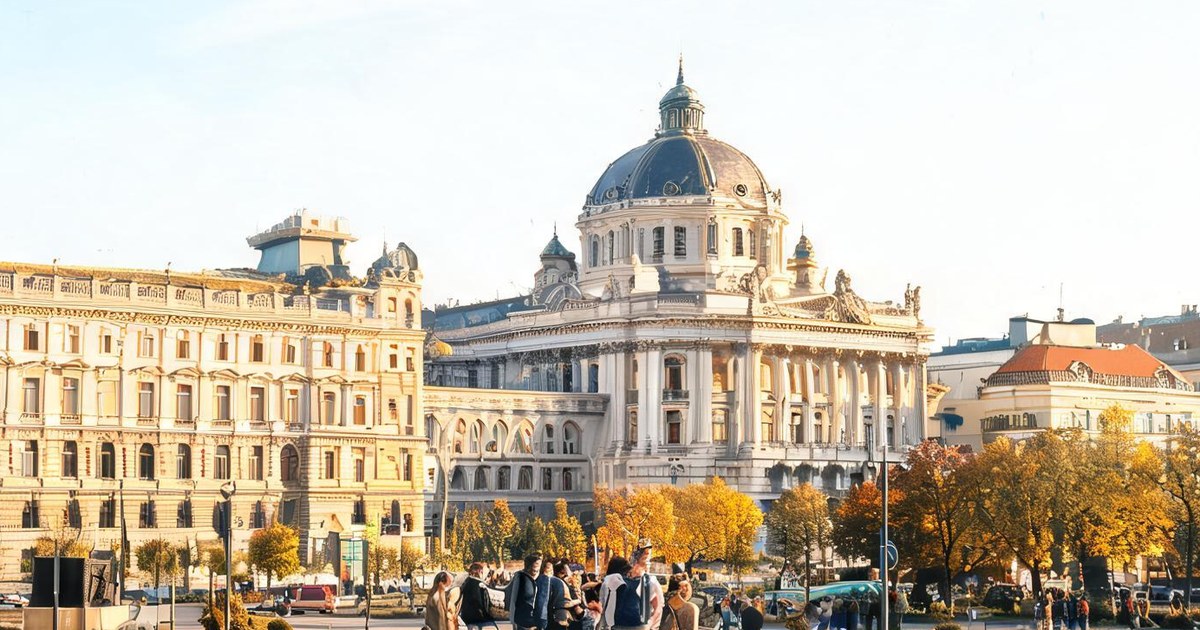
The Hofburg im Dialog: Wirtschaft - Europa - Resilienz forum gathered the ECB chief, the Austrian president and top business leaders under one imperial roof. Lagarde stated plainly that insufficient financing threatens Europe’s technological sovereignty in artificial intelligence. Europe risks importing AI rather than building it, and that gap starts with money.
Van der Bellen addressed entrepreneurs with a blunt message. Public budgets are stretched, so private investment must take the lead. He urged companies to invest, hire and innovate instead of retreating. The president criticised what he called “Selbstverzwergung”, a self-diminishing habit of thinking too small in Europe.
Lagarde’s numbers: where European savings disappear
Lagarde backed the appeal with striking figures. Households in the euro area hold around 440 billion euros in US technology assets. Meanwhile, about 1.4 trillion euros in European savings flow abroad every year because the EU lacks deep capital markets. Money earned in Vienna or Graz ends up financing American startups instead of Austrian ones.
The ECB chief offered a historical parallel. In the 1870s, she recalled, European savings built the railroads of the United States rather than European ones. Today the stakes are not rails but chips and models. According to Die Presse, Europe’s road to digital sovereignty is already proving rocky.
600 billion euros for data centers and chips
Closing the gap in data centers and microelectronics will take up to 600 billion euros over the next ten years, Lagarde estimated. Private savings, not EU budgets, are meant to supply that capital. Without computing capacity of its own, Europe depends on foreign technology providers for everything from cloud to chips.
Fast AI adoption would pay for itself, she argued. Deploying artificial intelligence at speed could lift euro area productivity growth by up to 4% over a decade. That matters in Austria, where labour shortages already weigh on growth, a trend we covered in our piece on the Austrian economy. Lagarde also warned that once AI steers logistics, tax audits and banking, losing access to it would hit the entire economy at once. The data side of that risk is real: as Die Presse reports, most Austrian data is not under Austrian control.
We need a genuine European capital market, a genuine EU capital markets union.
- Alexander Van der Bellen, Federal President of Austria
What business and Austria’s central bank demand
Austrian National Bank Governor Martin Kocher added a dose of realism. Risikokapital (venture capital) alone will not do it, he said, because Europe also needs reliable framework conditions. Energy supply must be secured and companies relieved of red tape. Regulation, he argued, should encourage innovation instead of slowing it down.
Infineon Austria CEO Sabine Herlitschka warned about runaway bureaucracy inside the single market. Europe holds global strengths in microelectronics and must play them, using regulation as a “lever for competitiveness”. Cheap green energy is a precondition, especially since AI’s power hunger is exploding, as we showed in our article on AI energy consumption.
Johannes Brandstetter, co-founder of AI startup Emmi AI, described the funding ladder in practice. Early-stage money exists in Europe, but late-stage venture capital does not. That is why founders still move to the United States, and his call to “think much bigger” became the debate’s slogan. We examine the same squeeze in our piece on AI pressure on Austrian startups.
What the EU capital markets union means for your money
The reform reaches ordinary wallets in Austria. Today pension reserves and fund savings drift toward US markets by default. A real EU capital markets union would let the same money flow into European companies, data centers and AI startups, including fintech champions like Bitpanda, which grew from a Viennese crypto broker into a European giant.
Investors would get more European instruments, startups would find growth-stage money, and employees would see new tech jobs. Interest is already building: as Die Presse reports, data center investments are sparking a gold-rush mood among savers. Still, the single market’s new rules will not appear overnight, because rebuilding a financial system takes years.
What comes next for the EU capital markets union
The European Commission has worked on the capital markets union since 2015, and Lagarde’s Vienna appearance raised the stakes. Pressure from the ECB and two presidents is expected to speed up Brussels’ legislative work on supervision, securitisation and cross-border investment. For Austria the bet is high: the country industrialises savings poorly despite its manufacturing strength.
A short reader checklist:
- Watch the EU capital markets union package from Brussels, as it will touch funds and pension schemes.
- Consider European ETFs and companies for long-term savings goals.
- If you work at a startup, study European growth-stage funds before moving to the US.
The message from the Hofburg is clear: Europe no longer intends to bankroll someone else’s AI. To stay on top of Austrian finance and tech decisions, subscribe to our newsletter - we explain Austria’s economy in plain English, on time and without panic.
Stay Up to Date with the Latest Austrian News
The week's top stories - news, guides, and insights about life in Austria. Every Sunday in your inbox.