Austrian Economy Shrinks 0.1% in Q2 2026 — GDP Dips After Six Quarters of Growth Austrian economy shrinks 0.1% in Q2 2026 after +0.1% in Q1 — Austria GDP data from Statistik Austria, why energy prices dragged output down and what WIFO forecasts next. Topics: News, Economy.
The Austrian economy shrinks by 0.1% in the second quarter of 2026, ending six straight quarters of expansion. After a revised +0.1% in Q1, Austria GDP (BIP Österreich — gross domestic product) slipped into negative territory for the first time since late 2023. You will learn what fresh data from Statistik Austria shows, why rising energy prices hit output, how Austria compares with the EU and Germany, and what it means for households, jobs and the budget.
What happened to Austria GDP in Q2
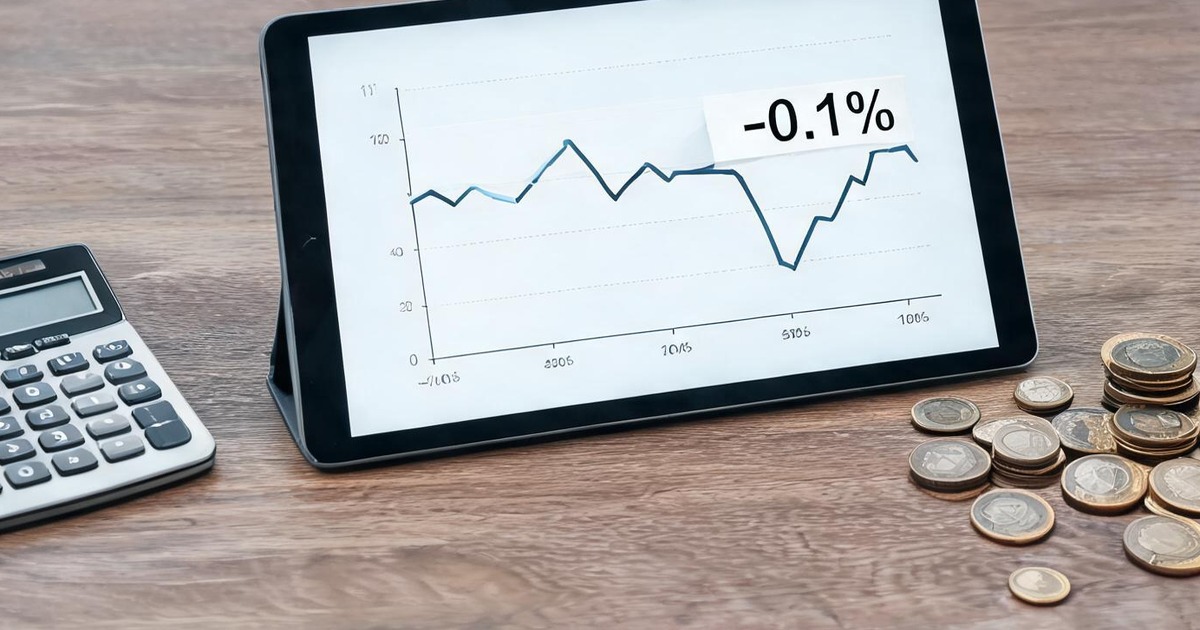
Austria GDP fell by 0.1% quarter-on-quarter in Q2 2026 in real, seasonally and calendar-adjusted terms, after a revised +0.1% in Q1 2026. As RTTNews reports citing Statistik Austria, the initial estimate was stagnation, but the revision showed a slight contraction. It is the first decline after six quarters of growth.
According to Statistik Austria, the economy still grew by 0.2% in Q1 2026 versus Q4 2025, and annual GDP for 2025 is estimated at 514.3 billion euro at current prices. The calculation follows ESA 2010 in the Quarterly National Accounts (QNA).
On a year-on-year view the picture stays muted: the first half hovered near zero, with industry and exports under pressure from expensive energy and weak external demand.
Why output fell again — energy prices as the brake
The main drag was a further rise in energy prices. As Director General Manuela Lenk of Statistik Austria stressed, economic output was mainly dampened by higher energy prices. The mechanism has been familiar since 2022–2023: costly energy hits manufacturing, capital-goods exports and investment.
According to WIFO Reports on Austria 9/2026, the inflation shock linked to the Middle East conflict pushed prices higher again in the first half of 2026, soured business and consumer sentiment and weighed on consumption. The institute expects activity to regain momentum with falling energy prices from the second half of 2026, leaving full-year growth around 1.0% in 2026.
A second factor is weak foreign demand. Data from the Austrian Federal Ministry of Finance (BMF) shows real exports fell by 2.3% in 2024 and only returned to +1.2% in 2025; imports behaved similarly. When energy is expensive and Germany — the top trading partner — stalls, Austrian exports feel the headwind first.
Economic output was mainly dampened by a further rise in energy prices.
— Manuela Lenk, Director General, Statistik Austria
Quarter-by-quarter dynamics — table and context
The -0.1% looks technical, but it marks a turning point after eighteen months of cautious recovery.
| Quarter | GDP q-o-q (real, seasonally adjusted) | Note |
|---|---|---|
| Q4 2024 | -0.5% | decline per Statistik Austria |
| Q1 2025 | slight growth | start of recovery |
| Q3 2025 | slight growth | Statistik Austria report 04 Dec 2025 |
| Q4 2025 | base | annual 2025 growth revised to +0.6% |
| Q1 2026 | +0.2% (vs Q4 2025) / +0.1% revised | last gain before the turn |
| Q2 2026 | -0.1% | first fall after 6 growth quarters |
For comparison, the euro area grew about 0.2–0.4% q-o-q in Q2 2026 (estimates from Trading Economics and Eurostat), while Germany also hovered around zero. Austria’s dip is therefore not an outlier but part of a broader European slowdown after the energy shock.
For the longer arc: Austria endured a 2023–2024 recession with -1.0% in 2023 and -0.7% in 2024 — background in our pieces Austrian economy: will there be a recession in 2024? and Austrian economy: growth despite hardship.
WIFO and government forecasts for 2026–2027
Despite the quarterly dent, the medium-term outlook stays cautiously positive. WIFO expects Austria GDP to grow by around 1.0% in 2026 and 1.1–1.2% in 2027 if energy prices ease in the second half as assumed. Industry and exports should benefit from a global upturn.
Inflation stays elevated: per the BMF / WIFO / Statistik Austria overview, CPI is 3.6% in 2025, 3.2% in 2026 and 2.4% in 2027. Real incomes shrink in 2026 on high inflation, so private consumption rises only +0.4% (after +0.7% in 2025).
The labour market remains stable but lacklustre: employment +0.2–0.5%, unemployment (national definition) 7.4% in 2025 and 7.5% in 2026, edging down to 7.3% in 2027. The fiscal deficit stays high near -4.2% of GDP in 2025 and -4.0% in 2026, public debt 81.3% in 2025 heading to nearly 84% by 2027.

What it means for people living in Austria
A -0.1% quarterly dip does not trigger an instant crisis for households, but it sets the tone for the next months. First, real incomes are squeezed: with 3.2% inflation in 2026, wage growth lags prices and consumption grows slowly. Second, industrial firms postpone investment — visible in gross fixed capital formation (-4.3% in 2024, only +2.5% in 2025 and +1.3% in 2026).
For workers that means a muted labour market: no wave of layoffs is forecast, but no hiring boom either. If you plan to move to Austria or look for work in Austria, budget for a longer job search and factor in rent and energy costs. Our guides on renting an apartment in Vienna and salaries in Austria help to map income versus expenses.
For businesses the signal is cost discipline and energy efficiency. The government continues fiscal consolidation, so a sharp rise in support is unlikely — the target is a deficit of -3.7% of GDP in 2027.
What to watch next
The key question is energy prices in the second half of 2026. If they fall as WIFO assumes, Austria can still end the year with about 1% growth despite the Q2 dent. If pressure persists, the risk of a technical recession (two negative quarters in a row) rises.
Markers to watch:
- Q3 2026 — will show whether Q2 was a one-off or the start of a longer drag;
- CPI inflation — the decline to 2.4% in 2027 is critical for a consumption recovery;
- Unemployment — holding near 7.5% would signal resilience;
- Exports/imports — a sustained +1.1–1.6% is needed for industrial growth.
Also follow our updates on the budget and the budget hole — why the state runs short of money and on how Austrian Airlines keeps growing despite turbulence — stories that show how macro trends hit specific sectors.
Frequently Asked Questions
How much did the Austrian economy shrink in Q2 2026? By 0.1% quarter-on-quarter in real, seasonally and calendar-adjusted terms, after +0.1% in Q1 2026. It is the first quarterly fall after six quarters of growth, per Statistik Austria.
Why did Austria GDP turn negative? Mainly due to a further rise in energy prices dampening output, especially in industry and exports, as noted by Statistik Austria chief Manuela Lenk. Weak external demand, notably from Germany, was a secondary factor.
Is this already a recession? No. A recession formally requires two negative quarters in a row. WIFO still forecasts about 1% growth for full-year 2026 if energy prices ease in the second half.
What about inflation and unemployment? Per the BMF overview, CPI inflation is seen at 3.2% in 2026 and 2.4% in 2027, national unemployment at 7.5% in 2026 and 7.3% in 2027.
Takeaways from the Q2 2026 dip
The Austrian economy shrinks by 0.1% in Q2 2026 after +0.1% in Q1 — a small but telling reversal after eighteen months of growth. The culprit is expensive energy, with soft exports and muted consumption at 3.2% inflation in the background.
Checklist for households and businesses:
- Budget check: factor in 3.2% inflation in 2026 and slow real-income growth
- If changing jobs, allow for a longer search at 7.5% unemployment
- Prioritise energy efficiency and flexible supplier contracts
- Watch Q3 2026 — it will decide if Q2 was an outlier
- Keep a 3–6 month expense buffer for volatility
The quarterly dip is not a crash but a caution flag. If energy prices do fall in the second half, 2026 can still end with about 1% growth. Do not miss the next Statistik Austria release and WIFO outlook — subscribe to our newsletter for clear numbers without fluff.
Stay Up to Date with the Latest Austrian News
The week's top stories — news, guides, and insights about life in Austria. Every Sunday in your inbox.