Will 40C summers become more common in Austria? What experts say
Will 40C summers become more common in Austria? What experts say Will 40C summers become more common in Austria? Record 41.2C heat, 395 heat-related deaths in June and GeoSphere Austria forecasts — what climate experts say Topics: News, Leisure & Culture.
The summer of 2026 has broken every temperature record in Austria’s history: in early August, the mercury crossed 41°C for the first time ever. Heatwaves started back in June and have continued ever since, while the Austrian Agency for Health and Food Safety (AGES) estimates that 395 people died from heat-related causes in June alone. The extreme conditions have disrupted schools, transport and agriculture, while a severe drought has hit rivers and crops. The Local asked an expert at the national weather service GeoSphere Austria to explain what is going on and whether 40C summers will become more common in Austria. Here is what the climatologists say, the projections up to 2050, and practical advice for surviving extreme heat.
August 2026 records: 41.2C in Bad Deutsch-Altenburg
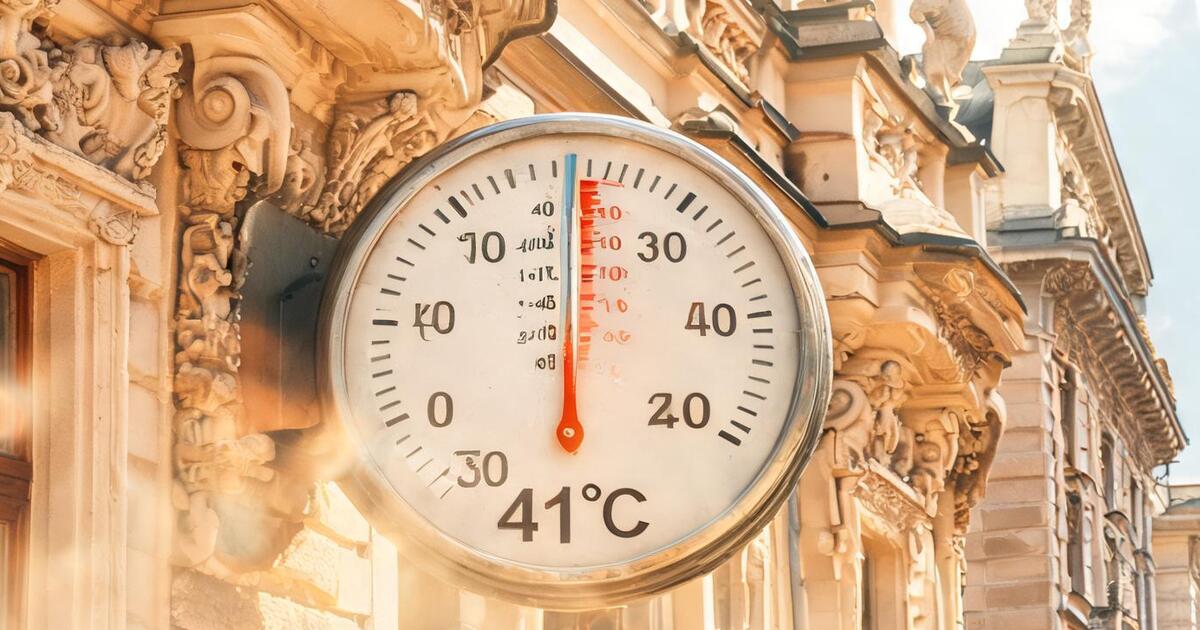
In the first week of August, Austria broke its national heat record twice in two days. On 5 August 2026, a weather station in Bad Deutsch-Altenburg (Lower Austria) recorded 41.2°C — the highest reading ever measured in the country. A day earlier, Vienna-Stammersdorf hit 41.0°C, surpassing the previous national record that had stood since 2013.
Austria’s previous all-time maximum was 40.5°C, set on 8 August 2013 — also in Bad Deutsch-Altenburg. As Reuters reports, the 40°C mark had been crossed only a handful of times before; now the country has exceeded it in June, July and August of the very same year.
June 2026 was historic too: on 28 June, Vienna recorded 40.0°C — a new capital-city record — and the next day Bad Deutsch-Altenburg reached 40.1°C, a new national record for June. According to the World Meteorological Organization, Western Europe experienced its hottest June on record.
What the climatologists at GeoSphere Austria say
Andreas Tröscher, press spokesman for the national weather service GeoSphere Austria, told The Local that this summer’s heat spells are anything but normal. In his words, they are the result of ongoing, man-made global warming.
As a general rule, heatwaves are becoming longer, hotter and occurring earlier in the year. See this year: June with temperatures of 40C.
— Andreas Tröscher, press spokesman, GeoSphere Austria
Tröscher noted that natural weather patterns play a role too: the El Niño phenomenon has an influence, even though its impact on Austria is traditionally less significant than in other parts of Europe. The main driver of extreme heat, he says, is blocking high-pressure systems that are becoming increasingly sluggish and stable, with air masses shifting more slowly and lingering over the country.
Climatologist Alexander Orlik, also of GeoSphere Austria, added an alarming detail about the drought: some regions in the east of the country have not seen such dry conditions since 1885.
395 deaths in June: heat as a health threat
For the first time ever, AGES (the Austrian Agency for Health and Food Safety) published an interim mortality assessment during the summer season. The result: in June 2026, 395 people died from heat-related causes — that is 13 people per day, the highest June figure since records began in 2017.
As ORF reports, the previous June record was set in 2019, when heat claimed 335 lives. For comparison: the entire summer season of 2025 (June–September) saw 449 victims, while the even hotter summer of 2024 recorded 989. The number 395 almost matches Austria’s total road fatalities for last year — 397.
Health Minister Korinna Schumann called the figures “shocking” and stressed that heat has “long ceased to be a question of comfort” and become “a concrete danger to health and life”. For more on how heat affects health and which records fell in July, see our article on the extreme heat.

Will 40C summers become the norm? Projections up to 2050
According to the ÖKS15 climate scenarios, average temperatures in Austria will rise by a further 1.3–1.4°C by 2050 — and this increase can no longer be avoided. By the end of the century, warming would reach +2.3°C under an ambitious emissions-reduction scenario (RCP4.5) and +4.0°C under a business-as-usual scenario (RCP8.5), as the official Klimawandelanpassung scenarios show.
The number of Hitzetage (days with temperatures above 30°C) has already risen sharply across Austria: Vienna averaged 9.6 such days per year in 1961–1990, but 15.2 per year in 1981–2010. Tropennächte (tropical nights, when temperatures stay above 20°C) in the capital have increased from 1–2 to 6 per year on average, and in the summer of 2015 Vienna counted 23 of them.
Europe is the world’s fastest-warming continent: according to Copernicus, temperatures here have risen twice as fast as the global average since the 1980s. Meteorologists at Ubimet expect 40°C to become routine in southern Europe by 2050, with the 50°C mark possibly reached in the Mediterranean for the first time. For Austria, the question is not whether 40C summers will become more common, but how often they will repeat.
Drought and water: the other side of the heat
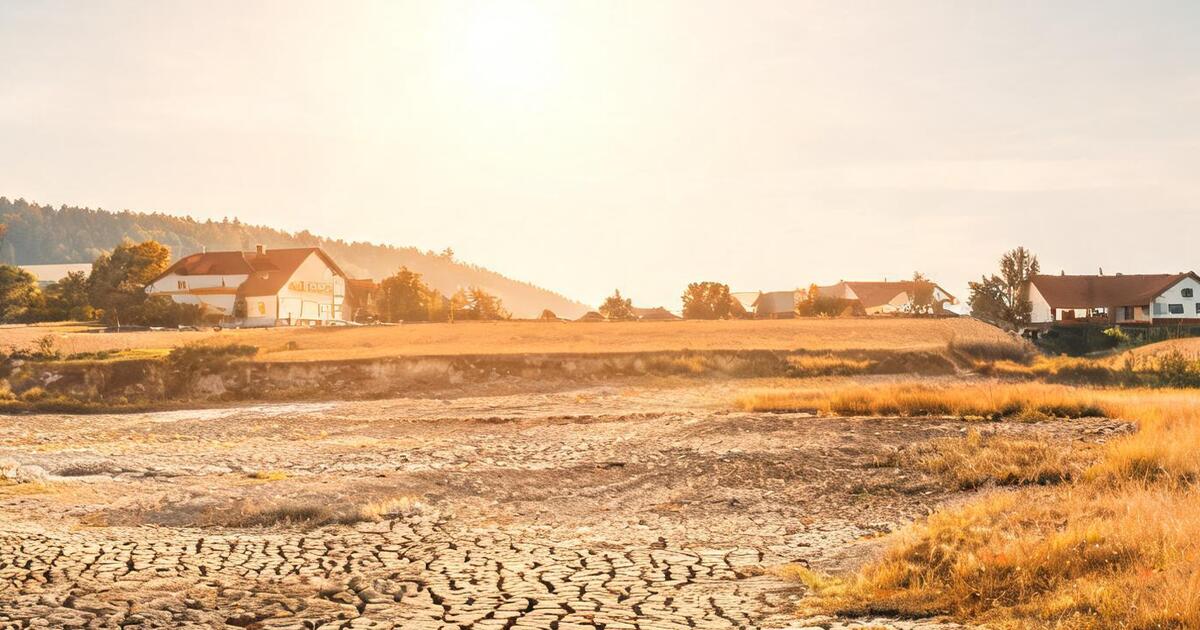
Heat goes hand in hand with record drought. From 1 January to 30 June 2026, Austria received 27% less precipitation than the long-term average, and some eastern regions got only half their normal rainfall. The Danube has dropped so low that sandbanks are exposed, and the low water affects shipping not only in Austria but also in Hungary, where the nuclear power plant at Paks is running at 10% capacity due to a lack of cooling water.
The drought has hit agriculture hard: Europe’s grain harvest is expected to be the worst in decades, and in Austria maize and vineyards are suffering. Dry conditions have also led to restrictions on open fires and grilling.
Air conditioning: will technology help?
Many readers of The Local have noticed how few air conditioners there are in Austria — unlike the USA or Brazil, where offices, gyms and schools are fitted with A/C. Tröscher argues that air conditioning is only part of the solution:
Air conditioning systems can only alleviate the heat stress in specific, individual cases and, moreover, consume a great deal of electricity, the generation of which in turn has an environmental impact, unless it comes from wind power or solar energy.
— Andreas Tröscher, press spokesman, GeoSphere Austria
Instead of mass-installing air conditioners, the expert recommends climate protection measures: greening cities, preventing further soil sealing (paving over and building on land) and careful management of groundwater during droughts. Vienna already runs a “Cooling Places” programme — a map of public air-conditioned spaces including libraries, museums and shopping centres. For more on how the capital copes with the strain on its water supply, see our article on Vienna’s water consumption.
Forecast for the coming days and heat safety tips
Forecasters see no quick relief: highs of up to 34°C are expected in Graz and Linz and 31°C in Vienna at the start of the week, along with thunderstorms. Experts urge caution — extreme heat places an enormous physical strain on elderly people and those in poor health, but even for young, fit people, several consecutive days above 30°C are unhealthy.
The basic recommendations from GeoSphere Austria: cool off in a swimming pool, drink plenty of fluids and avoid outdoor activity unless absolutely necessary. Austria operates a free heat helpline: 0800 880 800. If you plan to spend the summer in the city, our guide to the Hundstage — the hottest days of summer in Austrian tradition — may also come in handy.
Frequently Asked Questions
Will 40C summers become more common in Austria? Yes. According to the ÖKS15 scenarios, average temperatures will rise by another 1.3–4°C by the end of the century, and the number of days above 30°C has already doubled in Vienna over the past 50 years. GeoSphere Austria experts say heatwaves will be longer, hotter and start earlier.
What was Austria’s temperature record in summer 2026? On 5 August 2026, Bad Deutsch-Altenburg recorded 41.2°C — the highest temperature ever measured in the country. The previous record (40.5°C) had stood since 2013.
How many people died from the heat in Austria in 2026? In June 2026 alone, 395 people died from heat-related causes, according to AGES — a record for the month since 2017.
Will air conditioning solve Austria’s heat problem? Experts say A/C helps only locally and consumes a lot of energy. Long-term solutions are urban greening, protecting soil from development and careful water management.
What happens next
The record summer of 2026 has shown that 40C summers in Austria are no longer an anomaly but part of the new climate reality. Follow our updates on weather and life in Austria — subscribe to our newsletter so you don’t miss important news and practical guides.
Stay Up to Date with the Latest Austrian News
The week's top stories — news, guides, and insights about life in Austria. Every Sunday in your inbox.