
Austrian Citizenship by Descent: How It Works Alongside Naturalization and Dual Citizenship Rules
Austrian Citizenship by Descent: How It Works Alongside Naturalization and Dual Citizenship Rules Austrian citizenship by descent explained: §7 StbG rules, the broken ancestor chain, naturalization in 10 or 6 years and when Austria allows dual citizenship. Topics: Migration, Citizenship.
There are really only three doors into Austrian citizenship: birth, naturalization, and a special declaration route for descendants of Nazi-era refugees. Most people jump straight to the 10-year residence route and never check the cheaper first door. This guide explains Austrian citizenship by descent: how citizenship passes from a parent to a child, why ancestor chains break, and how to prove your lineage with documents. We then cover naturalization: the 10-year rule, the income requirement and the German B1 exam. Finally, we map the rare cases where Austria allows dual citizenship and the cases where a second passport instantly cancels the Austrian one. Every legal fact is checked against the current text of the Citizenship Act on RIS and the official portal oesterreich.gv.at.
Three Paths to Austrian Citizenship: A Quick Map
Path one is descent: a child automatically becomes Austrian at birth if their mother or father was an Austrian citizen on that day. Path two is naturalization (Verleihung, conferment): a foreigner lives in Austria for 10 years and applies to be made a citizen. Path three is the §58c declaration: descendants of Austrians who fled Nazi persecution restore their citizenship with a simple written statement, without ever living in Austria.
Here is the same choice as a table, because most readers pick their strategy from it:
| Path | Who it fits | Living in Austria | Dual citizenship | Cost |
|---|---|---|---|---|
| Descent (§7) | Child of an Austrian citizen | Not required | Allowed when the second passport comes from birth | Free |
| Naturalization (§10, §11a) | Foreigner with 10 years of residence | Required: 10 years, 5 with Daueraufenthalt-EU | Usually no: you must give up the old passport | €800-1,800 |
| Declaration (§58c) | Descendants of Nazi persecution victims | Not required | Allowed | Free, only documents |
According to Statistik Austria, about 15,000 people were naturalized in 2024, and the average residence time before filing was 11.2 years. Most applicants take the second path. The first and third paths cost nothing and require no move - yet almost nobody checks them first.
Austrian Citizenship by Descent: How §7 StbG Works
Austrian citizenship by descent passes only through blood: the place of birth is completely irrelevant. Under §7 of the Citizenship Act (StbG), a child becomes a citizen at birth if their mother was an Austrian citizen on that day. An Austrian father passes citizenship the same way if the parents are married or paternity has been legally established.
The father rule works like this: an Austrian father who acknowledges the child (Vaterschaftsanerkenntnis, acknowledgement of paternity) or whose paternity is confirmed by a court passes citizenship to the child. If the acknowledgement is filed within 8 weeks of birth, it counts retroactively to the date of birth. A later acknowledgement still works, but the citizenship then starts from the acknowledgement date, not the birth date.
Three details of §7 most people miss:
- The mother never needed to be married - for mothers, transmission works in every case; for fathers, only with established paternity.
- A deceased parent still transmits citizenship if they were an Austrian citizen on the day they died (§7 para 2).
- Children born before 1 September 1983 out of wedlock fall under transitional rules and often have their own declaration routes.
So ask yourself one question: was your parent an Austrian citizen on the day you were born? If yes, you are most likely already Austrian, even if you have never set foot in the country. What you need then is a Staatsbürgerschaftsnachweis (certificate of Austrian citizenship) - the official proof of your status.
Why Descent Chains Break
The core trap of Austrian citizenship by descent is that citizenship passes only at the moment a child is born. If your Austrian ancestor naturalized in another country before the next link in the chain was born, the transmission breaks forever. Nothing is ever restored retroactively.
A classic case: your grandmother was born in Vienna in 1930 and was Austrian. She emigrated to the USA in 1957, took US citizenship in 1960, and her daughter was born only afterwards. The daughter was not born Austrian, because the grandmother had already lost her Austrian citizenship by then. No grandchild or great-grandchild can inherit a passport down that line.
Automatic loss is governed by §27 StbG: voluntarily acquiring a foreign citizenship cancels the Austrian one. There is one exception - if a person did not know they were Austrian, the loss does not occur, but this has to be proven separately.
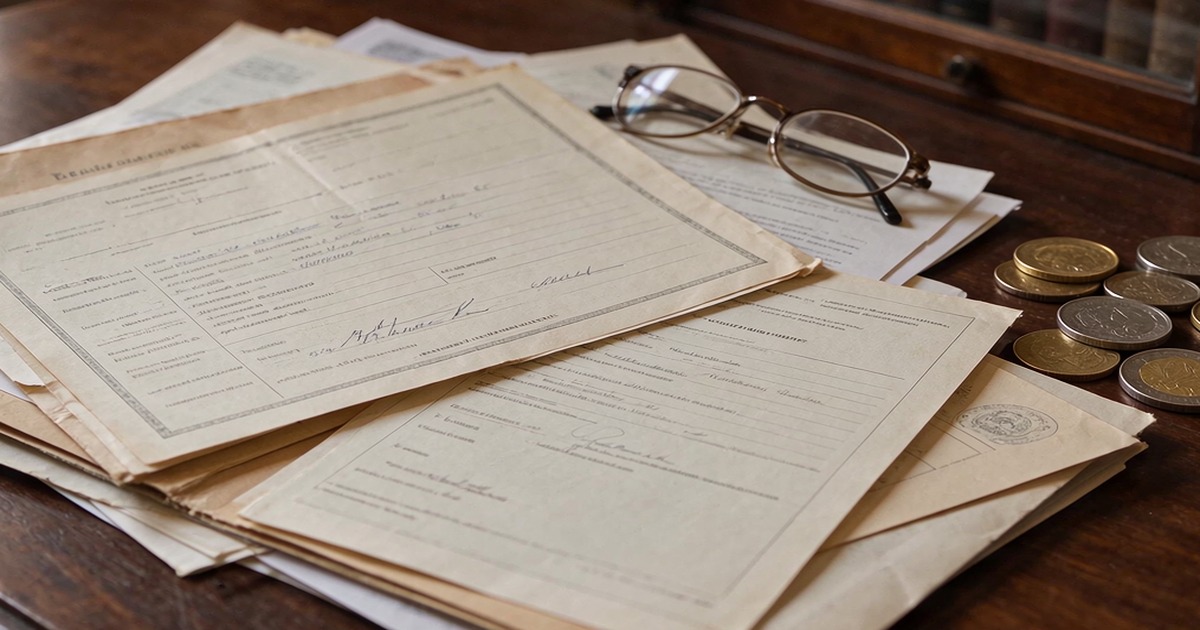
Before drawing any conclusions, collect three documents for every link in the chain: a birth certificate, the parents’ marriage certificate, and proof that the ancestor was an Austrian citizen on the day the descendant was born. The full paperwork checklist lives in our article on documents for a citizenship application.
Being Born in Austria Does Not Grant Citizenship
Contrary to a widespread belief, Austria has no right of the soil (ius soli). A child born in Vienna to citizens of Russia, Kazakhstan or the USA stays a foreigner. Only blood counts: at least one parent must have been an Austrian citizen on the day of birth.
The law holds just two narrow exceptions:
- Foundlings: a child under six months found on Austrian territory is presumed to be a citizen until proven otherwise (§8 StbG).
- Statelessness rescue: a child born in Austria would otherwise become stateless, so the child receives the Austrian passport (§7 para 3).
Rules for children deserve their own deep dive, and we have one: Austrian citizenship for children covers birth registration, adoption and joint naturalization with parents. For couples where one partner is Austrian, the practical takeaway is simple: the child gets the passport automatically, no matter where the birth happens.
Restoration Under §58c: Descendants of Nazi Victims
The third path is unique to Austria: a declaration instead of naturalization. Under §58c StbG, people whose ancestors fled Nazi persecution acquire citizenship with a simple written declaration (Anzeige). No residence in Austria is required and no German test exists.
The rule covers descendants of people who left Austria before 15 May 1955, with their main residence in Austria at the time, to escape persecution by the NSDAP or the German Reich. It also covers ancestors deported before 9 May 1945 and those who died from persecution as Austrian citizens. Descendants in the direct line - children, grandchildren, great-grandchildren and beyond - file their own declaration, regardless of generation.
What makes this path unusually soft:
- The procedure is free: the declaration, the decision and all documents in the file carry no fees (§58c para 9).
- Dual citizenship is allowed: there is no obligation to give up your current passport.
- You can file from abroad: an Austrian embassy or consulate accepts the declaration (§58c para 8) and forwards it; a large share of cases runs through Vienna’s MA 35 magistrate office.
- The ancestor is not re-examined: the authorities skip re-checking the ancestor’s own requirements; you only prove the family link with documents.
One limit sits in §58c para 5: the rule does not apply to people who knowingly lost their Austrian citizenship by acquiring a foreign one. Someone who was Austrian at birth and then naturalized abroad falls outside §58c. But someone who never knew about their Austrian origin keeps the right to declare.
A detailed English-language walkthrough for US applicants is published by the Austrian consulate in Los Angeles, and the law assigns the review of historical circumstances to the National Fund for victims of National Socialism. Expect processing to run one to three years, depending on how complete your archival documents are.
Naturalization: 10 Years of Residence and the Income Test
For everyone without Austrian roots, naturalization applies: the baseline requirement is 10 years of lawful and uninterrupted residence in Austria, including at least 5 years with a settlement status. In practice the key status is Daueraufenthalt-EU, the EU long-term residence permit issued after 5 years of living in the country.
The second filter is income: under §10 para 5 you must prove stable earnings across 36 months out of the last 6 years, and the last 6 months must run straight into the filing date. Your income must support life without social assistance and match the average ASVG reference rates of the last three years. Even one month on Sozialhilfe breaks the “secure livelihood” chain.
The third filter is language and the exam: German at B1 level plus knowledge of Austria’s democratic order and history (§10a StbG). Graduates of Austrian schools are exempt from certificates. Our step-by-step citizenship application guide walks through the whole route, and our residence permits overview explains which permit starts the clock.
On money: total naturalization costs without a lawyer usually land between €800 and €1,800, including fees, translations and renunciation of the old passport. The item-by-item breakdown is in our article on the cost of Austrian citizenship.

Fast-Track Naturalization in Six Years
Ten years is not a life sentence: the law cuts the period to 6 years for several groups. Under §11a StbG, spouses of Austrian citizens qualify after 6 years of residence if the marriage has lasted 5 years and the family shares one home. The same 6-year window opens for EU citizens, people born in Austria and holders of extraordinary achievements in science, business, culture or sport.
The second acceleration mechanism trades integration for tenure. Passing German at B2 level instead of B1 shortens the wait to 6 years. An alternative to B2 is three years of sustained volunteering in a nonprofit, three years working in the social sector, or three years on the board of a professional association. Recognized refugees reach citizenship after 10 years of residence under §11a para 7.
For spouses the route runs through residence after marriage, which opens the fast track. And for the history and values exam, our article on the Austrian citizenship test has real questions and a preparation strategy.
Dual Citizenship: When Austria Allows Two Passports
The general rule is harsh: at naturalization Austria requires you to renounce your previous citizenship, and a voluntarily taken second passport triggers automatic loss of the Austrian one under §27 StbG. This principle of avoiding multiple citizenship (Vermeidung der Mehrstaatigkeit) contrasts sharply with Germany, where dual citizenship at naturalization has been allowed since June 2024.
Automatic dual citizenship at birth is legal and never taken away. A child of an Austrian mother born in the USA holds two passports from day one: the American one by soil, the Austrian one by blood. This double status lasts a lifetime without any declarations. Every case is mapped in our article on dual citizenship in Austria.
The exception list at naturalization is short:
- EU and EEA citizens may keep their previous passport when naturalizing in Austria.
- §58c applicants never have to renounce anything - it is built into the procedure.
- A retention permit (Beibehaltungsgenehmigung) is granted when renunciation is legally impossible or means disproportionate hardship - for example, when the home country has no exit procedure.
- Renunciation is waived when the country of origin simply does not allow exit from citizenship.
The grey zone between the rule and the exceptions is wide, and we map it in a separate breakdown. Russian-speaking applicants should also read our piece on Austrian citizenship for Russians, which covers exit timelines from Russian citizenship and practical pitfalls.

Documents That Prove Your Descent
The paperwork follows one principle: every link in the chain is proven by its own pair of documents. For the ancestor you need an Austrian document: a Staatsbürgerschaftsnachweis, an old passport, a Heimatschein (proof of belonging to a home community) or an extract from the citizenship register. If no such papers survive, Austrian archives can be queried through the authorities and parish registers.
For every later generation you add a birth certificate and the parents’ marriage certificate. All foreign documents require an apostille and a sworn translation (gerichtlich beeidete Übersetzung) into German. Austrian authorities consistently report expired apostilles and incomplete translations as the number one reason cases stall for months.
Where you file depends on where you live: inside Austria at the Vienna magistrate (MA 35) or the district administration (Bezirkshauptmannschaft); outside Austria at an Austrian embassy or consulate, which forwards the file. The BMEIA guidance on birth abroad explains the consular registration, which usually takes 2-4 months.
Citizenship by descent is the only route into an Austrian passport that starts not with a form but with a family archive. Half of all successful cases are won not in the legal field but in the hunt for the right certificates.
- Mag. Katharina Hofmann, migration lawyer, Vienna
What to Do When the Chain Is Broken
If your ancestor naturalized abroad before the next generation was born, the descent door is closed - but the passport route is not. Option one is classic naturalization: move to Austria, secure a residence permit, count out 10 years and file like everyone else. Slow, but it follows fixed rules.
Option two is the fast track: marrying an Austrian cuts the wait to 6 years, and B2 German or three years of volunteering saves another four years off the baseline. Option three is checking whether your family falls under §58c: if your roots reach people who left Austria before 1955 because of Nazi persecution, a chain broken by naturalization does not matter - a descendant still files the declaration.
The fourth option works in the future: a child born to you after you become an Austrian citizen receives Austrian citizenship by descent automatically. Your own path to the passport simultaneously builds your child’s. One naturalization in a family permanently changes the civic status of every generation after it.
Frequently Asked Questions
How do I know whether I already hold Austrian citizenship by descent?
Ask one question: was your mother or father an Austrian citizen on the day you were born? If yes, you are Austrian under §7 StbG, even if you have never visited the country. What remains is to obtain a Staatsbürgerschaftsnachweis through an embassy or your local authority. Collect your birth certificate, your parent’s birth certificate and proof of their Austrian citizenship.
Does an Austrian father pass citizenship if the parents were not married?
Yes, but only if paternity is legally established: through the father’s acknowledgement or a court ruling. If the acknowledgement is filed within 8 weeks of birth, citizenship counts from the date of birth. Children born before 1 September 1983 fall under transitional rules and often have a declaration route of their own.
Can I get Austrian citizenship through a great-grandparent?
Only through a §58c declaration, if your great-grandparent left Austria because of Nazi persecution before 15 May 1955. Ordinary blood transmission across two or more generations works only if citizenship stayed unbroken at every link. If the great-grandparent naturalized abroad before your grandparent was born, the chain snapped and the classic ground is gone.
Do I have to renounce my citizenship when naturalizing in Austria?
Usually yes: Austria requires you to exit your previous citizenship, and a voluntarily kept second passport means automatic loss of the Austrian one. The exceptions are EU citizens, §58c applicants, cases where renunciation is legally impossible, and Beibehaltungsgenehmigung permits. The order is always the same: permit or renunciation first, Austrian passport after.
What to Do Next: Your Checklist
Austrian citizenship by descent is the cheapest and fastest route, but it rewards those who collect documents before drawing conclusions. Your plan:
- Find the broken link: in which generation did the ancestor stop being Austrian, and when was the next family member born
- Order birth and marriage certificates for every link, add apostilles and sworn translations
- If your roots reach before 1955, evaluate §58c - it is free and requires no residence
- If there is no chain, map the naturalization route: Daueraufenthalt-EU status, 36 months of income, German B1
- Subscribe to our newsletter - we track every StbG amendment and explain each change in plain English
An Austrian passport obtained through blood stays with you for life and passes on to your children. The strongest move today is not an application but the family archive: one recovered record can change the citizenship status of three generations at once.
Stay Up to Date with the Latest Austrian News
The week's top stories - news, guides, and insights about life in Austria. Every Sunday in your inbox.