No ATM in Town: Where Cash Is Getting Hard to Find in Austria
No ATM in Town: Where Cash Is Getting Hard to Find in Austria Hundreds of Austrian municipalities have no ATM. Where cash is getting hard to find, why the OeNB is installing new machines and what it means for you Topics: News, Economy, Politics.
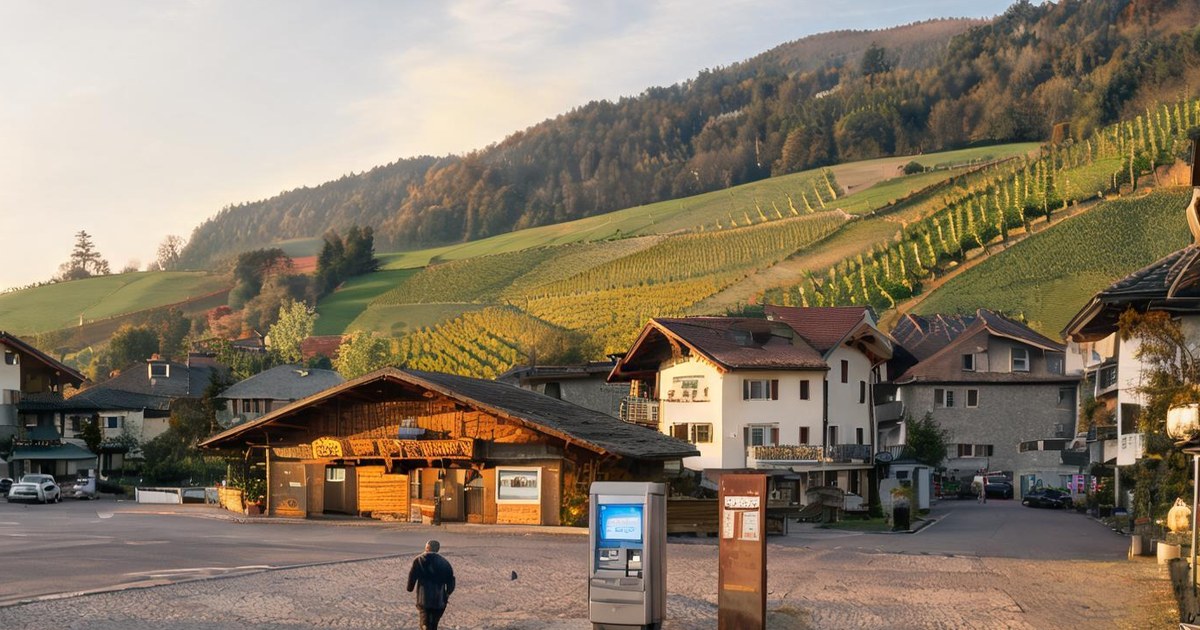
Austria remains one of the most cash-loving countries in Europe, yet access to banknotes is no longer guaranteed by address alone. 15% of Austrian municipalities have no Bankomat (the Austrian word for ATM) at all — extrapolated to the country’s 2092 municipalities, that means more than 200 villages without a cash machine. Small alpine villages, older residents and tourists heading to markets and mountain huts are hit hardest. The good news: compared with other EU countries, Austria’s ATM network still looks excellent. Here is where cash has become scarce, what the OeNB (Austrian National Bank) is doing about it, and how to withdraw money even without an ATM in your municipality.
Hundreds of Austrian municipalities have no ATM: what the study shows
More than 200 Austrian municipalities have no local access to cash: 15% of surveyed municipal representatives reported not a single ATM in their village. Trend researcher Harald Pitters conducted the study on behalf of Geldservice Austria, the association responsible for cash circulation; Die Presse published the results in September 2026. Around 200 representatives were surveyed, with a focus on small villages — large enough, the author says, to draw conclusions for the whole country.
The numbers show the scale of the problem. 23% of representatives consider their municipality undersupplied with cash machines. Another 57% describe bank branch closures as “problematic”, and more than a third of municipalities have no bank branch at all. The Austrian Association of Municipalities (Gemeindebund) points out that neighbouring villages often share a single machine, so a second ATM in the backcountry rarely makes sense.
Still, Gemeindebund president Johannes Pressl calls Austria’s position “good” by international standards — little comfort for a village with no machine. Pressl reminds that cash is the “lubricant of the economy” for weekly markets, village festivals and small businesses.
Why cash is still the main way to pay in Austria
More than half of all transactions in Austria are still made with banknotes — a rarity in Western Europe. According to the OeNB, even among 16–29-year-olds about 70% pay with cash regularly. Cultural context matters: markets, Heuriger taverns (seasonal wine taverns run by winemakers), alpine huts and village festivals still run on banknotes.
Municipal attitudes towards cash are revealing. 65% of representatives associate cash with the future, only 35% with the past. And 93% associate it with security, versus just 7% with risk. Almost 87% back a law obliging retailers to accept cash; we explain how the EU enshrines the right to cash alongside the digital euro.
It is not cash but rather the card that is an outdated model. Young people increasingly pay by phone, smartwatch or ring, yet the share of cash payments among the young is still very high.
— Matthias Schroth, Head of the Cash Division, Austrian National Bank (OeNB)
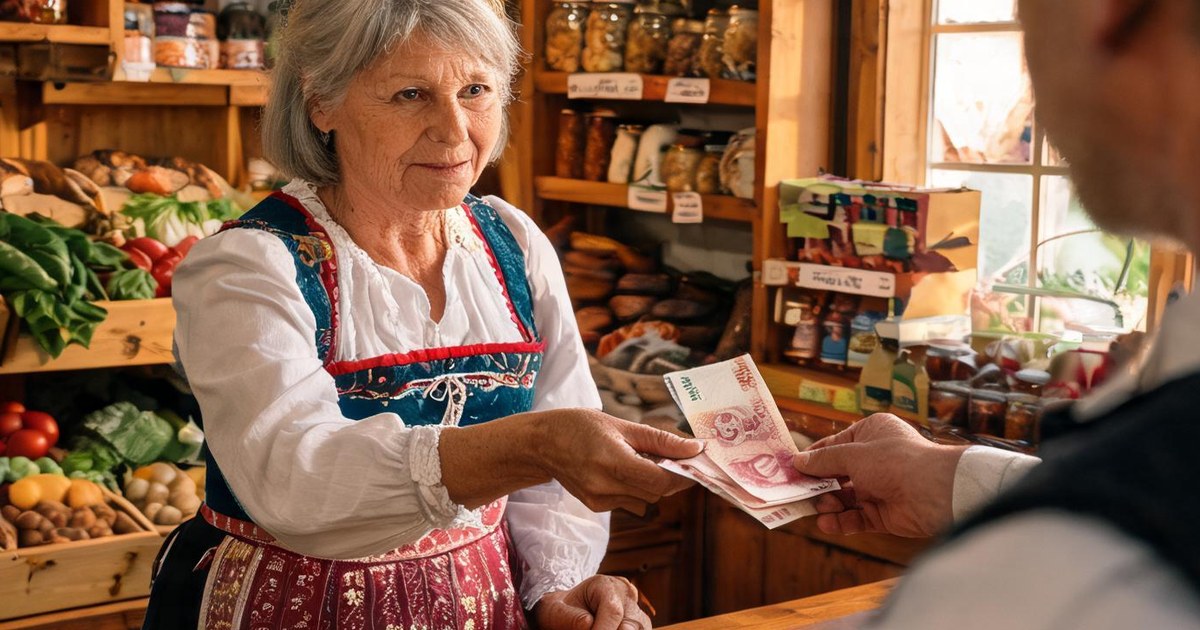
What the OeNB is doing: 120 new ATMs for rural areas
Since 2024, the Austrian National Bank has been installing up to 120 new ATMs in areas with weak coverage. More than 70 are already in operation, and all planned machines should be up by the end of the year. Austria currently counts more than 8300 cash machines — a dense network by European standards.
The contrast with neighbours shows why this matters. According to OeNB director Matthias Schroth, Belgium cut its network from 8000 machines to 4000 within a few years. And access to money is fragile even when machines exist: in October 2026 a major IT outage hit Austrian banks, knocking cards and online banking offline at around 30 institutions overnight.
For people who keep reserves off their accounts, cash policy is not abstract either: many Austrians classically store valuables at home, and our guide on gold-selling rules shows how alive this habit remains.
The Swedish lesson: what happens when ATMs disappear
Sweden is the only European country where cash has truly retreated: most transactions there run on cards and apps. A 2023 survey by the Swedish central bank (Riksbank) recorded the downside: 44% of Swedes regret that cash has almost disappeared.
Another telling figure: half of respondents had wanted to pay with banknotes but the shop accepted only cards. That is why Matthias Schroth puts it bluntly: freedom of payment choice in Sweden “no longer exists”. Austrian municipal leaders want to avoid this scenario and insist on legal protection for cash.
How to withdraw cash when your municipality has no ATM
There are three main ways to get cash without an ATM in Austria. First, Auszahlung an der Kasse (withdrawal at the checkout): major chains like Billa, Spar and Hofer hand out cash when you pay with a Bankomatkarte (debit card) — just ask at the till. Second, post offices and bank branches in small towns still serve clients, though branches keep closing.
Third, plan ahead: before heading to an alpine village, a festival or a hiking route with mountain huts, withdraw money in the city. Tourists should remember that markets, family taverns and village parking often do not accept cards at all.
Older residents without a nearby machine are hit hardest — they pay in cash most often. ATMs and supermarket checkouts also attract fraudsters, so refresh your knowledge of how Austria prosecutes fraud and how to stay safe. If you help elderly relatives manage finances, our article on the 13th pension payment and nursing home costs is a useful read.
Frequently Asked Questions
How many Austrian municipalities have no ATM at all?
More than 200 of 2092 municipalities — roughly one in ten. It follows from the Geldservice Austria survey, in which 15% of municipal representatives said their village has no cash machine.
Can I withdraw cash at a supermarket in Austria?
Yes. Many chains (Billa, Spar, Hofer) offer Auszahlung an der Kasse — cash withdrawal at the checkout when paying with a debit Bankomatkarte. This is the easiest workaround for residents of villages without an ATM.
Why is Austria so attached to cash?
More than half of transactions are made in banknotes: the tradition of markets and taverns, cultural trust in cash (93% of municipal representatives associate it with security) and recent digital service outages all play a role.
What happens to ATMs next?
The OeNB is installing up to 120 new machines in underserved areas, while the EU enshrines the right to cash at the legislative level. The digital euro, planned from 2029, is designed to complement banknotes, not replace them.
Conclusion: cash is staying in Austria, but you may need to travel for it
By European standards Austria is well supplied with cash: 8300+ ATMs, more than 70 new OeNB machines and EU-level legal protection for banknotes. But for 200+ municipalities without an ATM, access to money has become a logistics task.
A short checklist:
- Check whether your municipality has an ATM and learn the nearest alternatives.
- Use cash withdrawal at supermarket checkouts with your Bankomatkarte.
- Withdraw cash in advance before trips to villages, markets and mountains.
- Help elderly relatives plan their pension withdrawals.
Want Austrian finance news explained without the German? Subscribe to our newsletter — a weekly digest in plain language.
Stay Up to Date with the Latest Austrian News
The week's top stories — news, guides, and insights about life in Austria. Every Sunday in your inbox.