The World's Largest Outdoor Drone Laboratory Is in Klagenfurt
The World's Largest Outdoor Drone Laboratory Is in Klagenfurt The world's largest outdoor drone laboratory is in Klagenfurt: the Outdoor Drone Space Austria at the University of Klagenfurt. Why the 1,000 m² open-air Topics: News, Technology.
The University of Klagenfurt has reached a new milestone: its outdoor drone laboratory is now considered the largest in the world. Inside an arena with 1,000 square meters of floor space and 15 meters of height, autonomous drones learn to cope with wind, rain and fog. The research group “Control of Networked Systems” tests taxi routes, greenhouse monitoring and bridge maintenance here. This article explains what makes the Outdoor Drone Space Austria unique, how the technology works in detail and which applications lie ahead.
What Is the Outdoor Drone Space Austria (ODSA)?
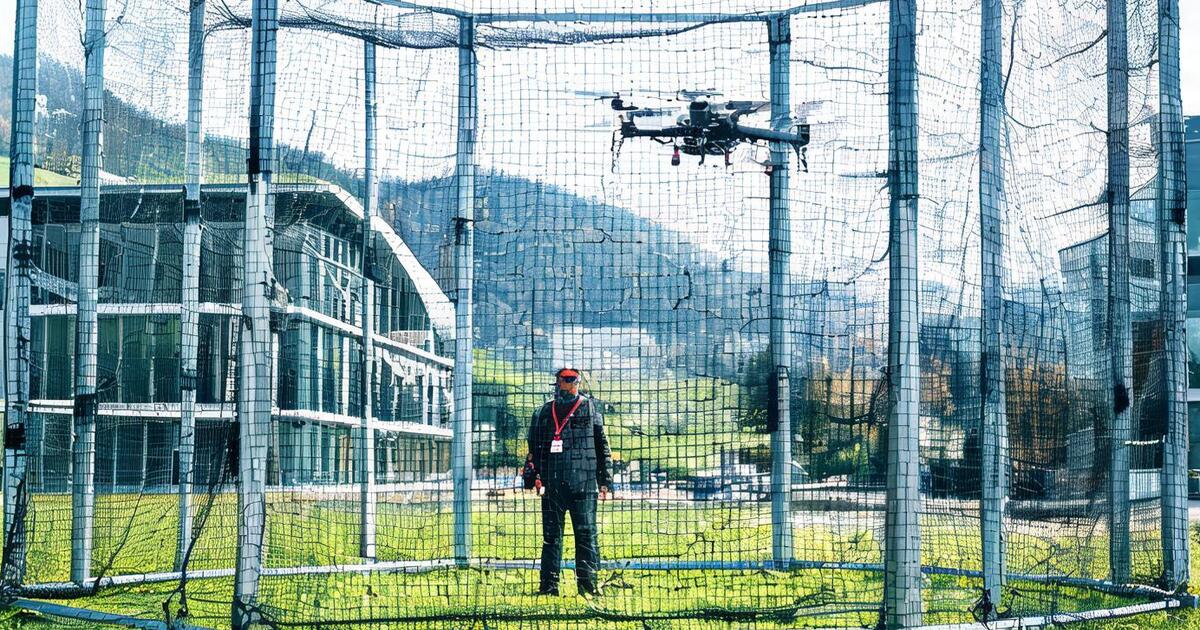
The Outdoor Drone Space Austria (ODSA) is an open-air arena at the Lakeside Science & Technology Park on the western edge of Klagenfurt. The structure resembles a giant cage: 15-meter steel pillars, wrapped on the sides and above with a coarse-meshed net, enclose a rectangular meadow of 1,000 square meters.
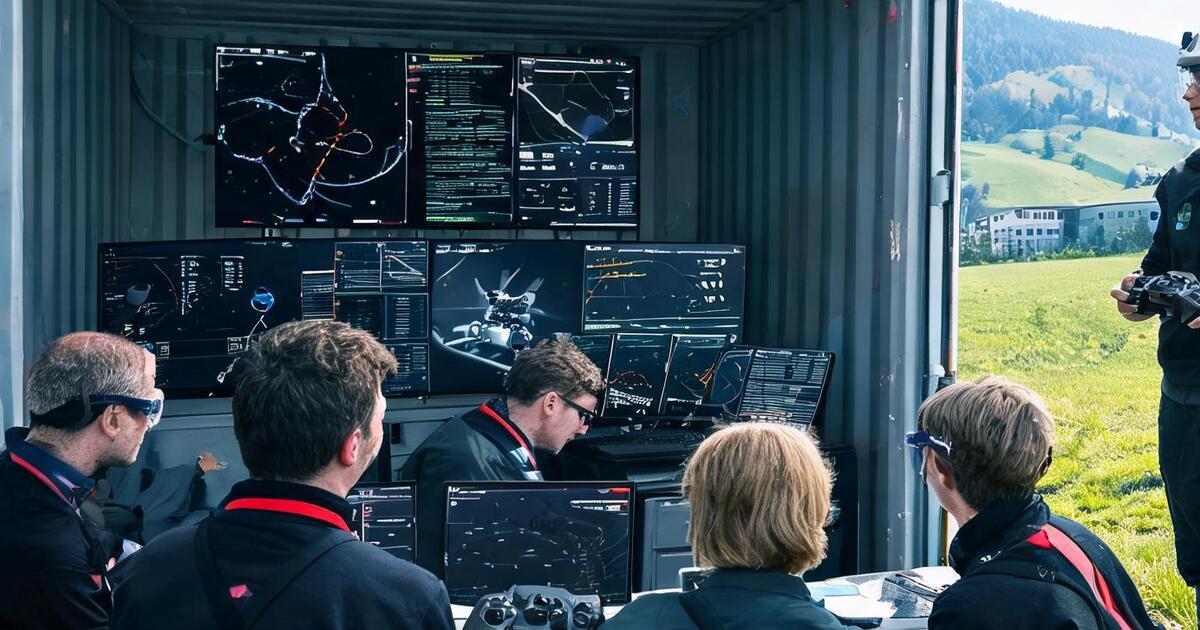
At the center stands an unremarkable grey container that serves as “Mission Control”: a powerful server, workstations with screens and a small prop storage for flight operations. The researchers simply call the facility “Arena”. According to the university, the setup is a pioneering project: drones can be tested under real outdoor conditions without being subject to airspace regulations.
The university’s hall, opened in 2019, was previously the largest drone hall in Europe. With the completion of the ODSA, Klagenfurt now claims a new record: the world’s largest outdoor drone laboratory. As the University of Klagenfurt reports in its blog, the research here focuses on autonomous multi-drone systems.
Indoor Hall: 37 Sensors and Millimetre-Precision Tracking
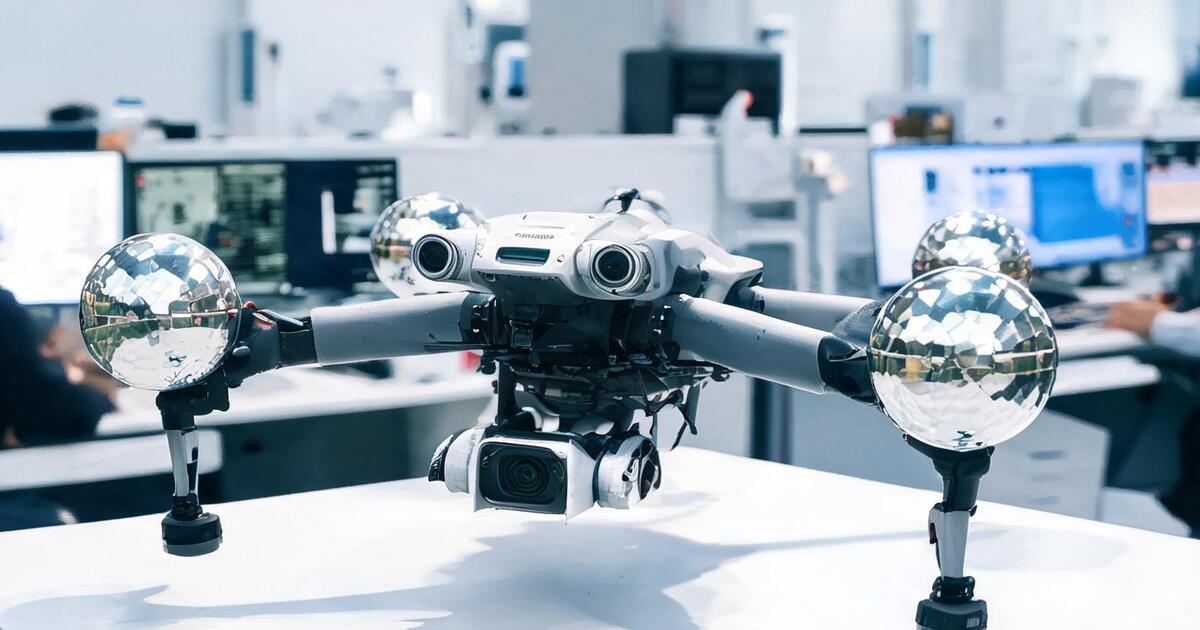
In addition to the open-air arena, the research group uses an indoor hall of 150 square meters. A total of 37 sensors are mounted on all four walls, registering even the slightest movements of the drones. The system uses infrared LEDs and small spherical reflectors on the drone body.
The position is calculated 60 times per second — with an accuracy of under one millimetre and under one degree. This precision is crucial because the control algorithms learn from every flight. As Die Presse describes, the hall can be combined with the open-air arena, seamlessly expanding the range of tests.
Cable Robot: Safety Instead of a Simulator
A special feature of the laboratory is the cable robot with four winches. The drone can be suspended in it and, in case of a miscalculation, does not crash — it is caught like a climber by a safety rope. “That way we don’t need a simulator,” says Stephan Weiss, head of the research group.
This minimises cost risk and maximises development speed. Safety measures are strict: the pilot wears a protective helmet and goggles, and the tables with computers and tools are separated from the flight area by a tall metal grid. Drone research at the University of Klagenfurt has been running since 2008 — the researchers are internationally regarded as leaders in estimating drone position in space.
Open-Air Arena: Testing in Wind, Rain and Fog
We work with sun, fog, wind, cold or rain just like on real outdoor missions.
— Stephan Weiss, head of the research group “Control of Networked Systems”
The decisive advantage of the open-air arena is the realistic environment. “Because for many of our use cases we assume that the drones will be deployed outdoors — in forests or disaster areas — it is important that we can work with the usual influences of wind, cold, solar radiation, heat, fog, rain, etc.”, explains Stephan Weiss. This combination of precision tracking and outdoor freedom makes the site unique worldwide, according to the Austrian research infrastructure database.
The Lakeside Park provides ideal conditions: next to the university’s research units, 60 companies are based here — from industrial branch offices to technology startups. Directly next to the drone hall is a unit of the research society Joanneum Research, whose tracking systems can be coupled. The share of third-party funding in the research stands at 70 percent.
Swarm Intelligence: Multiple Drones Flying Together
The group focuses on developing multi-drone systems in which several drones navigate autonomously, coordinate themselves and exchange data. “Drones are the king discipline of robotic platforms,” describes Thomas Jantos, postdoc in the group, the complexity of the task.
The self-built drones weigh around 6.5 kilograms and reach a flight speed of about twelve metres per second. The scientific goal: drone swarms that, similar to a flock of birds, complete tasks without central programming. This requires drones that build a picture of their surroundings via cameras and can orient themselves without GPS.
Second Place at the International Competition in Delft
The infrastructure also serves as a training ground for students. A team around Jakob Schmidinger recently won second place at the international competition at Delft University (Netherlands). The task: programming an accident scenario — the drones had to independently determine the severity of injuries of the victims, autonomously pick up supply packages and prioritise their flights.
The necessary sensors pushed the drone’s weight to 7.5 kilograms. “Every gram influences the flight duration,” explains Martin Scheiber. For all its gamification approach, this is serious science: the Klagenfurt researchers are considered internationally leading in calculating drone positions. Stephan Weiss, a Swiss native with research experience at ETH Zurich, highlights the cooperative working atmosphere in Carinthia.
Applications: From Greenhouses to Dams
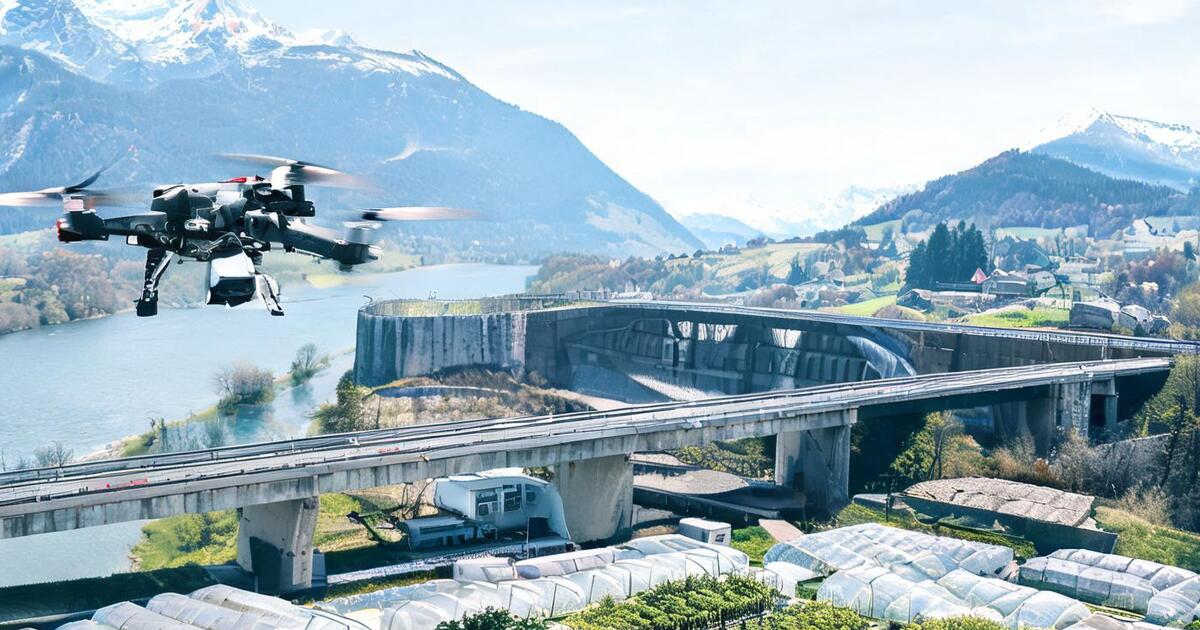
The application fields of the developed technologies are broad: robotaxis and delivery services, inspection flights at dams or bridges, monitoring in forests and vineyards, and maintenance work in shipping, where huge vessels are checked by drones even underwater. Greenhouse flights are also planned to determine the ripeness of small tomatoes.
“Using artificial intelligence, the drones will autonomously create analyses and take necessary measures,” outlines Thomas Jantos the approach of his project, funded by the Christian Doppler Society and running until 2028. Stephan Weiss already has the next task in view: state-estimation methods between drones and a boat on the water — a possible application area lies practically on the doorstep, Lake Wörthersee.
The development of drone research in Klagenfurt shows how Austria is strengthening its position in autonomous robotics. For expats and professionals, this project signals that Austria’s technology sector offers open doors — from research positions to startups. Learn more about the tech scene in our article on AI pressure on Austrian startups or about studying in Austria. The future of drones is being written in Carinthia — in the world’s largest outdoor drone laboratory.
Frequently Asked Questions
Where is the world’s largest outdoor drone laboratory located?
The outdoor drone laboratory is located in Klagenfurt at the Lakeside Science & Technology Park. The Outdoor Drone Space Austria (ODSA) of the University of Klagenfurt is considered the world’s largest with 1,000 square metres of floor space.
What can be tested in the open-air arena?
Autonomous drones can be tested under real conditions in the arena — with wind, rain, fog, cold and heat. Taxi routes, greenhouse monitoring, bridge maintenance and disaster-area missions are practised without being subject to airspace regulations.
How precise is the drone tracking system?
In the indoor hall, 37 sensors calculate the drone’s position 60 times per second with an accuracy of under one millimetre and under one degree. A cable robot with four winches catches the drone in case of miscalculation.
How long has the University of Klagenfurt been researching drones?
Drone research at the University of Klagenfurt has been running since 2008. The indoor hall opened in 2019; the ODSA open-air arena has been in operation since autumn 2025.
Conclusion: Carinthia Writes Drone History
The world’s largest outdoor drone laboratory in Klagenfurt is more than an attraction: it is international top-level research in the open air. The combination of a 37-sensor indoor hall, a cable robot and a 1,000-square-metre open-air arena is unique worldwide. For immigrants and skilled workers, this project shows that Austria’s technology sector has open doors — from research careers to startups. For regular updates on living and working in Austria, subscribe to our newsletter.
Stay Up to Date with the Latest Austrian News
The week's top stories — news, guides, and insights about life in Austria. Every Sunday in your inbox.