
Property management sues tenant 20 years after his death: family in Graz desperate
Property management sues tenant 20 years after his death: family in Graz desperate Property management sues tenant 20 years after death: a Graz family paid rent flawlessly for two decades — now the lawsuit names the father who died in 2004. Topics: News, Housing, Economy.
Being sued is stressful enough — but imagine the lawsuit naming your father, who died more than two decades ago. That is the absurd reality facing a family in Graz, as reported by Kronen Zeitung. The son and his mother have lived in a rented 60 m² flat near the Griesplatz for about 30 years, never missing a payment. When the property management (Hausverwaltung — the professionally organized administration of an apartment building) raised the rent from 700 to 1100 euros in January 2026 and the family objected, the reply stunned them: a lawsuit — against the man who died in 2004. Here is how the case unfolded, what Austrian law says about rent increases, how a tenancy survives the death of the tenant, and what to do if this happens to you.
How a Graz family ended up in a legal trap
The story began roughly 30 years ago, when Burak K.’s parents moved into a privately rented flat near the Griesplatz. The tenancy agreement was signed by the father. When he died in 2004, his mother simply carried on living there and kept paying the rent.
For two decades there was, as Krone stresses, not a single missed payment. The relationship with the property management felt calm and predictable — until January 2026.
That month a letter arrived: the rent would rise from 700 euros to roughly 1100 euros a month. An increase of almost 60 percent would have hit the pensioner hard. The family filed a written objection — and then received court papers in which the deceased father was listed as the defendant.
Why the rent jumped from 700 to 1100 euros
Whether an increase of this size is even legal is decided in Austria primarily by the MRG (Mietrechtsgesetz — the tenancy rights act). In old buildings under its full application, rent increases are strictly capped: a landlord may raise the rent at most to the statutory benchmark level (Richtwert — the reference rate for location and quality) plus agreed cost contributions. A sudden jump of almost 400 euros is contestable in such buildings.
The Mieterhilfe advisory service regularly warns that many tenants do not know their rights and simply swallow inflated demands. The organisation recently launched an online rent-increase calculator that lets tenants check the landlord’s math before signing anything.
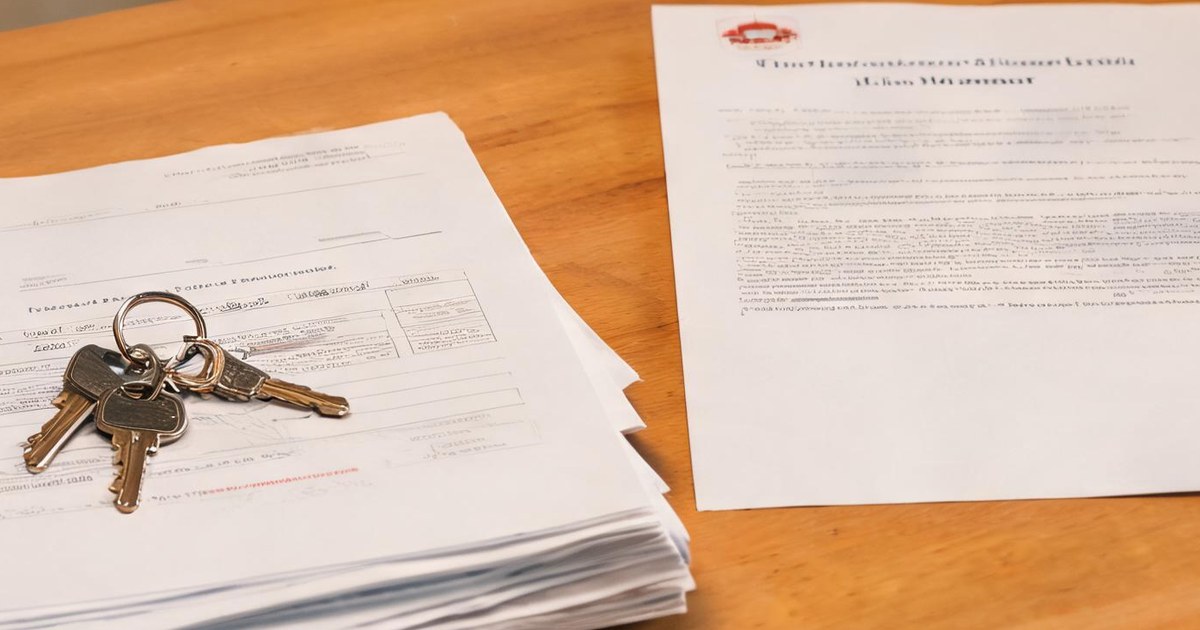
After the property management drastically increased the costs for a flat in Graz, the family filed an objection. Now the deceased father is supposed to appear before the court!
— Kronen Zeitung, from its report on the Graz case
Can a property management sue a deceased person
Legally, no. A claim must be brought against a living person or against the Verlassenschaft (the estate — the deceased’s assets until the heirs take over). Austria’s judiciary explains in its overview of inheritance law that the rights and obligations of a deceased person pass into the estate proceedings, represented by the estate itself or its administrator — never by the dead person personally.
A lawsuit aimed at someone who died 20 years ago cannot stand. The Graz case has a second twist: as Krone reports, the mother had acted as the de facto tenant for twenty years — paying, receiving correspondence and getting the increase letters. The property management effectively recognized her as the tenant for two decades, yet named the long-dead original tenant in its claim.
For the family this means stress and deadlines. Every letter from the court demands a response — even if the naming looks nonsensical, the correction must be requested in writing.
Who owes a tenant’s obligations after death
Heirs are liable for the deceased’s obligations, but with two important limits. First, only up to the value of the estate: heirs’ own savings are off-limits for the deceased’s debts. Second, an inheritance can be declined outright — Austrian law allows 6 weeks to renounce (Erbenverzicht — renunciation of the inheritance). We explain the mechanics in our guides on renouncing an inheritance in Austria and on inheritance in Austria.
In the Graz story, though, no debts are involved at all: according to Krone, the rent was always paid on time. The dispute is purely about the legality of the new rent level. That distinction matters — heir liability is not the point here; the rules on rent increases are.
After a tenant dies, the tenancy usually continues: close relatives who shared the household have the right to step into the contract (Eintrittsrecht under § 14 of the MRG). The Graz mother has effectively held that position for twenty years — just without formally renewed paperwork.

What tenants should do about a rent increase or lawsuit
First, never sign consent to an increase straight away. Check whether the building falls under the full application of the MRG — for pre-1945 buildings and most old stock, the limits are tight. Ask the property management for a written calculation: benchmark, criteria and legal basis.
Second, object in writing and get advice at the same time. In Vienna that is Mieterhilfe, in Styria the Mieterschutz Steiermark, nationwide the Arbeiterkammer. The Graz case shows that even two decades of flawless payments do not protect you from paperwork errors — so tenants need to keep their own paper trail.
Third, never ignore court mail. Response deadlines are short, and missing one is the worst possible outcome. If the papers contain an error — for example, a deceased person named as defendant — document it in writing and demand a correction. Our guides on rental scams in Austria and renting a flat in Austria cover the basics.

Frequently Asked Questions
Can anyone file a lawsuit against a person who has died? No. The defendant must be a living person or the estate (Verlassenschaft). A claim directed at a deceased person breaches procedural rules — it must be redirected to the estate or the heirs.
Does the tenancy continue for the family after the tenant dies? Yes. Close relatives from the same household may step into the contract under § 14 MRG. The Graz mother’s twenty years of payments strongly support a continued tenancy.
What should I do if the rent jumps from 700 to 1100 euros? Do not consent, request a written calculation and check it with the Mieterhilfe calculator or an AK consultation. If the MRG fully applies, an excessive increase can be contested.
Do heirs have to pay the tenant’s debts? Only out of the estate’s assets. If the inheritance is renounced within 6 weeks, no obligations arise.
What this case means for tenants in Austria
A property management that sues a tenant 20 years after his death shows how quickly yesterday’s files become today’s problem — and the Graz family now has to untangle the paperwork. The lessons are simple.
- Keep the tenancy agreement, payment records and all correspondence for years — they are your strongest evidence.
- Measure every rent increase against the MRG before signing.
- Turn to Mieterhilfe, Mieterschutz or the Arbeiterkammer at the first sign of conflict.
- Answer court letters on time, even if the claims look absurd.
If you want to know your tenant rights before a dispute starts, subscribe to the how2austria newsletter — we explain cases like this in plain language. The Graz story proves it once again: in Austrian tenancy law, the details decide everything.
Stay Up to Date with the Latest Austrian News
The week's top stories — news, guides, and insights about life in Austria. Every Sunday in your inbox.