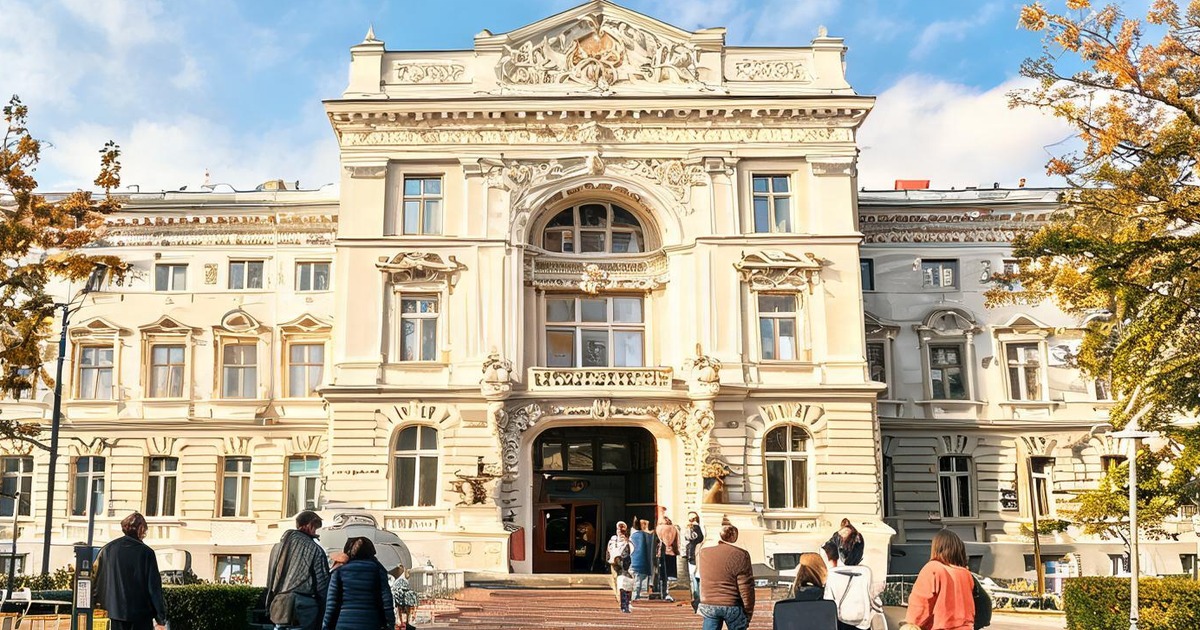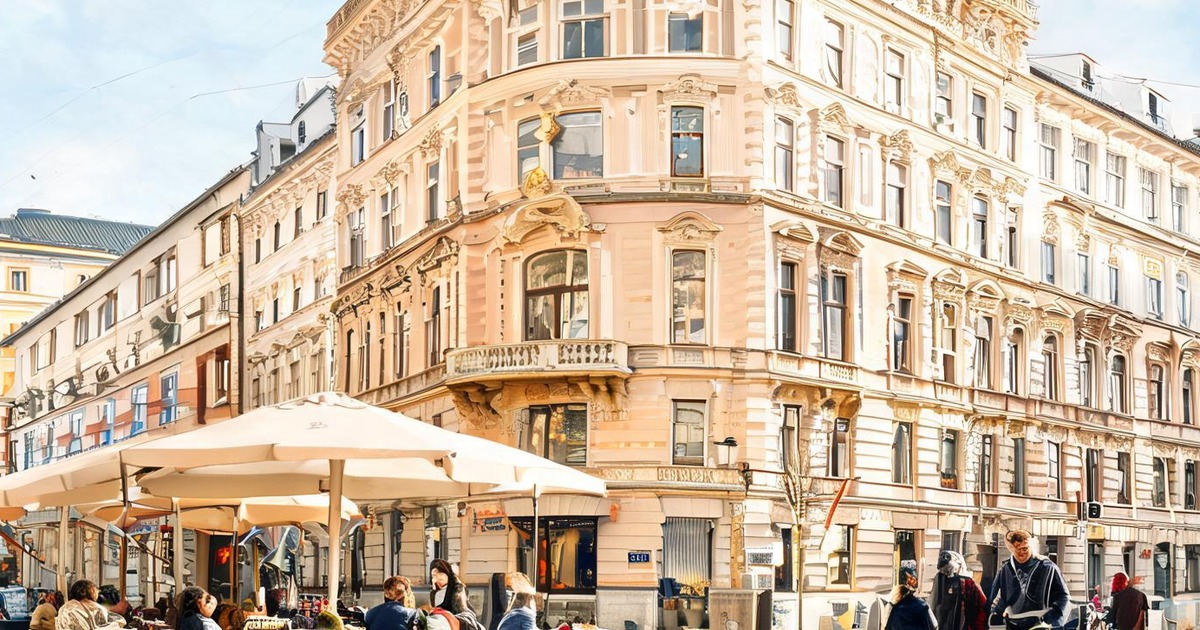
Austrian Dialect Explained: Why Hochdeutsch Fails Migrants After Language Courses Austrian dialect shocks even B2 graduates: how Hochdeutsch differs from Austrian German, dialect map, real-life examples from work and offices, and 7 strategies to understand Viennese and Tyrolean speech. Topics: Daily Life, Career & Education, Leisure & Culture.
You passed B2 at ÖIF, you speak solid Hochdeutsch — and then a colleague in Vienna drops «Oida, host des eh gmocht?» and you freeze. Around 60 % of migrants in Austria have this moment after their course. The Austrian dialect is not an accent, it is a parallel reality of the language that integration courses barely cover. This guide explains why literary German does not guarantee understanding, how the dialect map stretches from Vienna to Vorarlberg, where misunderstanding hurts most, and which 7 strategies actually help you understand Viennese and Tyrolean speech.
Why Hochdeutsch Does Not Save You in Austria
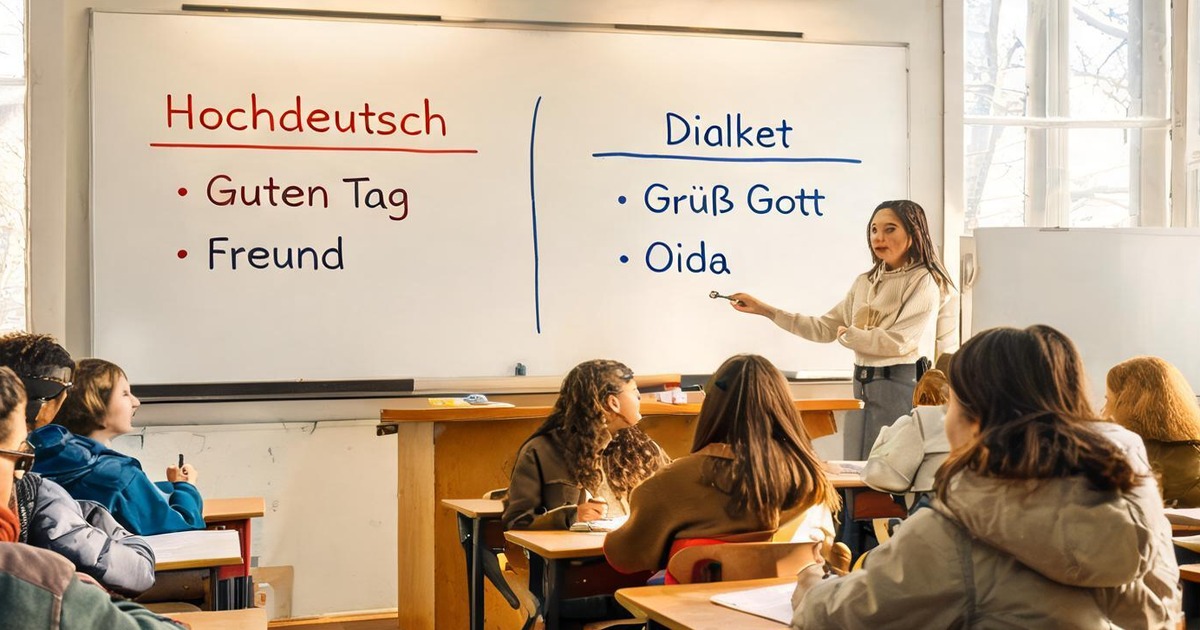
The Austrian dialect breaks the illusion that a B2 certificate closes the language chapter. Courses teach Hochdeutsch (Standard German) — the language of Berlin and of the ÖIF exam. Everyday Austria speaks Austrian German with its own vocabulary and grammar, and on top of it vivid Mundart (local dialect).
According to the Austrian Integration Fund — ÖIF, more than 38,000 people attended integration courses in 2024, 72 % passed module B1. Yet in the same annual report 61 % of graduates named «understanding spoken Austrian German in daily life» as the biggest hurdle after the course. Certificate yes, comprehension at the Billa checkout or at the parents’ evening no.
The reason is diglossia: Hochdeutsch is for documents, ORF news and school; dialect is for relationships. As ORF reports, even native Hochdeutsch speakers from Germany understand only 40–60 % of everyday speech in Tyrol or Vorarlberg without acclimatisation. For migrants who learned Hochdeutsch as a foreign language, the gap is even wider.
The consequence goes beyond small talk. Without spontaneous language you struggle to make friends — jokes, small talk, quick replies do not work at exam pace. We showed in our guide on making friends in Austria that language is the main catalyst for social integration — and dialect comprehension is the part courses overlook.
What Austrian Dialect Really Is
The Austrian dialect is not «wrong German», it is a group of Bavarian-Austrian dialects with centuries of history. Linguistics distinguishes Mundart (spoken dialect) and Austrian German as a standardised variety with its own dictionary — the Österreichisches Wörterbuch with around 12,000 Austriacisms from Grüß Gott to Jänner instead of Januar.
According to oesterreich.gv.at, the Integrationsvereinbarung (integration agreement) requires proof of A2 after two years and B1 after five years — but the test is Hochdeutsch with an Austrian colour, via ÖIF-Test and ÖSD. Dialect is not tested. That is why you can pass the exam and still not understand the plumber who says «des is eh ois dicht».
The most striking feature is sound: endings are swallowed, words merge, consonants soften. «Ich habe es nicht gewusst» becomes «I hob’s net gwusst». The word Oida does not exist in Hochdeutsch at all, yet in Vienna you hear it every 3–4 minutes among young people — as address, exclamation or filler.
Crucially, Austrians master both registers and switch depending on who they talk to. They will try to speak more clearly with you, but the more emotional or fast the situation, the deeper they slide into dialect. It is not rudeness, it is autopilot.
Dialect Map of Austria — From Vienna to Vorarlberg
The Austrian dialect sounds completely different in each state — the differences are huge. Three zones make orientation easier.
East — Viennese (Wienerisch) and Lower Austrian. Viennese is the softest: stretched «a», barely audible «r», plenty of Wiener Schmäh (sarcastic Viennese humour). You will hear «Habidere» (hi) or «leiwand» (cool) at markets and in a Beisl (traditional tavern). Acclimatisation: 3–6 months — the fastest.
Centre and south — Styrian, Carinthian, Tyrolean. Denser: «st» becomes «sch», vowels stretch. «Grüß Gott» sounds as «Griaß di», «ein bisschen» as «a bissl». According to an analysis in Der Standard, Tyrolean and Carinthian dialects preserve up to 35 % vocabulary unintelligible to Hochdeutsch speakers without preparation.
West — Vorarlberg (Vorarlbergerisch). Another world: Alemannic, closer to Swiss German than to Viennese. «Haus» becomes «Huus», «nicht» becomes «nid». As the WKO Vorarlberg notes, companies in Vorarlberg therefore more often require B2+ and dialect comprehension already in the job ad than in Vienna. Even Viennese often have to ask again in Bregenz.
| Region | Hochdeutsch | Dialect | Difficulty for migrants |
|---|---|---|---|
| Vienna | Guten Tag! Wie geht es dir? | Grüß Gott! Wie geht’s da? | low |
| Styria/Carinthia | Ich weiß nicht | I woaß net | medium |
| Tyrol | Ein bisschen | A bissl | high |
| Vorarlberg | Ich habe es nicht | I han’s nid | very high |
What ÖIF Courses Teach and Why Dialect Is Missing
The Austrian dialect is not missing by accident, it is by design. Integrationskurs and Deutschkurs in the ÖIF system follow the Common European Framework (CEFR) and the exams ÖIF-Test A2/B1 and ÖSD. The goal is neutral Hochdeutsch for Aufenthaltstitel (residence permit) and citizenship — understandable in any German-speaking country.
According to ÖIF, a B1 course comprises 300–400 teaching units of 45 minutes, 100 % of which go to grammar, reading and Hochdeutsch listening with studio speakers. Dialect appears at most as a joke by the teacher. The exam is also Hochdeutsch — clear and slow.
That creates a glass-ceiling effect: The B1 certificate qualifies for Daueraufenthalt (permanent residence) and is needed for Austrian citizenship, but it does not prepare you for the construction site where the foreman speaks Styrian. An ÖIF survey in 2024 found that 58 % of employers in construction and gastronomy expect staff to «understand Austrian colloquial speech», although the ad only says «German B1».
Bottom line: The course is the foundation — without the dialect extension the house stays unfinished. The good news: You can catch up faster and cheaper than the course itself, and you can even deduct part of the costs from tax if German is needed for work. We covered that separately.
Where Dialect Hurts Most — Work, Doctor, Authorities
The Austrian dialect does not hurt everywhere equally. Five settings are critical — misunderstanding there costs money and nerves.
1. Work. On construction sites, in restaurant kitchens or in Pflege (elderly care), teams speak dialect among themselves. «Bring ma a Kübel» instead of «Bring mir einen Eimer» (bring a bucket) can derail a task. According to WKO, 43 % of small businesses cite «lack of understanding of colloquial German» as a reason for dismissal during probation — despite a B1 certificate.
2. Kindergarten and school. In Kindergarten (preschool) teachers are strong dialect carriers. «Dein Kind braucht Hausschuhe» sounds as «Dei Kind braucht Hauspatscherl». Migrant parents miss important details, children switch to dialect themselves within 6–9 months — the gap to parents grows. We explained the school system in our guide to Pflichtschule in Austria.
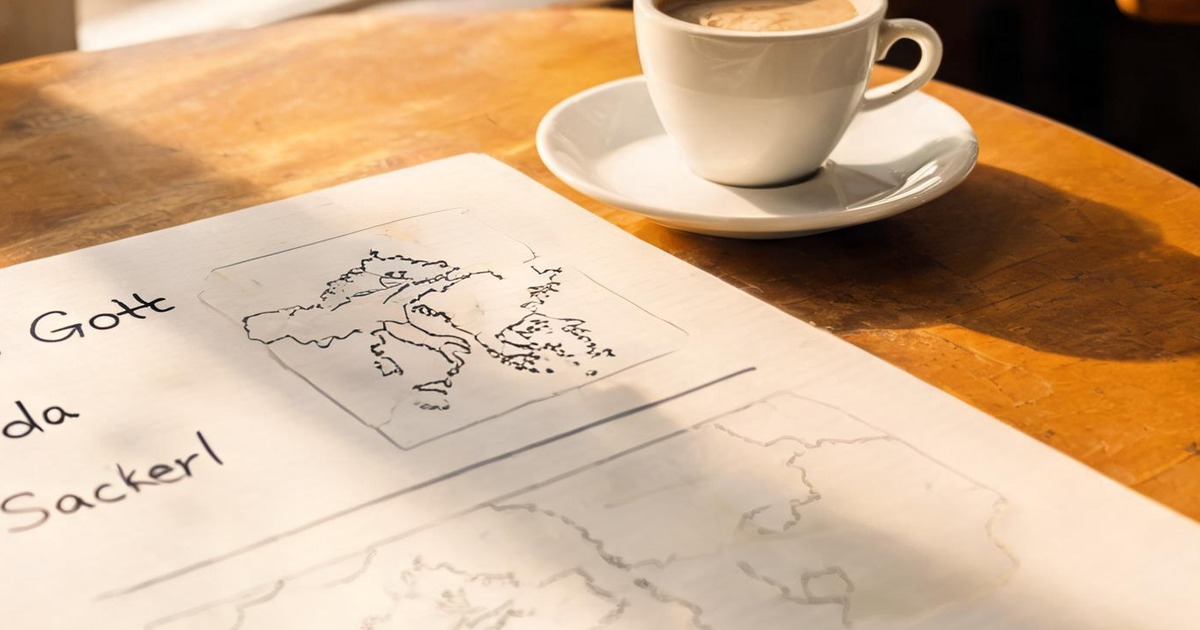
3. Doctor and pharmacy. A doctor may say «Sie haben a Verkühlung» instead of «Erkältung», a pharmacist ask «Brauchens a Sackerl?» (do you need a bag?). Under stress the brain switches worse — misunderstanding rises.
4. Authorities (Ämter). Paradox: The official at the counter tries to speak Hochdeutsch, the receptionist on the phone booking the appointment already speaks dialect. «Kommen Sie am Donnerstag um halb acht» — in Viennese «hoiba ochte» — is often misheard by migrants as «halb achtzehn».
5. Neighbours and Hausverwaltung (building management). A notice «Kehrwoche is am Freitag» or «Müll is z’entsorgen» in the stairwell is phrased dialectally. Overlook it and you get the reminder with a penalty warning.
Dialect is not decoration of the language, it is its everyday form. Those who learn only Hochdeutsch understand documents, but not people. Integration needs both registers.
— Magdalena P., ÖIF teacher and dialectologist, Vienna
Survival Vocabulary — 20 Words No Course Teaches
The Austrian dialect is fastest to crack through vocabulary. This mini-glossary dialect → Hochdeutsch → English from real life gives you an immediate 30 % boost if you actively learn 10 of them.
- Grüß Gott / Griaß di — Guten Tag — hello (south)
- Habidere / Habe die Ehre — Hallo — hi (Vienna, Styria)
- Oida — Alter — dude / man (universal address, friendly to rough)
- Hawara — Freund — buddy, mate (Viennese)
- leiwand — toll, super — cool (Vienna)
- Baba / Pfiati — Tschüss — bye (Baba Vienna, Pfiati south/west)
- Jänner / Feber — Januar / Februar — January / February
- Erdäpfel — Kartoffeln — potatoes
- Paradeiser — Tomaten — tomatoes
- Sackerl — Tüte — bag
- Hauspatschen / Patscherl — Hausschuhe — slippers
- Matura — Abitur — school leaving exam
- Kübel — Eimer — bucket
- a bissl / a bisserl — ein bisschen — a little
- i woaß net / kummt drauf an — ich weiß nicht / kommt darauf an — I don’t know / it depends
- Heast! — Hör mal! — hey, listen!
- G’spritzter — Weinschorle — wine spritzer
- Beisl — Kneipe — traditional tavern
- Stiege — Treppenhaus — stairwell
- Zuckerl — Bonbon — candy (also «bonus» figuratively)
As Der Standard reports, even young Austrians use up to 22 % dialect words in chats — which is why WhatsApp messages from colleagues can also feel cryptic.
How Austrians Switch and How to Ask Them to Speak Clearly
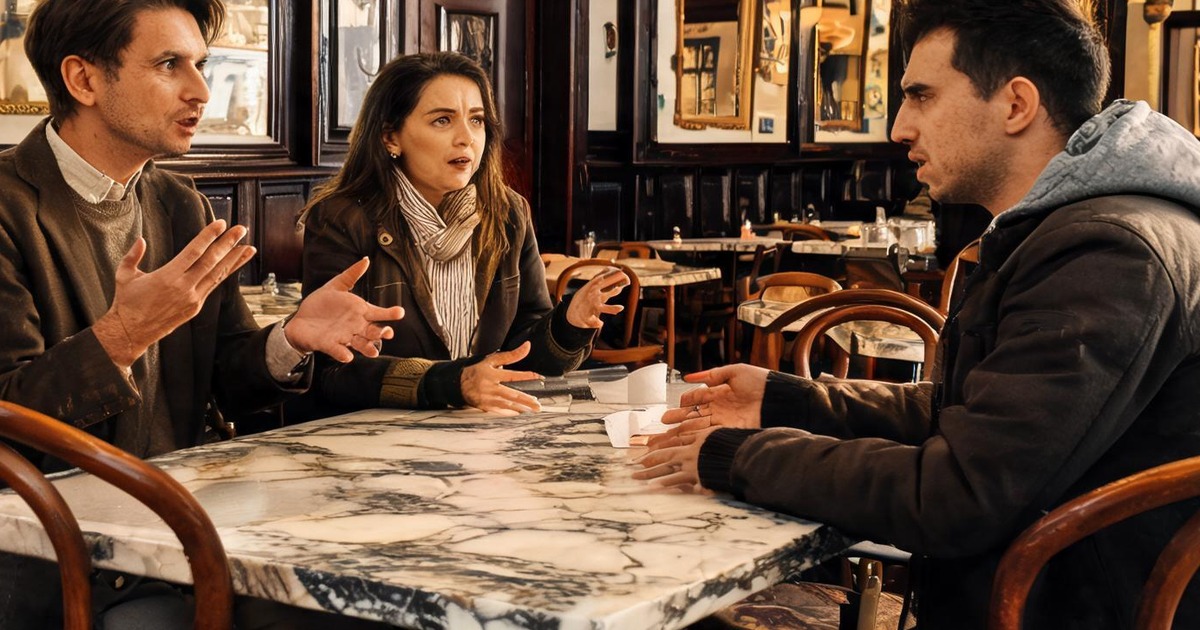
Good news about the Austrian dialect: Most Austrians can speak clearly — you just have to ask. A University of Vienna study in 2023 found 78 % automatically switch to a more Hochdeutsch-like register when they hear an accent, but slip back after 2–3 minutes if not reminded.
Phrases that do not sound rude:
- «Kannst du bitte etwas langsamer sprechen? Ich lerne noch Dialekt.» — You compliment their dialect instead of criticising it.
- «Wie sagt man das auf Hochdeutsch?» — neutral and curious.
- «Ich habe ‘Sackerl’ nicht verstanden — meinst du Tüte?» — Repeating with a check works better than just «What?»
Do not just nod as if you understood. At work, asking again is safer than making a mistake. Austrians value directness and would rather repeat than fix later.
Another trick: Name the dialect. Say «Ich übe gerade Wienerisch» or «Tirolerisch ist schwer!» — your counterpart will smile and become your ally. Dialect is pride, interest in it reads as respect.
7 Strategies to Understand Dialect Faster — Without Cramming
The Austrian dialect is learned with ears, not textbooks. Seven habits bring noticeable progress in 2–3 months with 15 minutes a day.
1. ORF with subtitles — daily. Watch ORF Bundesland heute (19:00) — presenters speak soft dialect. First with, then without subtitles. According to ORF, 1.2 million Austrians watch it daily — the language is maximally authentic.
2. Podcasts and radio in dialect. Ö1 is too Hochdeutsch. Try Radio Wien, Radio Steiermark, the podcast «Wienerisch für Anfänger» or YouTube «Dialekt erklärt». Just listening on the go is enough — your ear gets used to melody.
3. Dialect diary. Note 3 new words daily from real life with their Hochdeutsch equivalent. After a month that is 90 words — enough for basic comprehension.
4. Win colleagues as translators. Ask one colleague to explain yesterday’s phrases for 5 minutes a day. Faster than any course and it builds friendship — work is the main channel anyway, as our guide Working in Austria shows.
5. Join a Verein (club). Football, choir, volunteering — dialect flows naturally there, but in a friendly setting. Regularity beats intensity.
6. Watch Austro series. «Vorstadtweiber», «Braunschlag», «Kaisermühlen Blues» — pure Viennese with subtitles. One episode a week gives more than an hour of vocab drilling.
7. Do not try to speak dialect immediately. Comprehension comes after 3–6 months, speaking after a year and often sounds funny at first. Austrians appreciate understanding — you do not need to imitate every «Oida», it can quickly sound off.
Is It Worth Learning Dialect on Purpose?
The Austrian dialect is worth it — but not at the expense of Hochdeutsch. Linguists at the University of Vienna recommend the 80/20 rule: 80 % effort for Hochdeutsch (documents, job, citizenship), 20 % for passive dialect comprehension.
For citizenship and permanent residence only Hochdeutsch B1/B2 counts — dialect is not tested. In job interviews for gastronomy, care or Handwerk (crafts) employers often test exactly that: «Do you understand how the team speaks?» As Der Standard reports, 61 % of ads with «good German required» actually mean «understanding Austrian colloquial speech».
Children pick up dialect on their own — via Kindergarten they switch within 6–9 months. Adults need conscious listening. Wienerisch courses at VHS (€120–180 for 8 weeks) exist but remain niche — immersion is usually enough.
Bottom line: Learn dialect on purpose if you live in Tyrol, Vorarlberg or work in a strongly dialectal environment. In Vienna, basics plus 50–70 dialect words cover 90 % of situations. And if you plan the whole settlement path — from residence permit costs to naturalisation — consider dialect as part of the social investment.
Frequently Asked Questions
I passed B1 but do not understand colleagues. Is that normal? Yes. B1 certifies Hochdeutsch for official settings, colleagues speak Mundart. According to ÖIF surveys, more than half of graduates experience this. Targeted dialect listening — 15 minutes of ORF and a word diary daily — fixes it in a couple of months.
Which dialect is hardest for a migrant? Vorarlbergerisch in Vorarlberg — closer to Swiss German than to Viennese, even Austrians from other states struggle. Next is Tyrolean. Viennese (Wienerisch) is the most accessible.
Do I have to answer in dialect if someone addresses me that way? No. Answer in Hochdeutsch — you will be understood. Immediately imitating «Oida» often sounds unnatural. Show you understand and answer clearly. Single words like Grüß Gott or Baba will come naturally over time.
Where can I practise dialect comprehension for free? ORF TVthek (Bundesland heute), YouTube channels on Wienerisch, Radio Wien and above all real life: Verein, volunteering, parents’ chats at school. And ask acquaintances to speak a bit slower — 78 % do so gladly when asked.
What to Do Next — Checklist
The Austrian dialect is not a wall, it is a filter that lifts within months. Hochdeutsch remains your foundation for papers, job and Integrationsvereinbarung, dialect is the extension for life.
Your checklist for the next month:
- Learn 20 words from the glossary — start with Grüß Gott, Sackerl, Hauspatscherl, Oida, leiwand
- Watch ORF Bundesland heute 3 times a week with subtitles
- Keep a phone note: 3 new dialect words daily
- Ask one colleague to explain one phrase a day
- Try a taster session at a Verein — sport, choir, volunteering
You have already completed courses and exams — the hardest part is done. Now it is about tuning your ears to Austria. In half a year you will smile when you hear «Oida, ois leiwand» — and understand without translation. Subscribe to our newsletter for weekly analyses of life in Austria — without the Hochdeutsch filter.
Stay Up to Date with the Latest Austrian News
The week's top stories — news, guides, and insights about life in Austria. Every Sunday in your inbox.