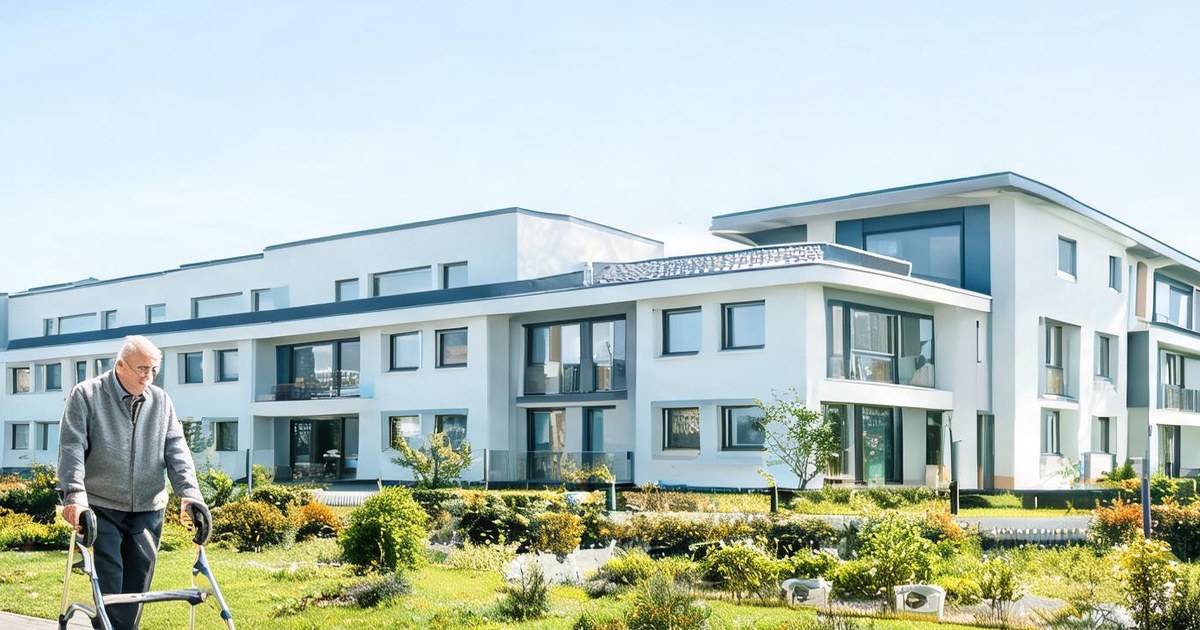
Rehabilitation in Austria: Waiting Times Have Grown Fivefold
Rehabilitation in Austria: Waiting Times Have Grown Fivefold Waiting times for rehabilitation in Austria jumped from 8 to 39 days, and Vienna patients now wait 9.6 weeks. Referral, fund choice and Reha-Geld explained. Topics: News, Healthcare, Politics.
Rehabilitation in Austria has become a test of patience. The ÖGPMR (Austrian Society for Physical Medicine and Rehabilitation) reports that the median waiting time grew from 8 days in 2012 to 39 days in 2024 — nearly a fivefold increase. A spot check in Vienna at the turn of 2025/2026 produced an even bleaker figure: an average wait of 9.6 weeks. The reason is an ageing population: by 2040, Austria will count 2.46 million residents older than 65. This article explains what PMR (Physikalische Medizin und Rehabilitation — physical medicine and rehabilitation) actually treats, why the queues keep growing, and what you can do right now: obtain a Zuweisung (referral), understand your insurance fund and apply for Reha-Geld (rehabilitation allowance).
What is happening with rehabilitation queues in Austria
The scale of the problem came to light via Die Presse, reporting from an ÖGPMR press conference in Vienna. The median waiting time for physical-medicine services rose from 8 days in 2012 to 39 days in 2024. Twelve years ago patients started treatment roughly a week after referral. Today they wait more than a month.
The second measurement is harsher. A spot check at Vienna Vertragsinstitute (practices and institutes under contract with the health insurance fund) recorded an average wait of 9.6 weeks for late 2025 and early 2026. That is nearly double the official national median.
The paradox is that Vienna’s outpatient infrastructure is actually good: facilities cover the whole city and are easy to reach. As Thomas Kienbacher, a physical-medicine specialist at the Rehab Zentrum Liesing, stressed, the principle of “ambulant vor stationär” (outpatient before inpatient) only works when patients receive outpatient services on time. According to ÖGPMR, demand for these services is growing faster than the system can keep up.
Why waiting times for rehabilitation keep growing
The main driver is demography. Already every fifth resident of Austria is older than 65. By 2040, according to the forecast by Statistik Austria, that group will grow to 2.46 million. Chronic illness and limited mobility are becoming the norm, not the exception.
The numbers for the oldest age group speak for themselves. Almost every second person over 75 has trouble climbing stairs, and around 45 % struggle with walking. Arthrosis affects 28 % of men and 47 % of women in that age bracket. Add chronic back and neck pain, muscle loss and a rising risk of falls and fractures.
There is an economic dimension too. A model presented by ÖGPMR experts suggests that integrated rehabilitation could shorten sick leave and save the economy up to 862 million euros per year. Meanwhile, structural reform moves slowly — the health minister has already said he gives no guarantees on reform timelines.
What PMR treats and who needs rehabilitation in Austria
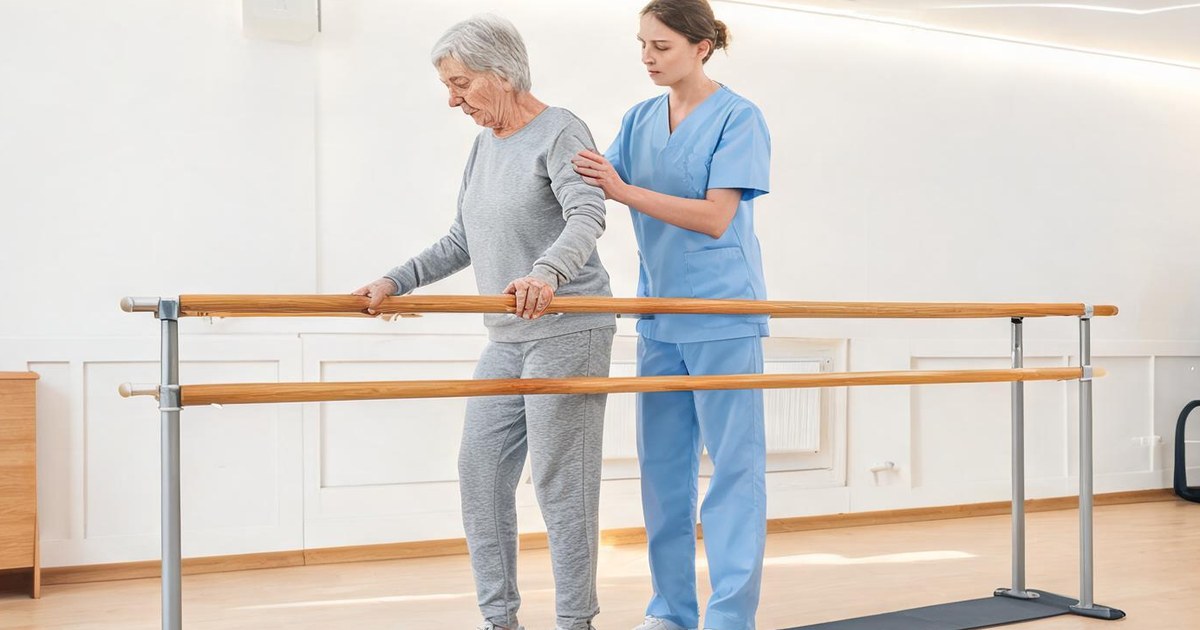
The goal of PMR is to preserve — or restore — a person’s mobility and independence for as long as possible. This is not a “spa for the sick” but a medical discipline with its own protocols. Typical areas: back and neck pain, recovery after surgery and injuries, rehabilitation after stroke, treatment of arthrosis, osteoporosis, and balance disorders in older people.
Movement is the core medicine here, and part of the workload can be built independently. For example, some insurance funds partially cover strength training prescribed for medical reasons — it works as prevention against muscle loss. But with serious mobility restrictions, training alone is not enough: you need a physician, a physiotherapist and a rehabilitation plan.
A note for newcomers: access to rehabilitation runs through your health insurance fund. The specific rules and timelines depend on which Krankenkasse (health insurance fund) covers you. We explain in detail which insurance funds exist in Austria and how to find out which one is yours.
What patients can do: referral, insurance fund and Reha-Geld
Step one is a Zuweisung (referral) from a doctor under contract with your fund. Your Hausarzt (GP) issues it when a medical indication exists. Without a referral, the fund generally will not pay for rehabilitation. Describe your symptoms concretely: what you can no longer manage in daily life, how long the pain has lasted, what has worsened over the past year.
Step two is the choice of fund. For most employees the fund is tied to their profession and employer, but the self-employed and voluntarily insured can choose between ÖGK, BVAEB and SVS. Rehabilitation conditions and timelines differ between funds, so compare the rules before filing your application.
Step three is Reha-Geld (rehabilitation allowance). It is paid by the pension insurance provider PVA to employed patients during inpatient rehabilitation when the employer does not keep paying their salary. Conditions and amounts are described on the PVA portal. This differs from ordinary Krankengeld (sick pay) paid by the health fund: the two benefits work differently, and they are easy to confuse.
The decisive health-policy question is no longer only: how do we treat diseases? Increasingly, it is also: how do we prevent illness from permanently taking away a person’s mobility, independence or ability to work?
— Richard Crevenna, Senior President of the ÖGPMR
Telemedicine: rehabilitation comes home
The system does have an answer to the queues — telemedicine. According to Christian Wiederer, medical director of the Klinikum am Kurpark in Baden, video-guided sessions let patients do their exercises at home under professional supervision. The physician checks technique, adjusts the plan and monitors progress between in-person visits.
For people with limited mobility this is especially valuable: fewer trips, fewer lost days. Tele-rehabilitation does not replace inpatient programmes, but it helps secure their results. As ÖGPMR notes, such offerings continue to develop, and demand will grow along with the queues.
The practical takeaway: if a place in a rehabilitation centre means a long wait, ask your doctor about tele-rehabilitation programmes or outpatient groups. It is a legitimate way to avoid losing months. To understand the broader picture of fund spending, it also helps to read about ÖGK’s plans for co-payments at the doctor — the system is changing on several fronts at once.

Frequently Asked Questions
How long do patients currently wait for rehabilitation in Austria? The median wait is 39 days (ÖGPMR data for 2024, up from 8 days in 2012). In Vienna, a spot check covering late 2025 and early 2026 found an average wait of 9.6 weeks.
Do you need a Zuweisung (referral) for rehabilitation? Yes. A referral from a doctor under contract with your fund is the basis for coverage. Get it from your Hausarzt (GP) and keep a copy for your records.
Who pays Reha-Geld and under what conditions? The pension insurance provider PVA pays Rehageld to employed patients during inpatient rehabilitation when the employer does not continue paying their salary. Certain insurance periods are required — details are on the PVA portal.
Can you speed up getting a rehabilitation place? There are no legal shortcuts, but you can: ask for the referral without delay, ask about tele-rehabilitation, check your fund’s outpatient programmes, and make sure your application is complete the first time.
What to do if you need rehabilitation in Austria right now
A queue of 39 days — or 9.6 weeks in Vienna — is slow, but the system is not closed. Here is a short checklist:
- Ask your Hausarzt for a Zuweisung at your very first visit — do not postpone the referral.
- Check which fund covers you and what its rehabilitation rules are — start with our overview of Austrian insurance funds.
- For inpatient rehabilitation, check your eligibility for Reha-Geld on the PVA portal and compare it with the Krankengeld rules.
- Ask your doctor about tele-rehabilitation and outpatient groups while you wait for a place.
- Keep moving: even a light home exercise plan slows muscle loss.
The queue situation is a strong argument for acting early rather than after mobility is already gone. Follow Austrian healthcare with us: subscribe to our newsletter so you do not miss changes in fund and rehabilitation rules.
Stay Up to Date with the Latest Austrian News
The week's top stories — news, guides, and insights about life in Austria. Every Sunday in your inbox.