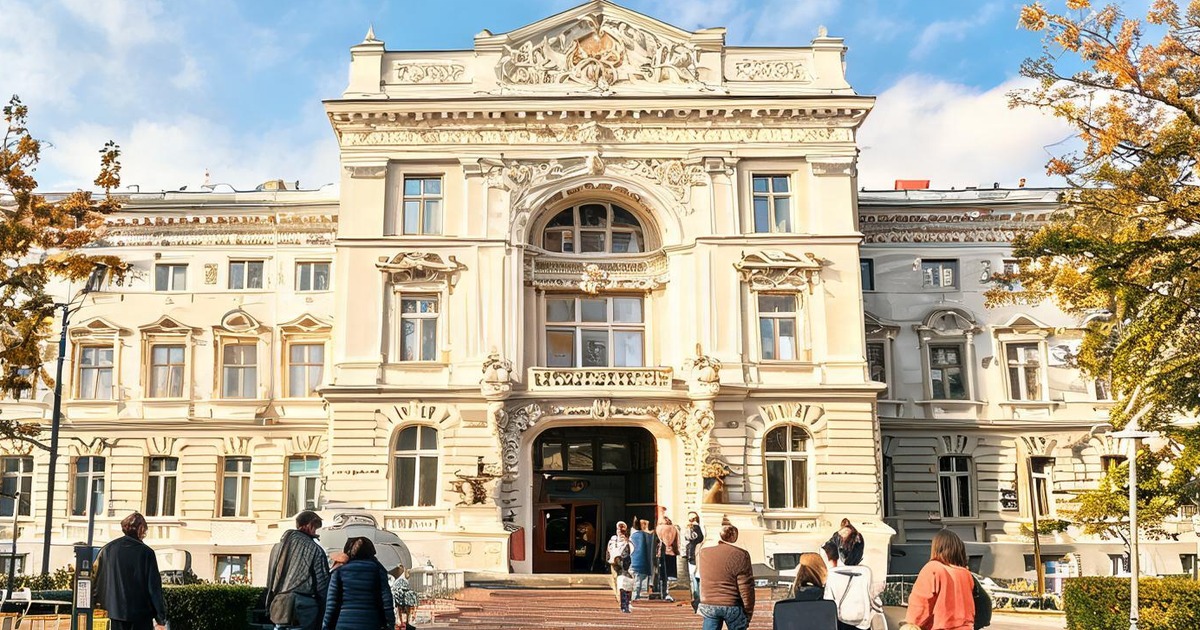
School Start in Austria: Schulstart 2026/27 Dates, Payments and Checklist School start in Austria 2026/27: Schulstart dates by state (7 & 14 September), Schulpflicht, holidays, Schulstartgeld €121, shopping checklist and language support. Topics: Daily Life, Career & Education.
Bags are packed, shopping lists are in hand, and the calendar says Schulstart (school start) in Austria. For immigrant families this moment matters twice: start dates differ by state, Schulpflicht (nine years of compulsory schooling) is strictly enforced, and the state pays Schulstartgeld right on time for it. Miss the enrolment deadline or the benefit and you will be catching up in a hurry.
This guide covers everything about school start in Austria in 2026/27: exact Schulstart dates by state (7 September in the east, 14 September in the west), how the school year and holidays work, what it really costs to get a child ready and where to save, which payments your family can claim, how Deutschförderklasse language support works from day one, and what parents and teachers wish the system would improve. It draws on BMBWF, oesterreich.gv.at and Austrian press reporting.
When is Schulstart in Austria in 2026/27 — exact dates by state
School start in Austria in 2026/27 comes in two waves. Monday 7 September 2026 — east group: Vienna, Lower Austria and Burgenland. Monday 14 September 2026 — the other six states: Upper Austria, Styria, Carinthia, Salzburg, Tyrol and Vorarlberg. As Kurier reports, the east is using the latest legally possible start this year — the first Monday in September falls on the 7th, and the Schulzeitgesetz does not allow a later start.
The split mirrors the summer holidays. The east starts holidays earlier (from 4 July 2026), the west later (from 11 July 2026), both enjoy 9 weeks before school resumes. The school year therefore ends on 2 July 2027 in the east and 9 July 2027 in the west, as detailed by Die Presse. Next year’s Schulstart 2027/28 is already fixed: 7 September 2027 for the east and 13 September 2027 for the west.
Two practical takeaways for parents. First, if you move between states in summer, check which group your new address belongs to — the start can shift by a week. Second, book holidays and after-school care for your state, not for “Austria in general”. A one-week mistake is a common reason for late arrivals among newly arrived families.
For the basics of compulsory schooling, see our guide Compulsory School in Austria: Schulpflicht Explained.
How the school year works: Schulpflicht, semesters and holidays
Schulpflicht in Austria means nine years of compulsory schooling for every child living in the country, regardless of citizenship or residence status. It starts at age 6 and is overseen by the Bildungsdirektion (education directorate) of your state. As oesterreich.gv.at explains, even children without a Meldezettel (registration of residence) or those in an asylum procedure must attend school — the right to education is inseparable from the duty to learn.
The school year runs from September to late June / early July and is split into two semesters. The first ends with Semesterferien (semester break) in early February, the second with the long summer break. Summer is 9 weeks, the others are shorter.
Holidays 2026/27 in Austria:
| Holiday | Dates 2026/27 | Coverage |
|---|---|---|
| Herbstferien (autumn) | 24 October – 2 November 2026 | all states |
| Weihnachtsferien (Christmas) | 24 December 2026 – 6 January 2027 | all states |
| Semesterferien (semester) | 1–6 Feb / 8–13 Feb / 15–20 Feb 2027 (staggered) | by three groups |
| Osterferien (Easter) | 20–29 March 2027 | all states |
| Pfingstferien (Whitsun) | 15–17 May 2027 | all states |
| Sommerferien 2027 | from 3 July (east) / from 10 July (west) | by groups |
As Bildungsberatung Steiermark notes, semester breaks are traditionally staggered to spread the load on ski resorts. For immigrant families this matters: travel prices in February depend heavily on which week your state is off.
A typical school day starts at 7:55–8:00, lessons last 50 minutes, with one long break of 20–30 minutes and two short ones of 5–10 minutes. Many schools offer Nachmittagsbetreuung (afternoon care) until 16:00–17:00 with a hot lunch — essential if both parents work. For children who do not speak German, language support is available from day one.
What to buy for Schulstart and what it really costs
School start in Austria is not only emotional but also expensive. Retail estimates put the cost of kitting out a first-grader (Taferlklassler — the Austrian word for first-year pupils) at €250–400 if you buy everything new: school bag (Schultasche), pencil case (Federpennal), notebooks, paints, gym kit and indoor shoes. For 5,572 Taferlklassler in Styria alone this year, as reported by Krone, that is a multi-million euro regional effect.
Where to save without losing quality:
- Schulbuchaktion — the state programme that provides textbooks free or for a symbolic €6 per book above an income threshold. Order via the school list instead of buying yourself.
- Second-hand and Tauschbörsen — many Elternverein (parents’ associations) run swap fairs at the end of August. A good bag after one year costs €30–50 instead of €120–180 new.
- Retail promotions — at Schulstart big chains (Libro, Pagro, Interspar, Müller) offer 30–40% off stationery. Compare in the last week of August when competition peaks.
- Municipal support — some communes pay €50–100 for low-income families on top of federal Schulstartgeld. Ask at the Gemeindeamt or Magistrat.
As weekend.at reports, retail expects the sales peak on 5–7 September when east and west start. If you are in Vienna, do not postpone shopping to 13 September — gym kit in the right sizes sells out first.
Do not save on the bag at the expense of the back: orthopaedists recommend an empty bag weight up to 1.2 kg and wide straps. On notebooks and paints, store brands are fine — the quality gap is minimal.

Schulstartgeld and Familienbeihilfe — payments timed for school start
The main financial help for school start in Austria is Schulstartgeld of €121.40 per child aged 6–15. It arrives automatically in August together with Familienbeihilfe (family allowance) — no separate application, as confirmed by oesterreich.gv.at. In 2026 eligibility covers children born between 1 January 2011 and 31 December 2020.
Familienbeihilfe itself is broader. The base amount depends on the child’s age and number of children in the family (€132–€220 per month per child in 2026) plus supplements for the third and further children. For children over 18 you need proof of education (Schulbesuchsbestätigung or Studienbestätigung), otherwise payment stops — see our guide Family Allowance in Austria: Who Gets It and How to Apply.
Additional regional top-ups:
- Vienna: up to €300 via MA 11 for low-income families (apply at the Magistrat).
- Styria and Carinthia: one-off €80–110 via the Bildungsdirektion.
- Tyrol: €50 voucher for first-graders in some communes.
If you have just moved, apply for Familienbeihilfe right after receiving your Meldezettel and residence title — the Finanzamt needs 4–8 weeks to process, and you will only get the August payment if you are in the register before July.
Language support: Deutschförderklasse and Deutschförderkurs from day one
The biggest fear before school start in Austria is that a child does not speak German. The good news: German is not a condition for enrolment, it is the goal of schooling. Two support formats start on day one.
Deutschförderklasse (DFK — separate German class) — intensive 15–20 hours per week separate from the main class, the rest of the time together with peers. It is set up when 8–10 children with insufficient German are in the school. Duration — up to two years with regular progress checks (Mika-D Test).
Deutschförderkurs (in-class course) — for schools with fewer non-German-speaking children. The child stays in the regular class but gets 6–8 hours of extra German in small groups.
As BMBWF notes, the aim of both forms is rapid integration into regular lessons without cutting the social life of the class. In practice, Vienna and Graz have more than 30% of primary pupils with a migration background, so teachers are experienced.
What parents should do before Schulstart:
- Do not delay enrolment because of language — the earlier the child enters the system, the sooner support starts.
- Declare the child’s mother tongue honestly at the meeting — it affects DFK placement.
- Ask about Muttersprachlicher Unterricht — mother-tongue lessons (Russian is offered in many schools in Vienna, Graz and Linz).
- Check whether Elternberatung with an interpreter is available — schools must ensure parents understand meetings.
For children who already speak good German, insist on a Sprachstandsfeststellung (language assessment) before allocation if the child has already spent a year in Austria — otherwise they may be placed in DFK by inertia.
School types after Volksschule — where the path goes after grade 4
School start in Austria for a first-grader always begins with Volksschule (primary school, grades 1–4). The key choice awaits after grade 4 — at age 10 children are streamed into three main paths, and this shapes access to university.
Mittelschule (former Hauptschule, grades 5–8) — general lower secondary with a practical focus. Since 2020, with good grades a Mittelschule graduate can move to AHS-Oberstufe and take the Matura (school-leaving exam). According to Statistik Austria, about 70% of children after Volksschule go to Mittelschule.
AHS-Unterstufe (academic lower secondary, grades 5–8) — an academic track with intensive languages and maths, leading directly to AHS-Oberstufe (grades 9–12) and the Matura, which opens any EU university.
Sonderschule — for children with special needs, or inclusion in a regular class with Integrationshilfe (assistant).
Year nine is special: it is Polytechnische Schule (orientation year) or the first year of BHS/AHS-Oberstufe. The nine compulsory years count as completed only after successfully finishing grade nine; repeating a year extends the duty.
For immigrant parents: early streaming is not a dead end. Transitions work both ways, especially via Aufnahmsprüfung (entrance exam) in grade 8. Choose pace over prestige — the system gives a second chance but requires family engagement.

Afternoon care, meals and combining school with parents’ jobs
School start in Austria raises a practical question for working parents: how to reconcile lessons that end at noon with a full-time job? The answer is Nachmittagsbetreuung (afternoon care) and Ganztägige Schulformen (all-day school forms).
Two models exist:
- Getrennte Form — lessons in the morning, afternoon care with lunch, homework and clubs until 16:00–17:00. Cost: €80–150 per month for meals + €0–70 for the care itself (often free for low-income families in Vienna).
- Verschränkte Form — lessons and activities alternate throughout the day, the class stays together. Rarer but convenient.
As WKO reports, more schools have taken part since 2022 in Gerät für digitale Bildung — every pupil from grade 5 gets a laptop or tablet. This cuts tech costs but requires a responsible-use agreement.
Meals: a hot lunch in afternoon care costs €4–6 per day, often subsidised by the commune. For low-income families there is Essenszuschuss via the Gemeinde. Clubs (Freigegenstände) — from chess to robotics — are usually free within the afternoon programme.
Tip: sign up for afternoon care in May–June, not September. Places run out in summer, especially in Vienna and Graz where demand exceeds supply. If you are renting and both parents work, check afternoon-care availability when choosing a district — it matters more than proximity to the centre. Our guide to renting in Vienna helps with districts.
What you might wish for the system at the new Schulstart — big and small wishes
The hook for this article is a column in Die Presse titled “Zum Beginn des neuen Schuljahrs darf man sich was wünschen” — after one year in school, the author lists wishes for the system. The tone is not a complaint but an inventory: what already works and where the system stalls. This view is close to immigrant families who see the Austrian school with fresh eyes.
Big wishes that recur in parent surveys and in the Die Presse piece:
- Less bureaucracy at enrolment — one online platform instead of different rules by state and school. Today a family in Vienna applies via the Bildungsdirektion, in Tyrol directly at the school, and in Carinthia via the Gemeinde.
- More afternoon-care places — demand in cities outstrips supply, and without care mothers cannot return full-time. As ORF notes, the lack of Ganztagsplätze is the main barrier to reconciling work and school.
- Stable Deutschförderklassen — so classes are not dissolved mid-year because 1–2 children are missing and teachers do not change every semester.
Small wishes that make school start in Austria more humane:
- Parents’ evenings with translation and at a sensible time (18:00, not 14:00 on a workday).
- Clear shopping lists without brand compulsion — “red pencil case” instead of “only Faber-Castell No. 7”.
- One chat and one calendar per class instead of five messengers.
Schulstart is not just the first bell, it is a test of how well the system welcomes different families equally, regardless of the language at home and the address on the registration.
— Volksschule homeroom teacher, Vienna
These wishes are not rebukes but a compass. If when choosing a school you see an active Elternverein, open afternoon care and a clear website with documents in several languages, you are looking at a school that has already ticked half the list.
Checklist for day one: documents, Meldezettel and vaccinations
School start in Austria needs a small document pack, but small things most often delay enrolment. Collect everything early — schools accept papers from January to March for the next school year and form classes in August.
Basic checklist:
- Meldezettel (registration of residence) — school catchment (Sprengel-Schule) is tied to address.
- Child’s passport/birth certificate + German translation.
- Proof of residence status (residence permit, protection Bescheid).
- Impfpass (vaccination record) and e-card data (health insurance). How to get insurance — see Health Insurance in Austria.
- School records from previous school with translation.
- Application for Nachmittagsbetreuung and for Schulstartgeld (if you do not yet receive Familienbeihilfe — apply at the Finanzamt).
Open days (Tag der offenen Tür) are held in January–February — the best moment to meet teachers and ask about DFK and afternoon care. Sprachstandsfeststellung (language assessment) is done before allocation; its result influences the language-class placement.
Advice for newcomers: even if you arrived in August, the school must take the child within two weeks of application — Schulpflicht does not wait for next year. Contact the Bildungsdirektion of your state directly if the Sprengel-Schule cites lack of places.
Frequently Asked Questions
When exactly is Schulstart 2026/27 in Vienna and Tyrol? In Vienna — 7 September 2026 (Monday), in Tyrol — 14 September 2026. The split by state groups is fixed in the Schulzeitgesetz and repeats yearly, as confirmed by Die Presse.
Does a child need German before school start? No. School start in Austria is open without German — Deutschförderklasse or Deutschförderkurs support begins on day one and lasts up to two years. Language is the goal, not a condition for enrolment, under BMBWF rules.
How long is Schulpflicht and what about truancy? Nine years, from age 6 to 15. Systematic violation can mean a fine up to €440 and referral to Jugendamt. Schools must report absence to the Bildungsdirektion.
Do we get Schulstartgeld if we just moved? Yes, if you already receive Familienbeihilfe. The €121.40 August payment is automatic for children 6–15. If Familienbeihilfe is not yet set up, apply at the Finanzamt as soon as possible — processing takes 4–8 weeks.
Can we choose a school outside our catchment (Sprengel-Schule)? Yes, but priority goes to catchment children. A Wunschschule application is filed in parallel; the Bildungsdirektion decides based on free places. Chances are higher if the catchment school is overcrowded.
What if a child is not ready for school at 6? A Zurückstellung (deferral for a year) is possible with a school psychologist and doctor’s opinion. The child stays in kindergarten or attends Vorschule (preparatory class). The Bildungsdirektion decides on parents’ application.
What to do today: a plan for a stress-free Schulstart
School start in Austria is not a one-off shop run but a small family project over 2–3 weeks. The earlier you lock the basics, the calmer the first week of September will be.
Checklist for the next days
- Check your state’s start: 7 September (Vienna, Lower Austria, Burgenland) or 14 September (other states)
- Get your Meldezettel and find your Sprengel-Schule on the Bildungsdirektion site
- Collect the document pack: passport, Impfpass, e-card, translations of school records
- Apply for Nachmittagsbetreuung if you need afternoon care
- Make sure Familienbeihilfe and Schulstartgeld are set up (Finanzamt)
- Buy the basics from the school list: bag up to 1.2 kg, pencil case, notebooks, gym kit
- Clarify language support: DFK or Förderkurs, is Muttersprachlicher Unterricht available?
- Visit Tag der offenen Tür or contact the homeroom teacher before launch
Austrian school is completely free and open to children with any status — from EU citizens to families in an asylum procedure. Early streaming feels daunting, but the system gives second chances via transitions and exams. The key is not to postpone enrolment because of language and not to wait for “perfect” German at home.
To keep up with school start in Austria, payments and holidays, subscribe to our newsletter — we send one useful guide a week, no spam.
Stay Up to Date with the Latest Austrian News
The week's top stories — news, guides, and insights about life in Austria. Every Sunday in your inbox.