SchoolFood4Change Project in Austria — How Vienna Is Making School Meals Healthy and Sustainable SchoolFood4Change project in Austria: how Vienna transforms school catering, the triple approach, participating schools, FoodTrailer and what it means for expat parents. Topics: Daily Life, Food & Shopping, Career & Education.
The SchoolFood4Change project in Austria is changing what lands on the plate of more than 100,000 Viennese schoolchildren every day. It is not just a «healthier canteen», but a four-year European programme where 43 organisations from 12 countries coordinated by ICLEI — Local Governments for Sustainability are rebuilding the whole chain — from procurement to classroom lessons. For expat families this means more accessible, climate-friendly and transparent school food without extra cost.
In this guide you will learn what SchoolFood4Change is and why Austria joined through Vienna, how its triple approach works (Nachhaltige Beschaffung — sustainable procurement, Nachhaltiges Kochen — sustainable cooking and Whole School Food Approach — whole-school food culture), who implements it in Austria (MA 22 — Umweltschutz, Danachda — Bildung für Nachhaltigkeit and EuroVienna), which Vienna schools already take part, what the new canteen looks like at Volksschule Halirschgasse, and what the FoodTrailer with its photovoltaic system brings to kids.
What the SchoolFood4Change project is and why Austria runs it
SchoolFood4Change (SF4C) is an EU project under Horizon 2020 that aims to create a shift to sustainable and healthy diets at societal scale. As the CORDIS project page 101036763 documents, it directly targets over 3,000 schools and 600,000 children in 12 EU countries and seeks to reach at least 2 million EU citizens. The logic is straightforward: eating habits are learned in childhood, and school is the only place that reaches all children aged 0–18 at once, including vulnerable groups.
The project links three objectives from the Farm to Fork Strategy and the Sustainable Development Goals. First: sustainable procurement — ingredients from land, inland waters and sea sourced with criteria for seasonality, regionality and nutrition. Second: planetary health diets & cooking — training cooks and urban food enablers rooted in local identity. Third: Whole School Food Approach (WSFA) — a method to achieve a healthy food culture in and around schools that drives community-wide systems change for education, sustainability, inequalities and health.
For Austria participation is logical: Vienna has run the ÖkoKauf programme for over 25 years, connecting heimische Biohöfe (local organic farms) with city kitchens and improving their market access. As the City of Vienna — Wien isst G.U.T. / SchoolFood4Change explains, SF4C brings together every stakeholder — from Schüler*innen, Eltern und Lehrkräfte to Landwirtinnen, Köchinnen and canteen staff and procurement experts — at one table. The goal is a holistic, fair and natural eating culture in schools and kindergartens.
Schools and children and young people (0–18) are seen as catalysts for systemic change towards sustainable and healthy diets for all EU citizens.
— Coordination Team, ICLEI — SchoolFood4Change, cordis.europa.eu
In Austrian figures this means fast scaling: the project runs from 01.01.2022 to 30.06.2026, as EUFA Vienna — SF4C notes, with EUR 433,000 EU funding for the Vienna part. According to Danachda, the consortium overall counts 43 partners from environmental, NGO, city, science and school fields, supported officially by 10 EU Member States.
For the broader Austrian school system, see our Schulstart in Austria 2026/27 guide.
The triple approach of SchoolFood4Change — procurement, kitchen and whole school
The triple approach of SchoolFood4Change links three levels — city, school and kitchen — so change endures. Level one is Nachhaltige Beschaffung (sustainable procurement). The city rewrites tender criteria for school-catering suppliers: more regional, seasonal and organic, shorter supply chains, lower CO₂ footprint per dish without raising cost, as the concept describes on Danachda.
Level two is Nachhaltiges Kochen (sustainable cooking). Cooks learn to implement planetary health diets tastily — more vegetables, legumes and whole grain, moderate meat and fish, focus on flavour and recipe design. As schoolfood4change.eu — About shows, the point is not prohibition but shifting proportions: the plant-based dish becomes the attractive default.
Level three is the Whole School Food Approach (WSFA) — a method to achieve a healthy food culture in and around schools. As schoolfood4change.eu — About SF4C explains, school heads, pedagogical staff, cooks, pupils and the whole Schulgemeinschaft (school community) must work as a team. Schools can reach the bronze level in the WSFA framework by meeting criteria from catering policy to curriculum integration.
| Pillar | What changes | Example Vienna |
|---|---|---|
| Nachhaltige Beschaffung | ÖkoKauf criteria, organic share, seasonality | MA 22 embeds organic and regionality in tenders for kitchens serving 100,000+ meals/day |
| Nachhaltiges Kochen | Cook training, new recipes | Köch*innen test climate-friendly dishes cost-neutrally |
| WSFA — whole school | Lessons, excursions, school policy | Danachda supports 5+ Viennese schools per year towards bronze |
Importantly for parents: the three pillars relieve families. The healthy option becomes the default option at school — you do not need to «cook differently at home».
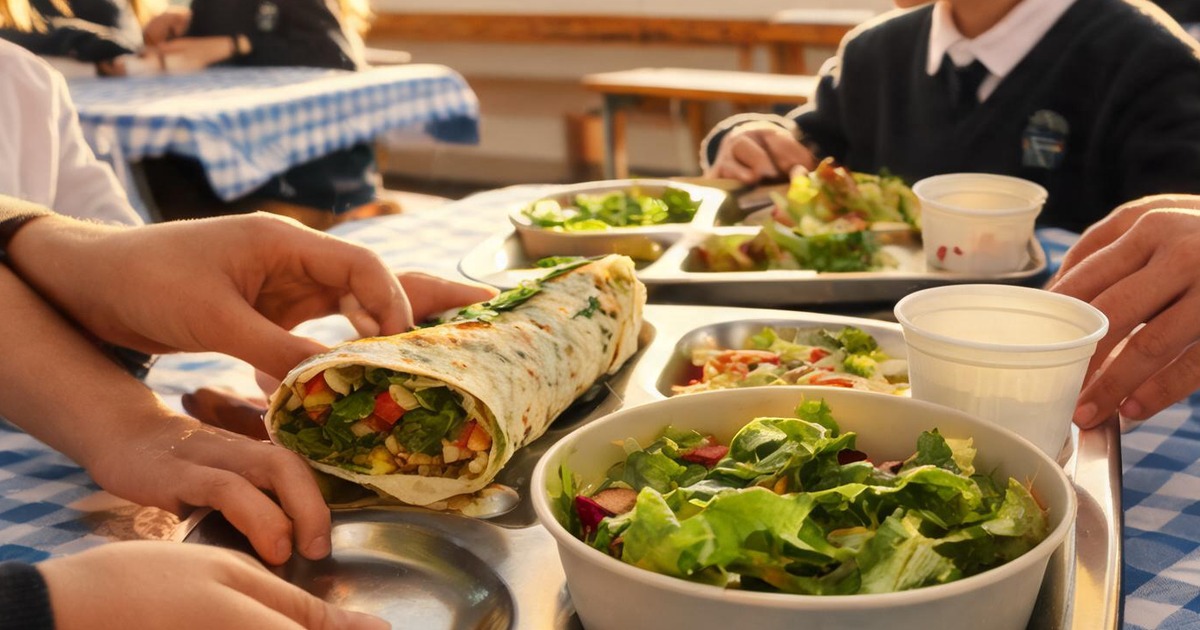
Who implements SchoolFood4Change in Austria — Vienna, Danachda and EuroVienna
In Austria three partners share the lead. As EUFA Vienna lists, the City of Vienna — MA 22 (Umweltschutz) is National Lead. It owns the pillars Nachhaltige Beschaffung and Nachhaltiges Kochen and steers the Lebensmittelaktionsplan «Wien isst G.U.T.». Behind it is a city that has used organic procurement as a climate tool for decades.
Second is Verein Danachda — Bildung für Nachhaltigkeit (Tulpengasse 3/2, 1080 Vienna). According to danachda.com, Danachda holds main responsibility for the Whole School Food Approach. It trains teachers and Freizeitpädagog*innen (leisure educators), develops materials and organises workshops and excursions to Produzent*innen (producers) so children connect with the origin of their food.
Third is EuroVienna EU Consulting & Management GmbH (Universitätsstraße 4/3-4, 1090 Vienna), which supports EU project management and replicability. At EU level the consortium is coordinated by ICLEI — Local Governments for Sustainability, as documented on CORDIS, with formal backing from 10 EU Member States.
This division is intentional: procurement without the kitchen fizzles, the kitchen without education does not stick. The triple impact therefore ties tender, stove and classroom into one system — exactly what anchors the Farm to Fork approach at city level.
You may also like: Food delivery services in Austria compared.
Which Viennese schools take part and what changes in practice
In Vienna primary and secondary pilot schools are on board. According to the list on schoolfood4change.eu — Schools these include Schule Kunterbunt, Volksschule Klenaugasse, Volksschule Galileigasse, Bundesrealgymnasium (BRG) Boerhaavegasse and BRG Seestadt. Each school works with Danachda on an action plan towards bronze level in WSFA — from catering policy to curriculum embedding.
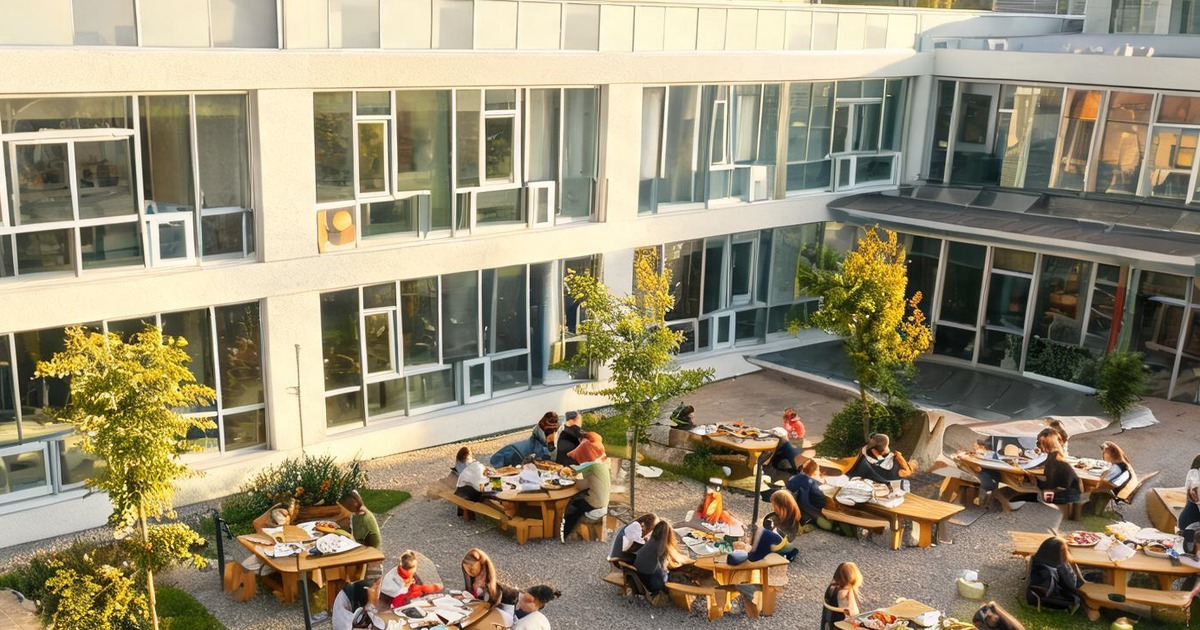
In practice change is visible in three zones. First, the canteen: more vegetables and legumes, less red meat, preference for regional produce — without the kitchen becoming more expensive. Second, breaks and snacks: gesunde Jause (healthy snack) and water become the norm, sugary drinks move to the background. Third, the classroom: food topics migrate into Sachunterricht (general studies), biology, geography and maths (e.g. CO₂ balance of a dish).
A vivid case is Volksschule Halirschgasse, portrayed in the ZDF plan b documentary «Kantine neu gedacht» by Katarina Schickling, summarised on the SchoolFood4Change Blog. In the Danachda workshop children cook a vegan wrap — a child who initially says «Ohne vegan ist besser — kein vegan!» rates the self-made wrap 10 out of 10. In parallel teachers and leisure educators receive training to anchor food education in daily pedagogy, as headteacher Bettina El-Ansari-Girakhoo stresses.
For families this means: the Speiseplan (menu) becomes more transparent, origin is explained, and schools communicate proactively with parents — a core WSFA principle.
What children eat now — from schnitzel to regional and more plants
The goal of SchoolFood4Change is not to ban schnitzel but to shift proportions. As the City of Vienna explains, the CO₂ footprint of dishes should fall — via two levers: more plant-based and regional sourcing. ÖkoKauf has for over 25 years ensured that local organic farms bring their produce into the city — an infrastructure SF4C now leverages.
On the plate this means: the meat day is complemented by legume and vegetable days, soups become richer with lentils and peas, desserts lighter and less frequent. As Danachda notes, the approach follows Farm to Fork and the SDGs but stays connected to Viennese identity — Austrian cuisine remains Austrian, only ratios and origin change.
The city reports as an interim result: Over 100,000 children in Vienna already eat climate-friendly, and through SF4C this number should grow — as coordinator Julia Haas is quoted on schoolfood4change.eu. At the same time the project evaluates its business case: healthy, sustainable school catering should be cost-effective — especially for vulnerable groups, as CORDIS lists as an evaluation goal.
Parents should not ask «Do you do SF4C?» but «Which WSFA plan does our school pursue and where can I find the Speiseplan for this month?» — participating schools mark which dishes are climate-friendly.
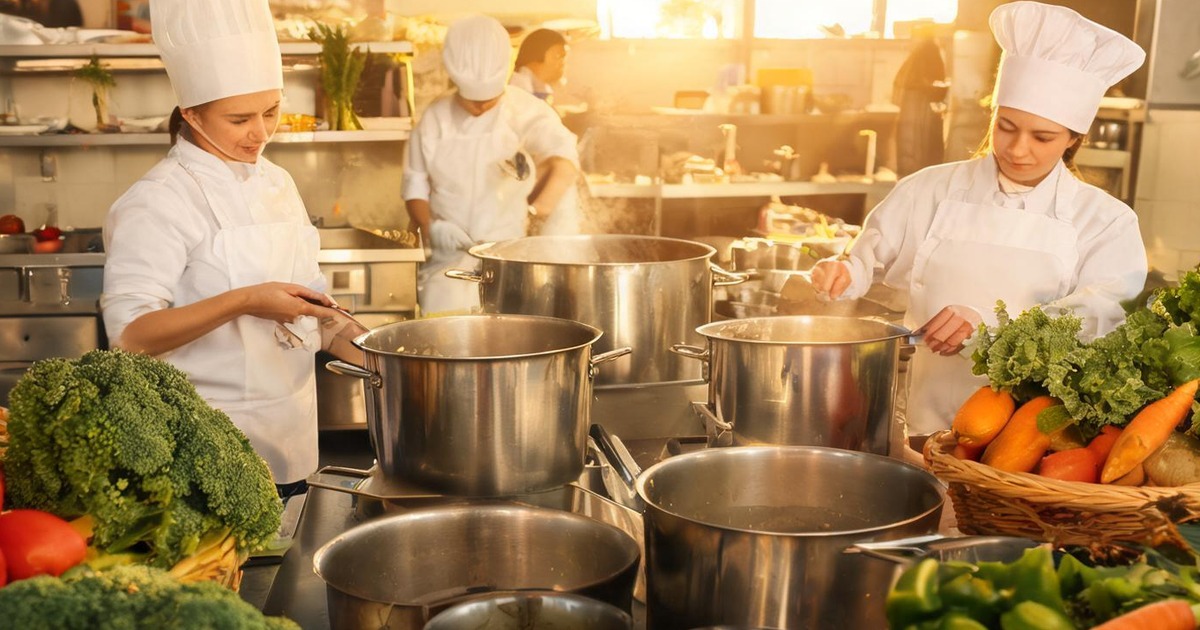
Lessons, excursions and the FoodTrailer — how children learn to eat consciously
Education is the second kitchen. As the City of Vienna describes, a central outreach tool is the FoodTrailer of the City of Vienna — Umweltschutz. It parks in front of schools and at events and bundles everything for joint cooking: Kombidämpfer (combi steamer), 2 Induktionskochherde (induction hobs), worktables, screen for presentations and the «danachda» board, which playfully shows origin and climate impact. On the roof a Photovoltaik-Anlage (photovoltaic system) provides several hours of autonomous, sustainable operation.
In the classroom Danachda runs workshops: children cut, mix, taste and broaden their horizons — from vegan wrap to legume dishes. Headteacher Bettina El-Ansari-Girakhoo stresses in the quoted blog post that every adult bears responsibility so the young generation gains awareness for sustainable, climate-friendly nutrition.
Added to that are excursions to Produzent*innen: visits to organic farms, bakeries and storage facilities where children see the origin of milk, bread and vegetables. And integration into lessons: calculating nutritional values, addressing food waste, recognising seasonality. This builds food literacy — the ability to read ingredients, decode seasonality and decide independently. For newly arrived families this is especially helpful because children learn language and food culture at the same time.
The effect at home is practical: the child brings home not only a wrap recipe but the rule of thumb «regional + seasonal = tastier and cheaper».
Cooks and kitchen staff — training, recipes and cost control
Without cooks no transition, which is why SchoolFood4Change systematically invests in Qualifizierung von Köch*innen (cook qualification). As documented on schoolfood4change.eu, cooks and canteen staff in 12 countries train in sustainable cooking — how to keep flavour and satiety with more vegetables and less meat without blowing the cost per portion.
In Vienna this strand runs via MA 22 and the supplier network. Kitchens plan the Speiseplan with a climate profile: dishes get a CO₂ balance and notes on which ingredients can be swapped. The project also evaluates health and behavioural changes in children — a central evaluation goal on CORDIS alongside the business case.
A practice example from the blog «Kantine neu gedacht»: cooks and educators test new recipes in the workshop and then transfer them into regular service. This lowers the risk of «Children won’t eat it» — the new taste is already familiar from joint cooking. Technology helps: Kombidämpfer and induction cook faster, preserve vitamins and save energy.
Important for families with diverse taste profiles: legumes, grains and spices are introduced gradually, not as an abrupt switch. That increases acceptance among children with different culinary backgrounds.
Scale and results — 3,000 schools, 600,000 children and 15 cities
SchoolFood4Change is European by design and Viennese by measurement. The goal is a shift to sustainable and healthy diets through direct work with 3,000 schools and 600,000 schoolchildren, as CORDIS records. As of 2024, according to schoolfood4change.eu — Schools, over 200 schools have already joined, with about 5 new schools per city per year across 15 cities. The horizon is a replicable model for the whole EU.
In Vienna this means: on top of the daily 100,000+ portions, a qualitative leap — menu and education improve together. As the blog post reports, over 100,000 Viennese children already eat climate-friendly — through SF4C more should join. Evaluated is whether health and behaviour actually improve, especially for vulnerable children, and whether the model scales cost-effectively.
| Indicator | Value (2022–2026) | Source |
|---|---|---|
| Partners / countries | 43 / 12 | CORDIS 101036763 |
| Schools / children (target) | 3,000 / 600,000 | cordis.europa.eu |
| EU citizens reach (target) | 2,000,000+ | danachda.com |
| Pilot cities | 15 | schoolfood4change.eu |
| Viennese children already climate-friendly | >100,000 | SchoolFood4Change Blog |
| Duration Vienna | 01.01.2022 — 30.06.2026 | EUFA Vienna |
Formally the project ends in Vienna in mid-2026, but the instruments — procurement criteria, trained cooks, WSFA plans and FoodTrailer — stay in the city system via Wien isst G.U.T.. Sustainability without a «funding cliff».
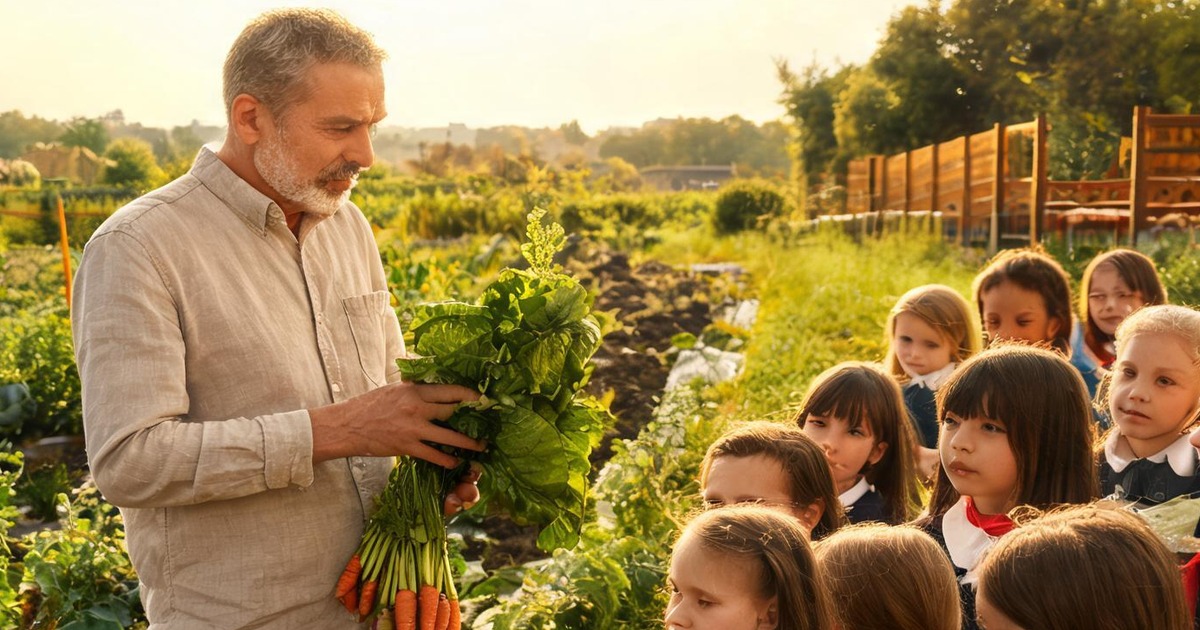
What SchoolFood4Change means for expat families in Austria
For newly arrived parents SchoolFood4Change takes the hardest part of food integration off your shoulders. Verpflegung (catering) and Beschaffung (procurement) already meet sustainability and health criteria, the Speiseplan is more understandable and can be discussed directly with the Klassenleitung (class teacher) or Freizeitpädagog*innen — transparency is a WSFA principle.
Practically this means: ask whether your school participates in WSFA / SchoolFood4Change and where the monthly Speiseplan is posted; when the FoodTrailer comes and which Danachda workshops are upcoming; whether excursions to Produzent*innen are open. For special needs — halal, vegetarian, allergies — participating schools are often more adaptable because kitchens are already trained for diversity.
And one everyday detail: many families pack a Jause (snack) to save money. In SF4C schools the healthy option is easier — water is available, lunch is designed so no expensive extra snack is needed on top. That reduces tensions «at home we eat like this — at school like that» and helps children who are simultaneously learning the language and a new food culture.
Helpful links: Compulsory schooling in Austria — Pflichtschule and Child benefit in Austria — Kindergeld.
Frequently Asked Questions
Is SchoolFood4Change mandatory for all schools in Austria?
No. SchoolFood4Change is a Horizon 2020 pilot with 15 pilot cities and voluntary participation — schools implement the Whole School Food Approach and can reach bronze level. In Vienna these are about Halirschgasse, Kunterbunt, Klenaugasse, Boerhaavegasse, Seestadt according to schoolfood4change.eu. However tools like procurement criteria, recipes and the FoodTrailer remain usable for all schools via Wien isst G.U.T..
How does the new menu differ from the classic schnitzel with side?
Not through bans but ratios. More vegetables, legumes and whole grain, less red meat, preference for regional and seasonal origin. As the City of Vienna outlines, the CO₂ footprint drops via larger plant-based shares and short supply chains — without extra cost. In everyday life this means vegetarian days, creamier soups and lighter desserts, tested in Danachda workshops with children.
Will the FoodTrailer come to our school and how do we join a workshop?
The FoodTrailer of the City of Vienna — mobile kitchen with Kombidämpfer, induction and danachda board — tours schools and city events. Dates are coordinated by MA 22 and Danachda, the school announces visits. If your school is not in SF4C, ask the headteacher about Wien-isst-G.U.T. dates — the offer is, as Danachda shows, built for replicability and open to further schools.
Do parents pay more for sustainable catering?
The aim is to prove cost neutrality, as CORDIS names as an evaluation goal. The mix of ÖkoKauf procurement and recipe optimisation keeps the portion price stable, financed via EU funding (EUR 433,000 for Vienna according to EUFA). For families lunch thus stays affordable — with higher quality.
Conclusion — what to take with you on Monday
SchoolFood4Change in Austria shows that healthy, sustainable school catering is not a one-off event but a system of procurement, kitchen and education where each part supports the other. In Vienna it is no longer an experiment: 43 partners, 12 countries, 15 cities, 200+ schools by 2024 and 100,000+ Viennese children on climate-friendly catering — the figures documented on CORDIS and wien.gv.at speak for themselves.
Your checklist for this week:
- Ask the class teacher whether the school has a WSFA / SchoolFood4Change plan and where the Speiseplan is posted
- Find out dates for FoodTrailer and Danachda workshops — enrol your child early
- Clarify individual needs (halal, allergies, vegetarian) — participating kitchens are more adaptable
- Take recipe material home — wraps and soups children have already tasted
- Follow Wien isst G.U.T. news — after 30.06.2026 the instruments stay in the city system
School in Austria already asks a lot of families — from language to holiday calendars. Thanks to SchoolFood4Change food stops being a stress point and becomes a place where children learn to care for themselves and the planet at once. Subscribe to our newsletter to get such Viennese school-initiative briefings first — and read next on prices: Food prices in Austria.
Stay Up to Date with the Latest Austrian News
The week's top stories — news, guides, and insights about life in Austria. Every Sunday in your inbox.