Hidden Museums in Vienna: 7 Insider Tips Without the Crowds
Hidden Museums in Vienna: 7 Insider Tips Without the Crowds Hidden museums in Vienna: 7 insider tips — Narrenturm, the Faker Museum, the Globe Museum, the Crime Museum and the Gaming Museum. Hours, prices, tips. Topics: Daily Life, Leisure & Culture.
Vienna is famous for Schönbrunn Palace, the Belvedere and the Kunsthistorisches Museum — and those are exactly where the crowds line up every day. But hidden museums in Vienna reveal a completely different side of the city: dozens of small halls with almost no visitors and exhibits that are often more striking than the grand halls. This list features seven of them, from a former asylum tower to a bunker full of retro consoles. We have collected opening hours, prices and practical tips so you can plan a relaxed visit. Several of these places are true Geheimtipps (insider tips) even for locals. And in summer they also work as free air conditioning: the thick walls of old buildings keep the heat out even during heatwaves.
Why small Vienna museums are worth your time
Vienna’s big museums keep breaking attendance records: according to the Austrian Ministry of Culture, federal museums welcomed 8.4 million visitors in 2025 — almost 700,000 more than in 2024. Small museums offer a different atmosphere: no queues, no audio guides in every language, no souvenir shops on every corner. Instead, there is silence, curious objects and the chance to take everything in at your own pace.
Small Vienna museums usually sit in historic buildings with thick walls — cool in summer, warm in winter. That makes them the perfect route on hot days, when the city is under an extreme heat warning. And in peak tourist season, these places let you escape the bustle of the Ringstraße and see the Vienna that locals know.
The Narrenturm: electricity and pathology in one tower
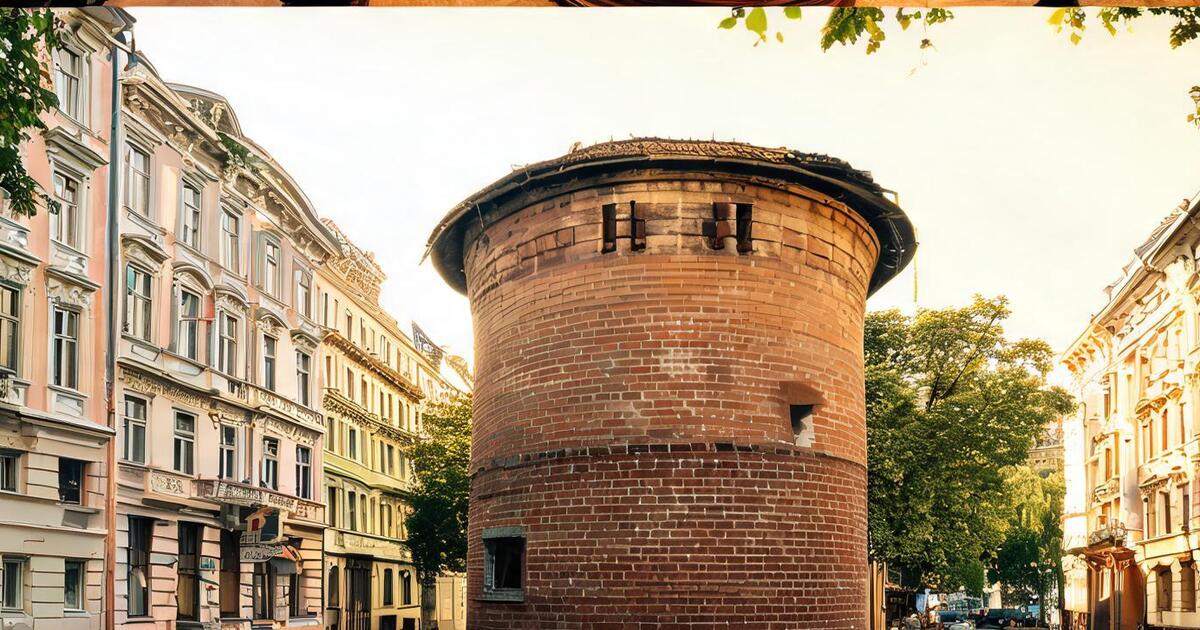
The first insider tip is the Narrenturm — a round tower built in 1784 by Emperor Joseph II to care for the mentally ill. Since 1971 it has housed the pathological-anatomical collection that Viennese locals still call the Stromtotenmuseum (“museum of those killed by electric current”): in the past, specimens documenting electrical accidents were kept here.
Today the renovated ground-floor halls display 50,000 specimens — the world’s largest pathological-anatomical collection, as the official NHM page notes. Until April 2027, the special exhibition “Vorsicht Hochspannung” (“Caution: high voltage”) runs here, telling the history of electrical safety: from early insulation to vivid illustrations of how current affects the human body. The specimens look abstract because of formaldehyde bleaching, so even sensitive visitors only get a mild chill.
The Narrenturm is not air-conditioned, but thanks to metre-thick walls the inside stays at a steady 26 degrees even at the height of summer. Curator Eduard Winter calls it an 18th-century natural air conditioner.
— Die Presse, guide to hidden museums in Vienna
Hours: Wednesday–Saturday, 10:00–17:00. Admission: €8 (concession €6), visitors under 19 free. Address: Spitalgasse 2, 1090 Vienna.
The Fälschermuseum: art forgery opposite the Hundertwasser House
Opposite the famous Hundertwasser House, in the cellar of an old building, hides the Fälschermuseum — the world’s only genuine museum of art forgers, according to its official website. It collects works by people with “wounded egos”: artists who failed to make it on their own and started faking the greats.
The star is British painter Tom Keating, who wrote the word “Fake” on his canvases before applying paint: the writing is visible only under X-rays. He coated some paintings in glycerine so they would destroy themselves during cleaning. Keating’s fate is ironic: today his “fakes” hang in collections as genuine works by Keating himself.
All exhibits fit into a single hall; you can read their stories in the guide or listen via QR codes. The cellar of an old building offers that classic Altbau coolness — another reason to visit in the heat. Hours: Tuesday–Thursday 10:00–16:00, Friday–Sunday 10:00–17:00. Address: Löwengasse 28, 1030 Vienna.
The Globe Museum: 800 globes in Palais Mollard
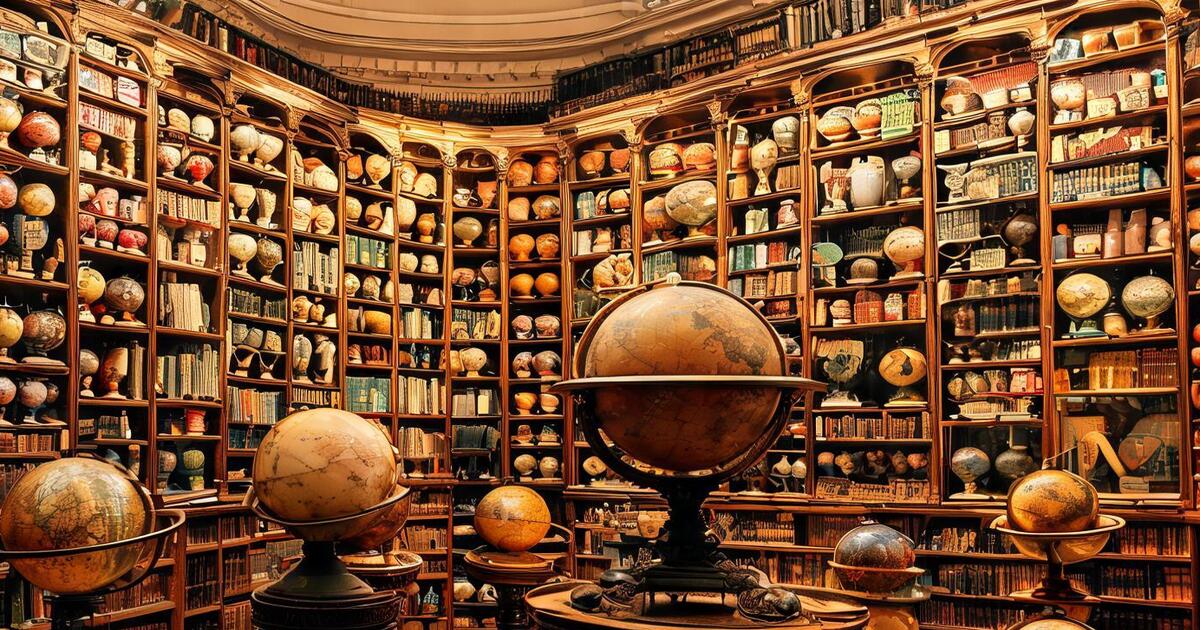
Just a few hundred metres from the State Hall of the National Library stands the Globe Museum — the world’s largest museum of its kind. Its collection holds more than 800 globes, 250 of which are on display: terrestrial and celestial globes by Mercator from the 16th century, an entire hall dedicated to Venetian master Vincenzo Coronelli, plus globes of the Moon, Mars and other celestial bodies.
In 2026 the museum turns 70, and on 24 September a new hall will open for the anniversary, devoted to globes in everyday life, art and pop culture, including the space age. As Austrian National Library reports, the museum is fully air-conditioned — a pleasant stop even on the hottest days of the Hundstage heat spell.
Hours: Tuesday–Wednesday 10:00–18:00, Thursday 10:00–21:00, Friday–Sunday 10:00–18:00. Address: Herrengasse 9, 1010 Vienna.
The Kriminalmuseum: crimes of old Vienna
On Große Sperlgasse in Leopoldstadt stands the Seifensiederhaus — the “soap boilers’ house”, built in 1685, just two years after the second Turkish siege of Vienna. Since 1991 its cellars have housed the Kriminalmuseum, a museum of Viennese police, justice and crime history, as the museum’s official site explains.
In the dark basement chambers, relics of notorious Viennese crimes line the walls: weapons, documents, photographs. One of the most famous exhibits tells the 1910 story of a limbless woman found in a laundry basket on a staircase — and the murderer traced through a scrap of newspaper found far from the crime scene. The museum looks as if it froze in 1991 — and that retro charm is exactly what makes it special.
The thick walls keep natural coolness inside, and the “shiver factor” rivals any air conditioner. Hours: Wednesday–Sunday, 10:00–17:00. Address: Große Sperlgasse 24, 1020 Vienna.
The Römermuseum: Vindobona beneath Hohen Markt
Under Hohen Markt square in the city centre, the ruins of the Roman camp Vindobona survive — they were discovered in 1948 during construction work. Today the Römermuseum, part of the Wien Museum network, operates above them. Across three narrow floors it tells how legion soldiers lived: where the barracks stood, how luxurious the baths were, whom soldiers were allowed to marry and how buildings were heated.
The Vienna basin was incorporated into the Roman Empire around 9 AD, and the museum shows what remains of that era under the modern city. The basement holds the excavations themselves; the upper floors offer vivid reconstructions. Archaeologists recently stumbled upon a mysterious ancient cellar of 450 square metres, and the museum’s mini-exhibition invites visitors to speculate about its purpose — like a detective case, as Wien Museum describes it.
Hours: Tuesday–Friday 9:00–17:00, Saturday–Sunday 10:00–17:00. Admission: €8 (concession €6), free on the first Sunday of the month. Address: Hoher Markt 3, 1010 Vienna.
The Gaming Museum: retro consoles in a bunker under Esterházypark
In a former civil-defence bunker under Esterházypark, next to the Haus des Meeres, the Gaming Museum has operated since 2023 — a private museum founded by Carinthian Markus Krainer. Before it, the underground space housed a torture museum, so the change of exhibits did the bunker a favour.
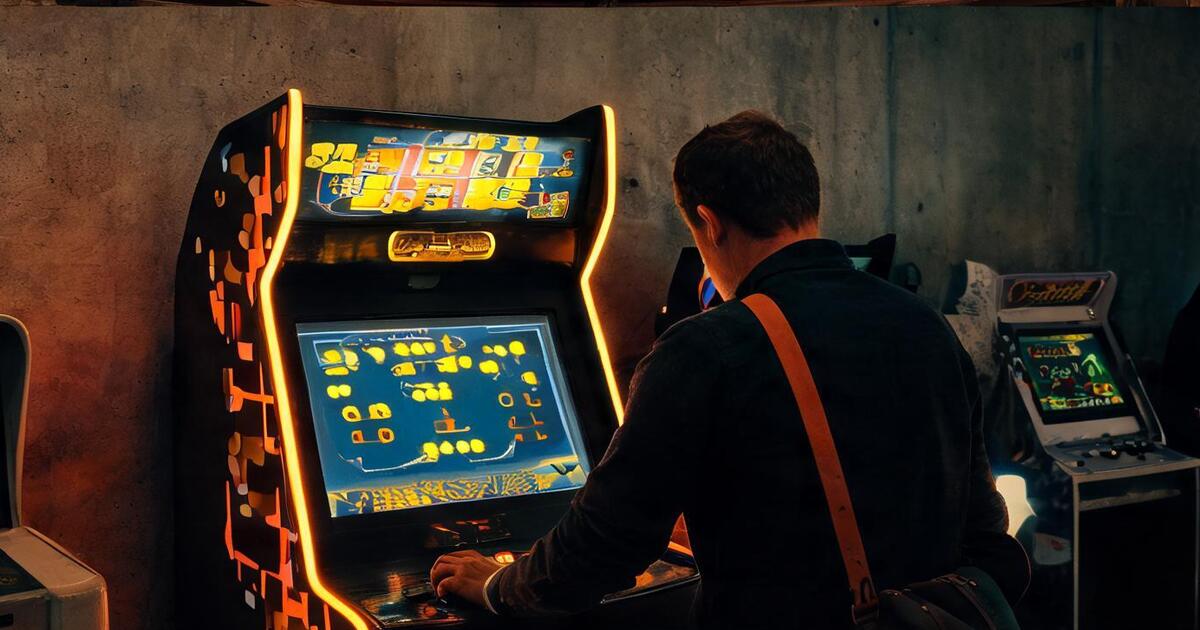
Inside is a console paradise: arcade cabinets, vintage home computers, the legendary Nintendo Wii and the Magnavox Odyssey — one of the first game consoles in history. Almost everything can be touched and played: challenge Pac-Man, settle a round of Tekken on a PlayStation or just sprawl on the museum’s “gamer couch”. As the museum’s website puts it, the exhibition is aimed at “all fans from level 0 to 999”.
The bunker is air-conditioned and open daily. Hours: every day 10:00–19:00. Admission: adult ticket €14.90, students €12.90. Address: Fritz-Grünbaum-Platz 1, 1060 Vienna.
The Literaturmuseum: Bernhard, Handke and Doderer’s dressing gown
In the former imperial treasury archive at Johannesgasse 6, the Literaturmuseum — the literature museum of the Austrian National Library — has found its home. Until February 2027, the exhibition “Dem Stumpfsinn die Geisteskappe aufsetzen” (“Putting the fool’s cap on stupidity”) runs here, dedicated to Thomas Bernhard. Visitors are greeted by a cult photo: Bernhard eating an ice cream cone — a nod to Kate Zambreno’s poem that ends with the line “Thomas Bernhard is eating an ice cream cone”.
The permanent exhibition on two floors features Peter Handke’s walking stick and Heimito von Doderer’s dressing gown, H. C. Artmann’s manifesto of the “poetic act” and quotes from Christoph Ransmayr’s first work. The atmosphere is old-fashioned and cosy, as described in the Die Presse guide. Afterwards, stop by the recently renovated Bräunerhof café — the one Bernhard loved to hate.
Hours: Tuesday–Wednesday 10:00–18:00, Thursday 10:00–21:00, Friday–Sunday 10:00–18:00. Address: Johannesgasse 6, 1010 Vienna.
Overview table: hours and prices
| Museum | Days open | Hours | Adult admission |
|---|---|---|---|
| Narrenturm (Stromtotenmuseum) | Wed–Sat | 10:00–17:00 | €8 |
| Fälschermuseum | Tue–Thu / Fri–Sun | 10–16 / 10–17 | ~€10 |
| Globe Museum | Tue–Wed, Thu, Fri–Sun | 10–18, Thu till 21 | ~€8 |
| Kriminalmuseum | Wed–Sun | 10:00–17:00 | ~€8 |
| Römermuseum | Tue–Sun | 9–17, Sat–Sun 10–17 | €8 |
| Gaming Museum | Daily | 10:00–19:00 | €14.90 |
| Literaturmuseum | Tue–Sun | 10–18, Thu till 21 | ~€8 |
Check exact prices on the museums’ websites — they change seasonally. To save money, consider the Vienna City Card: it offers discounts of up to 25 % at many museums, including the Römermuseum. If you want to cut travel costs further, our breakdown of how tourist habits are changing in Austria is worth a read.
How to plan your hidden-museum route
Five of the seven museums sit in or near the centre, so they are easy to combine. The Globe Museum and the Literaturmuseum are a five-minute walk apart (Herrengasse and Johannesgasse), both run by the National Library. The Römermuseum is on Hohen Markt, ten minutes from St Stephen’s Cathedral. The Narrenturm stands apart, in the 9th district near the old AKH campus. The Fälschermuseum and the Kriminalmuseum are on the left bank of the Danube Canal — combine them with a stroll through Augarten.
Note that small museums often have no online ticketing — cash or card on site only, as at the Kriminalmuseum. On hot days, plan visits for the morning: the air-conditioned Globe Museum and Gaming Museum make perfect midday refuges, and in the evening you can return to the leisure life and social scene Vienna offers in abundance. Before heading out, check where public toilets in Vienna are open — some are closed in peak season, which matters on a long museum walk.
Frequently Asked Questions
Which hidden museums in Vienna should I visit first?
The Narrenturm with its pathological-anatomical collection and the Globe Museum with 800 globes are the most impressive. For hands-on fun, choose the Gaming Museum, where you can play on retro consoles.
Do small Vienna museums have air conditioning?
Yes: the Globe Museum and the Gaming Museum are fully air-conditioned. The Narrenturm, Fälschermuseum and Kriminalmuseum stay cool thanks to thick historic walls — a comfortable 22–26 degrees in summer.
Can I get into these museums for free?
The Römermuseum offers free admission on the first Sunday of the month. Visitors under 19 enter the Narrenturm free of charge. The Vienna City Card also gives discounts of up to 25 %.
Are hidden Vienna museums suitable for children?
The Gaming Museum is designed for kids aged 12 and up accompanied by adults. The Römermuseum and the Globe Museum appeal to schoolchildren. The Narrenturm and the Kriminalmuseum are better for older visitors — their exhibits are on the grim side.
Conclusion: Vienna without the queues
Hidden museums in Vienna are a way to see the city differently — not through grand halls, but through its dark, funny and strange corners. Start with one or two, say the Narrenturm and the Globe Museum, and the list is easy to continue. Bring a Vienna City Card, check the opening hours on the museums’ websites and pick a day without rush: these places do not tolerate haste. And if you want more ideas for weekends in Austria — subscribe to our newsletter so you never miss fresh articles about life in the country.
Stay Up to Date with the Latest Austrian News
The week's top stories — news, guides, and insights about life in Austria. Every Sunday in your inbox.