
Weight Loss Injections and Health Insurance in Austria: What Is Reimbursed
Weight Loss Injections and Health Insurance in Austria: What Is Reimbursed Weight loss injections in Austria: when the Krankenkasse pays for Ozempic and Wegovy, indications, self-pay prices, prescriptions, courts and side effects. Topics: Daily Life, Healthcare, Food & Shopping.
The Abnehmspritze (German for “weight loss injection”) has become part of everyday life in Austria: Ozempic, Wegovy, Mounjaro and Saxenda cut body weight by up to 25 percent — and cost between 140 and 581 euros per month without reimbursement. The key question is therefore: when does the Krankenkasse (the public health insurance fund) pay, and when do you carry the costs yourself? In this guide we explain which diagnoses unlock reimbursement, how the Erstattungskodex (reimbursement list) and the chefärztliche Bewilligung (chief physician approval) work, which exceptions apply since 2026, and how one patient from Upper Austria won her case against ÖGK in court. We also cover self-pay prices, side effects and the counterfeit pens that the Austrian federal drug safety office keeps finding online. One thing first: this article is general information and not medical advice. Any therapy decision belongs to your doctor.
What a weight loss injection is and which products are sold in Austria
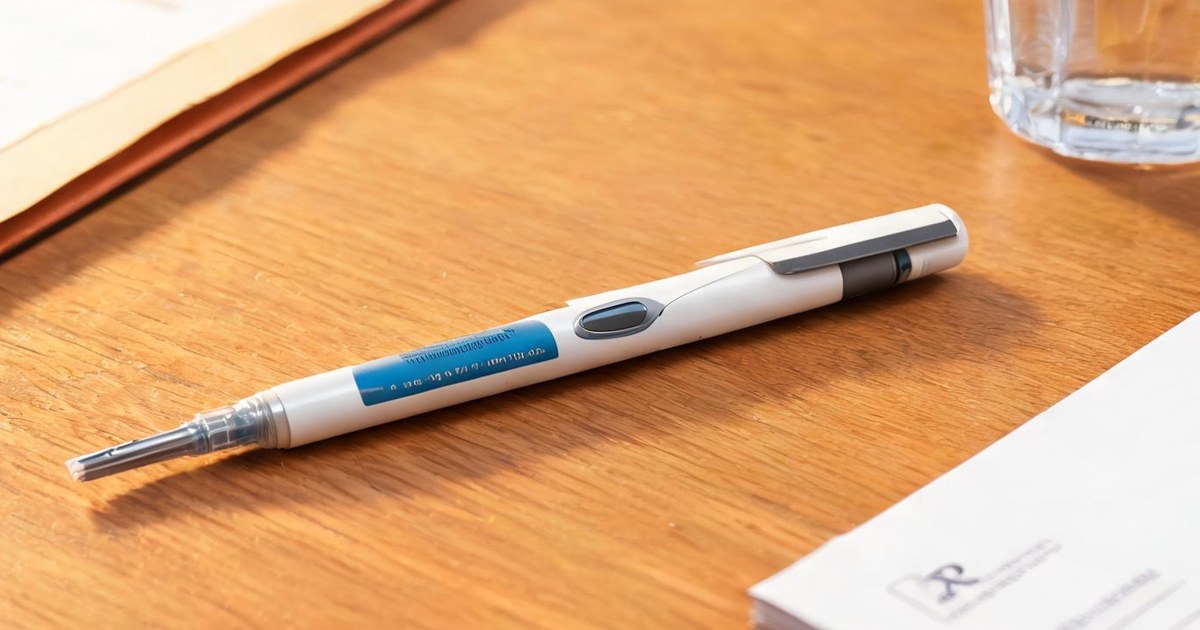
Abnehmspritze is the colloquial name for injections based on GLP-1 satiety hormones. You inject once a week with a pen-like device into the abdomen or thigh. The active ingredient slows down stomach emptying, curbs appetite and switches off the constant background chatter about food that Austrian doctors call Foodnoise.
Four products matter on the Austrian market. Ozempic and Wegovy share the same active ingredient, semaglutide: Ozempic is approved for type 2 diabetes, Wegovy for obesity treatment. Mounjaro runs on tirzepatide and is also approved for type 2 diabetes. Saxenda with liraglutide is the oldest member of the family. According to the magazine profil, the new generation of injections approved in the EU since 2018 is considered a breakthrough in treating severe obesity: risks of hypertension, diabetes, fatty liver and joint pain drop measurably.
All four products are prescription-only in Austria. A legal purchase without a doctor prescription is impossible — more on that in the counterfeit section. Whether the insurance fund pays, however, depends not on the doctor signature but on the diagnosis.
Indications: diabetes or obesity — this border decides everything
For the insurance company, your weight matters less than your diagnosis. As Vienna endocrinologist Florentine Schreiner explained in an ORF interview, GLP-1 medications are indicated at a body mass index above 30 — or above 27 with weight-related comorbidities such as hypertension or sleep apnoea.
These medications are indicated at a body mass index above 30 — or above 27, when weight-related comorbidities like high blood pressure are present.
— Florentine Schreiner, specialist in internal medicine, endocrinology and diabetology, in the ORF programme “Wien heute”
The products differ in what they are actually approved for. Ozempic is registered in Austria only for type 2 diabetes; using it on healthy people purely for looks is an off-label application. Wegovy contains the same active substance but is registered specifically for obesity treatment. The Austrian Obesity Society recommends drug therapy from a BMI of 30, or 27 with comorbidities, and insists that obesity is a serious chronic disease rather than a willpower problem.
The practical takeaway: collect your documentation before talking therapy. Diagnoses, previous weight loss attempts, lab values and reports on comorbidities. The more precise the file, the higher the chance the fund recognises treatment as medically necessary rather than cosmetic. The same logic applies to eyelid surgery: without proven medical necessity, the fund does not pay.
The general rule: pure obesity is not reimbursed
The baseline rule disappoints many: weight loss medications in Austria are excluded from regular reimbursement. Back in 2004, these drug categories landed on the Negativliste — the list of pharmaceutical categories that insurance funds do not cover. Applications for Wegovy or Mounjaro for plain obesity are therefore routinely rejected, even when doctors insist on therapy.
The exception is type 2 diabetes. Ozempic and Mounjaro are listed in the Erstattungskodex, in the “yellow” zone that requires prior approval — the chefärztliche Bewilligung. Patients with confirmed diabetes get a fund prescription and pay only the Rezeptgebühr (prescription fee) in the pharmacy: 7.55 euros per pack in 2026, as ÖGK states. There is an annual cap: once you have spent two percent of net yearly income on prescription fees, further prescriptions are free for the rest of the year.
How the fund system works as a whole, and which insurers exist, is covered in our guide to health insurance funds in Austria. If you have no coverage at all, start with our article on living in Austria without health insurance — without a policy there is nothing to reimburse.
Exceptions: when the fund does pay
In February 2026 the picture shifted. Manufacturer Novo Nordisk cut Wegovy prices and agreed a special reimbursement scheme with the umbrella association of Austrian social insurers for particularly vulnerable groups. As the trade portal MedMedia reports, the fund now covers Wegovy in two constellations.
First: adolescents aged 12 to 20 with an Equi-BMI above 30 and at least one weight-related comorbidity, where six months of prior treatment failed. Therapy runs for two years with a possible one-year extension, and the first prescription comes from paediatric obesity centres. Second: adults with an indication for bariatric surgery — a one-year course to reach an operation-safe target weight. First prescriptions are issued by reference centres of the Austrian society for obesity and metabolic surgery.
Third remains the individual route: where medical necessity is proven, a court can force the fund to pay — exactly what happened in the case described next. And for type 2 diabetes, reimbursement continues through the standard Erstattungskodex route with chief physician approval.
Court practice: how one patient won against ÖGK
Funds reject even severe cases — but a negative decision is not the end of the road. Andrea Tews, a 66-year-old retired veterinarian from Upper Austria, had already lost 20 kilograms on the injections when ÖGK suddenly stopped paying after one and a half years. The fund argued the medications were not used “for medical treatment” and that weight could be reduced “through diet and lifestyle changes”.
Tews filed an objection with help from the Arbeiterkammer (Chamber of Labour). The case reached the Regional Court in Linz — and she won outright. The court-appointed expert concluded that without the medication her weight, osteoarthritis and immobility would worsen; the therapy was medically necessary, not cosmetic. ÖGK had to reimburse the privately purchased drugs, court costs and ongoing therapy. By the time profil visited her, Tews had lost 40 kilograms in total.
Notably, the fund tone has changed: in summer 2025 ÖGK publicly questioned whether obesity was a disease at all, but after the ruling it cited the WHO classification and promised access to necessary therapies, as profil reports. Your playbook after a rejection: request the written decision (Bescheid), file an objection within four weeks, and bring in the Arbeiterkammer. The same “documentation beats intuition” principle applies to eyelid surgery reimbursement.

Prices: what weight loss injections cost without insurance
Without reimbursement, therapy becomes a budget line: depending on product and dose, expect 140 to 581 euros per month, as calculated by the magazine profil. On top come fees for private-practice doctors, if you see a Wahlarzt (a doctor running a private practice outside the fund system) instead of a fund doctor.
| Product | Active ingredient | Approval in Austria | Self-pay price |
|---|---|---|---|
| Ozempic | semaglutide | type 2 diabetes | roughly from 200 €/month |
| Wegovy | semaglutide | obesity (BMI ≥30 or ≥27 with comorbidities) | 244.85 € (1.7 mg) / 282.50 € (2.4 mg) |
| Mounjaro | tirzepatide | type 2 diabetes | roughly 250–400 €/month |
| Saxenda | liraglutide | obesity | lower end of the 140–581 € range |
Wegovy prices fell in February 2026: the 2.4 mg maintenance dose now costs 282.50 euros instead of 333 euros, and the 1.7 mg dose sits at 244.85 euros, the trade portal MedMedia reports. The higher Mounjaro doses remain the most expensive option on the market. If reimbursement is approved — via diabetes, the special scheme or a court ruling — you pay only the 7.55 euro Rezeptgebühr per pack. Private policies with a pharmacy add-on may cover part of the self-pay amount, so check your plan.
Getting a prescription and what the chefärztliche Bewilligung means
A genuine product cannot be bought legally in Austria without a prescription: the federal office BASG states plainly that original Ozempic is dispensed only via prescription through a public pharmacy. So the path starts at a doctor. Usually you begin with your GP: they assess BMI, comorbidities and your weight history, and refer you to an endocrinologist or a metabolism centre if needed.
Then the paths split. With type 2 diabetes, the doctor issues a fund prescription and applies for the chefärztliche Bewilligung — the controlled review by your insurer’s chief physician. The fund checks the diagnosis and the Erstattungskodex criteria; once approved, you simply pay the prescription fee. With obesity but no diabetes, you get a private prescription and pay the full price — unless your case fits the 2026 special scheme or the court route.
If the fund rejects your application: request the written decision, file a timely objection, involve the Arbeiterkammer. A similar sequence applies to ÖGK Selbstbehalt refunds for doctor visits — first the paperwork, then the objection, then the appeals. And do not accept “private injections” from cosmetic providers without full diagnostics: the next sections explain why.
Risks and side effects: what Austrian doctors report
The most common side effects are nausea, vomiting, diarrhoea and constipation, especially in the first weeks of therapy. Rarer but serious are gallbladder and pancreas inflammations, lists Vienna internist Florentine Schreiner in an ORF Wien report. For older people, rapid weight loss is risky because of muscle loss: fall risk rises and quality of life drops.
Cosmetic and dietary effects add another layer. The fast disappearance of facial fat is dubbed Ozempic Face — hollowed cheeks that patients then refill with hyaluronic filler. Without enough protein and strength training you lose muscle along with fat: experts recommend roughly twice the usual protein intake plus consistent training, such as the medical strength-training system at Kieser.
Then there is the unknown. Reliable long-term data do not exist yet — the products are simply too new. For people of normal weight there are no data showing any benefit, and case studies show stronger side effects and higher drop-out rates. The medical community is unanimous: this is not a figure vitamin but a therapy with indications, monitoring and support — and it only works alongside nutrition and movement.
Counterfeits: why you should never buy weight loss injections online
The hype has created a black market. The federal office BASG has repeatedly warned about counterfeit Ozempic in Austria: fake pens surfaced online and even through dubious cosmetic providers. The authority stresses that genuine Ozempic is available only by prescription and only through a public pharmacy.
Injecting a fake means injecting an unknown substance into your own body. It may contain the wrong dose, a completely different drug, or no active ingredient at all. The European medicines agency separately warns against buying these products without medical supervision.
The rule of thumb stands: no prescription, no product — however professional the online packaging looks. And when a provider pitches 400-euro-a-month injections to healthy people of normal weight, as ORF described, treat it as a red flag. Such cases are already causing trouble for the doctors involved and their lawyers.
The Ärztekammer position and what may change next
In September 2026, the medical chambers of Vienna and Lower Austria, together with the Austrian Obesity Society, published an open letter to health minister Korinna Schumann. Their demand: open regular reimbursement of obesity therapy and map counselling and ongoing therapy support into the fund system. Vienna vice-president Naghme Kamaleyan-Schmied presented a typical case at the press conference: a patient with obesity, elevated blood sugar, joint pain and sleep apnoea — “the patient was rejected immediately.”
The arguments carry weight. The Institute for Advanced Studies puts the annual cost of obesity to Austria at 2.4 billion euros — mostly hospital stays and sick leave. In many European countries the funds already pay for the injections. The Green party has tabled a motion to update the 2004 list and move suitable obesity therapies into regular reimbursement, with a committee decision expected in October, profil writes.

The direction is clear: the special scheme for adolescents and bariatric candidates has run since February 2026, courts are forcing funds to pay, Wegovy prices have fallen. The next battlegrounds are the Negativliste itself and how the funds classify obesity. And with an oral tablet form of semaglutide about to launch in Europe, expect the debate to accelerate.
Frequently Asked Questions
Does the insurance fund pay for Ozempic for weight loss without diabetes? No. For plain obesity, weight loss medications have been excluded from reimbursement since 2004. The fund pays for type 2 diabetes through the Erstattungskodex with chief physician approval, since 2026 in special cases for adolescents aged 12 to 20 and adults ahead of bariatric surgery — plus court-ordered cases with proven medical necessity.
How much does Wegovy cost in Austria in 2026? After the February 2026 price cut: 244.85 euros for the 1.7 mg pack and 282.50 euros for the 2.4 mg maintenance dose per month. The whole product family ranges from 140 to 581 euros monthly depending on product and dose. With approved reimbursement you pay only the 7.55 euro Rezeptgebühr.
What should I do if the fund rejects reimbursement? Request the written Bescheid, file an objection within four weeks, and involve the Arbeiterkammer — their support is free. With documented medical necessity, patients have already beaten ÖGK in court, most recently at the Regional Court in Linz.
Can I buy weight loss injections online without a prescription? No — and please do not try. The products are prescription-only, and BASG warns about counterfeit Ozempic pens in Austria: a fake may contain unknown substances or dangerous doses. The only legal route is a doctor prescription and a public pharmacy.
What to do next: a short checklist
Reimbursement rules for weight loss injections in Austria are moving: the diabetes route works, special cases are opening up, courts side with patients, and the medical chambers are pushing the ministry. If you are considering therapy, this order makes sense:
- Check the indications: BMI from 30, or from 27 with comorbidities, documented by doctors.
- See your doctor with a full file: lab results, past weight loss attempts, specialist reports.
- Clarify your reimbursement route: diabetes (Erstattungskodex), the 2026 special scheme, or self-pay.
- If rejected: Bescheid → objection within 4 weeks → Arbeiterkammer → court.
- Never buy online: prescription and pharmacy only.
Once more, a reminder: this article is informational and does not replace medical consultation. If health insurance matters to you beyond this topic, subscribe to our newsletter — we explain fund rules, prices and reforms in plain language. Regular reimbursement of obesity therapy in Austria looks like a question of the next few years.
Stay Up to Date with the Latest Austrian News
The week's top stories — news, guides, and insights about life in Austria. Every Sunday in your inbox.