
Eyelid surgery in Austria: what it costs and when insurance pays
Eyelid surgery in Austria: what it costs and when insurance pays Eyelid surgery in Austria costs €1,500–6,000 depending on the procedure. When ÖGK, SVS and BVAEB cover blepharoplasty and which medical reports you need. Topics: Daily Life, Healthcare.
Drooping eyelid skin makes you look tired, and the first question is almost always about the price. Eyelid surgery (German: Lidstraffung) in Austria costs between €1,500 and €6,000 depending on the procedure. In Vienna practices, upper lid surgery currently starts at around €3,000. The health insurance covers the operation only when it is medically necessary and the excess skin measurably restricts your visual field. That single line decides whether you pay thousands of euros or the insurer does. This guide shows typical prices for Vienna and the federal states, explains the difference between a private clinic, a private-practice surgeon and a public hospital, and what ÖGK, SVS and BVAEB require for cost coverage. Plus the realistic risks and a week-by-week healing timeline.
What eyelid surgery costs in Austria
The price depends on three factors: upper or lower lids, the scope of the procedure and the federal state. Upper lid surgery is the smallest and cheapest operation. It takes about 30 to 45 minutes under local anaesthesia and is usually done on an outpatient basis. Lower lid surgery for eye bags is more complex, because the surgeon works on fat tissue and supporting structures.
Typical price ranges in Austria look like this:
| Procedure | Usual range in Austria | Vienna (private practice) |
|---|---|---|
| Upper lid surgery | approx. €1,500–3,500 | from approx. €3,000 |
| Lower lid surgery | approx. €2,500–4,500 | from approx. €3,000 |
| Upper and lower combined | approx. €4,000–6,000 | usually well above €4,000 |
In a Viennese plastic surgery practice, prices for both upper and lower lid surgery start at €3,000, according to the website of Vienna surgeon Dr Stefan Gärner. The final amount depends on the diagnosis, the scope and the type of anaesthesia. At the consultation you receive a written estimate that lists every planned service separately.
Expect several positions on the invoice. They include the surgeon’s fee, charges for the operating theatre and assistant, the local anaesthesia, materials and medication. In some practices, the presence of an anaesthetist comes as a separate line if you want sedation. Also clarify in advance what a revision would cost. Small touch-ups are rare, but honest planning treats them as a residual risk of any operation.
Check what the estimate actually includes. Some practices fold consultation, stitch removal and follow-up visits into the price. Others bill them separately. Comparing offers only makes sense with an identical list of services, otherwise the numbers are not comparable.
Why Vienna is more expensive than the federal states
Vienna is the most expensive place for plastic surgery in Austria. Rents and wages in the capital are higher and demand is strong. In Graz, Linz, Salzburg or Innsbruck, the same procedures typically cost 10 to 30 percent less. The reason is lower overhead and less competition for the few experienced surgeons.
If you are flexible, request estimates from several federal states. But budget honestly for the hidden costs. Follow-up care is part of the operation, and you will return to the practice anyway for stitch removal. A cheap operation far away becomes expensive when every check-up means a train journey.
Timing differs too. In Viennese practices, consultations are often available within days, while smaller cities take longer. The queue between consultation and surgery is, however, shorter than the hospital route. If your job leaves little flexibility, book the consultation for Friday evening and the operation for the following week.
Cheap does not automatically mean good. Check the qualification behind every offer. You want a specialist in plastic, aesthetic and reconstructive surgery, or an ophthalmologist with a proven focus on eyelids. Ask how many of these procedures the practice performs per year.
Private clinic, private practice or public hospital
There are three routes to eyelid surgery in Austria, and they differ sharply in price. The fastest is a Wahlarzt — a private-practice doctor with no insurance contract. You pay the fee yourself, and appointments are usually available within weeks. Surgery is outpatient, in the practice or a day clinic.
A private clinic offers the most comfort: an operating theatre, a single room and continuous care. You feel it on the invoice, because flat rates for the stay and nursing come on top of the surgeon’s fee. This route makes sense for combined procedures, less so for upper lids only.
The public hospital is the cheapest option, but only with a medical indication. If the insurer approves the operation, you pay only the standard daily hospital contribution. What still comes out of your own pocket at ordinary doctor visits is covered in our post on ÖGK co-pays. In return, you wait several weeks to months for a surgery slot, depending on the state. We explain how Austrian insurers differ in our guide to health insurance funds.
Between private practice and hospital sits the day clinic as a middle path. These clinics usually belong to private clinic groups, operate in their own theatre and send you home the same afternoon. The price sits between a practice and a private clinic, because there is no overnight stay. For upper lids only, this is often the most comfortable option.
Private-practice doctors come with a reimbursement quirk. ÖGK refunds 80 percent of the amount it would have paid a contract doctor for the same service. That is not the same as 80 percent of your private invoice, because private doctors set their fees freely. The actual refund is often only a fraction of the bill.
Who operates: plastic surgeon or ophthalmologist
Upper lids may be operated on by two groups of specialists. These are specialists in plastic, aesthetic and reconstructive surgery, and ophthalmologists with a surgical lid focus — the so-called oculoplastic surgery. Both routes can be excellent, but the perspective differs. The plastic surgeon plans the entire upper half of the face: brow position, skin quality and fat distribution. The oculoplastic ophthalmologist puts the eyeball at the centre and watches the tear ducts and lid closure function closely.
For cost coverage, the specialism is secondary. The findings and your insurer’s criteria decide. What matters is genuine experience with lid procedures. Ask how many such operations the surgeon performs per year and request examples of similar cases. A serious doctor answers this without pressure and without sales slogans.
Prices differ as well. Oculoplastic practices sometimes charge less than pure aesthetic surgeons, because eyelids are routine work for them. On the other hand, the ophthalmologist adds examinations, some of which run through statutory insurance as ordinary visits. In the end, count the whole package: consultation, diagnostics, operation and aftercare.
If you are unsure, get two consultations, one plastic and one oculoplastic. That costs two consultation fees but gives you two views of the same findings. With functional complaints, you cannot avoid ophthalmological diagnostics anyway.
Medical indication or cosmetic wish
Everything hinges on one distinction. As oesterreich.gv.at explains, statutory insurance covers services that treat illness or functional disorders. Pure aesthetics are not included. Dissatisfaction with your appearance is no reason for the insurer to pay, as the example on Salzburg24 shows.
Medically necessary means the excess upper lid skin measurably impairs your vision. Typical signs: you raise your eyebrows when reading or driving, the forehead muscles are permanently tense, and headaches build up by evening. Cosmetic means a tired look or make-up problems are the main motivation.
| The insurer may pay | The insurer will not pay |
|---|---|
| Proven narrowing of the visual field from upper lid skin | Tired look without functional impairment |
| Headaches from permanent forehead muscle tension | The wish to look younger |
| Measurable improvement when the lid skin is lifted | Eye bags and lower lid surgery |
| Documented problems when reading or driving | Purely cosmetic adjustment of the lid crease |
Lower lid surgery is almost never considered medically necessary, because eye bags rarely affect vision. An exception is possible with a documented functional disorder, but do not count on it. If you also want the bags removed, you normally pay for that part privately, even when the upper lids are approved.
A practical tip before applying. Keep a symptom diary for two weeks: when you raise your brows, when the forehead tenses, when the headaches arrive. Such notes turn a vague feeling into a comprehensible history of complaints. They cost five minutes a day and strengthen the application more than any wording on the form.
For reimbursable private-practice services, ÖGK refunds in principle 80 percent of the amount the insurer would have spent on the same treatment by a contract doctor.
— Dr Stefan Gärner, specialist in plastic, aesthetic and reconstructive surgery, Vienna
What ÖGK, SVS and BVAEB require
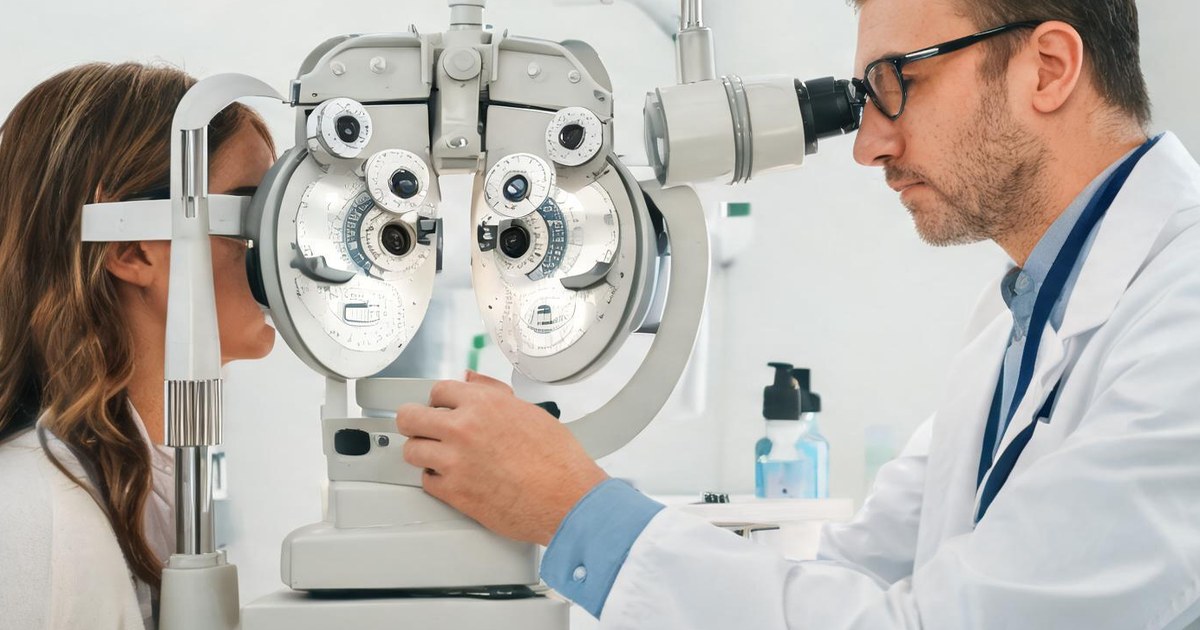
All three major insurers review applications on the same pattern, with different forms. The process has four steps and starts at the ophthalmologist. There you get a visual field test, the perimetry: it measures which area you perceive when looking straight ahead. The test runs twice — with the lid skin hanging naturally and with it lifted. If the upper visual field improves clearly, this goes into the report.
The second element is the surgeon’s specialist report with photographic documentation of the excess skin. The package also includes a written estimate. Submit these documents to ÖGK, SVS or BVAEB before the operation. The insurer can request additional documents or order its own medical assessment.
A rejection is not the end of the story. Often the reports are not conclusive, and a repeat perimetry clarifies matters. Against a formal rejection notice you can file a lawsuit at the Labour and Social Court. Watch the deadlines stated in the notice.
We walk through the entire route from perimetry to reimbursement step by step in our guide on droopy eyelid surgery and health insurance. It also covers what to do after a rejection.

Which risks eyelid surgery carries
Eyelid surgery is one of the most common and safest procedures in plastic surgery, and serious complications are rare. Swelling and bruising are normal in the first days, and most people feel tightness rather than pain. Temporary dry eyes are also common, because blinking changes after the operation.
Less frequent risks include asymmetry, a temporarily incomplete lid closure and irritation of the conjunctiva. With lower lid surgery, swelling of the conjunctiva can occur — a condition called chemosis that resolves over weeks. Very rare but serious is bleeding behind the eye. Wound infections also belong to the rarer complications.
With clean technique, the scars sit inside the natural lid crease or just below the lash line. Eyelid skin usually heals into fine, inconspicuous lines. Nicotine impairs blood flow and delays wound healing, so stop smoking several weeks before the operation.
The first weeks follow a short list of prohibitions. No rubbing, no bending down, no heavy lifting and no sauna. Make-up only once the wounds are fully closed. Fresh scars must stay out of the sun, so sunscreen and sunglasses are mandatory in summer. If your eyes feel dry, use the prescribed drops consistently without gaps.
Simple habits speed up recovery. Sleep on your back with the head raised, drink enough water and postpone alcohol for the first weeks. Plan the follow-up appointments early so work does not push them aside.
Take three warning signs seriously and go to an eye emergency clinic immediately: sudden vision deterioration, severe eye pain and rapidly increasing one-sided swelling. These symptoms can point to bleeding behind the eye and must not wait for the next follow-up appointment. The healing guide by Dr Gärner says the same.
Healing week by week
Visible healing takes two to three weeks, and the final result shows after four to six months. Scar maturation can take six to twelve months. For planning work and holidays, keep this timeline at hand:
- Days 1–3 — swelling peaks on the second or third day. Cool the area for 10 to 15 minutes several times a day and sleep with your upper body raised.
- Days 5–7 — stitches come out after upper lid surgery. Light desk work is often possible from day 2 to 4.
- Week 2 — from day 7 to 14 most people are presentable again. Eye make-up and contact lenses are allowed after medical clearance, usually after 10 to 14 days.
- Weeks 3–4 — sport and strength training return after at least two weeks, swimming and contact sports after three to four weeks. Driving is often possible again after 3 to 5 days in an uncomplicated course.
- Months 4–6 — the look looks natural and the result can be judged. Fresh scars need six months of sun protection.
A realistic sick leave is 7 to 14 days, depending on your job. Employees should arrange the sick certificate early and check continued salary payment. We explain how sick pay works and how long you can stay at home in our guide to Krankengeld.
With combined upper and lower lid surgery, recovery takes longer, especially the swelling on the lower lids. Plan at least two weeks between the operation and any important event.

Three legal ways to cut the costs
The first route is documentation. Submit the application before the operation and have every report prepared properly. A complete package — perimetry, photos and the surgeon’s report — raises the chance of approval significantly. Sending documents after the operation is almost pointless: the insurer approves in advance.
The second route is private supplementary insurance. Depending on the tariff, it covers part or all of a private-practice fee. Distinguish two tariff groups: hospital tariffs mainly help with stays in hospital, while reimbursement tariffs cover fees in private practices. For an operation with a private doctor you need the second type. Check existing policies before buying a new one, because new tariffs come with waiting periods. Add up premium and waiting period: if you want surgery within the next one or two years, a new tariff rarely gets past its quarantine phase. Get the confirmation in writing before you book an operation date.
The third route is price comparison. Request two or three estimates, including ones from other federal states. With a genuine medical indication, the public hospital is the cheapest option. And if you plan a break in work, remember that a gap in insurance cover is expensive before any planned procedure. Our article on health insurance without a job in Austria covers the basics.
Frequently asked questions
How much does upper lid surgery cost in Vienna? Viennese plastic surgery practices start at around €3,000. Across Austria the range is roughly €1,500 to €3,500. The estimate should list consultation, surgery, stitch removal and follow-up separately. Expect extra positions for the operating theatre and anaesthesia if they are not part of the fee.
Does the insurance pay if the eyelids give me headaches? Headaches from permanent forehead muscle tension are a recognised symptom. But they only count together with a measurable finding, meaning the proven visual field narrowing in perimetry. Without that report the operation stays a private service. Have the headaches additionally documented by your GP or a neurologist — it strengthens the application.
How long am I off work after the operation? Plan for 7 to 14 days of sick leave. Desk work is sometimes possible after 2 to 4 days, customer-facing roles need about two weeks. Heavy physical work and sport pause for at least two weeks. Request the sick certificate directly at the follow-up visit, since the stitches come out in the first week anyway.
Is supplementary insurance worth it for eyelid surgery? That depends on the tariff. Good hospital tariffs refund private-practice fees fully or partially, but often have waiting periods of several years for surgery. If you already hold a policy, have the coverage checked in writing before the operation. A new policy rarely pays off for an operation planned at short notice. A phone call is not enough — have the reimbursement confirmed in writing.
Conclusion and your next steps
Eyelid surgery in Austria costs between €1,500 and €6,000, in Vienna from around €3,000. The insurer pays only with a measurably narrowed visual field, and the application must be in before the operation. With good preparation you save thousands of euros and weeks of waiting.
Your checklist:
- Document your symptoms for two weeks, for example raised eyebrows while reading.
- Book an appointment with the ophthalmologist for a visual field test.
- Request two or three estimates, including from other federal states.
- Submit the application with all reports to ÖGK, SVS or BVAEB before the operation.
- Plan sick leave and follow-up appointments in advance.
Those who document first and operate later decide themselves whether the insurer pays or the wallet does. And subscribe to our newsletter so you never miss a new breakdown of Austrian medicine and insurance.
Stay Up to Date with the Latest Austrian News
The week's top stories — news, guides, and insights about life in Austria. Every Sunday in your inbox.