Driving License in Austria: Categories, Costs and Process 2026
Driving License in Austria: Categories, Costs and Process 2026 Driving license in Austria: all categories, minimum age, costs, theory and practical exams, L17 at 17, foreign license exchange and new EU rules 2026. Topics: Daily Life, Transport.
Getting a driving license in Austria in 2026 is one of the most expensive and bureaucratic journeys for newcomers. A full Category B course costs on average €2,400–3,200, and the process involves a medical check, a first-aid course, theory lessons, practical training and two exams. If you already hold a foreign license, separate exchange rules apply that you should know before you move.
This guide covers everything in order: which license categories exist, the minimum age for each, how training and exams work, what everything costs, how the L17 program lets you drive at 17, how to exchange a foreign license and which new EU rules are coming. Information is based on oesterreich.gv.at, ÖAMTC, WKO and current Austrian driving school prices.
Which driving license categories exist in Austria
Austria uses the EU-wide driving license categories. For private drivers the most relevant are AM (moped), A1/A2/A (motorcycle) and B (car). Commercial driving adds C/C1 (truck) and D/D1 (bus).
| Category | Vehicle | Minimum age |
|---|---|---|
| AM | Moped up to 45 km/h | 15 |
| A1 | Light motorcycle up to 125 cc | 16 |
| A2 | Motorcycle up to 35 kW | 18 |
| A | Motorcycle, unlimited | 24 (or 20 via progressive access) |
| B | Car up to 3.5 t, up to 8 seats | 18 (L17: 17) |
| B+E | Car with trailer over 750 kg | 18 |
| C/C1 | Truck over 3.5 t | 18/21 |
| D/D1 | Bus | 21/24 |
An important detail: Category B automatically includes Category AM — car license holders can ride a moped without a separate permit. As oesterreich.gv.at explains, the same applies to categories A1, A2, A, BE, C1, C1E, C, CE, D1, D1E, D, DE and F.
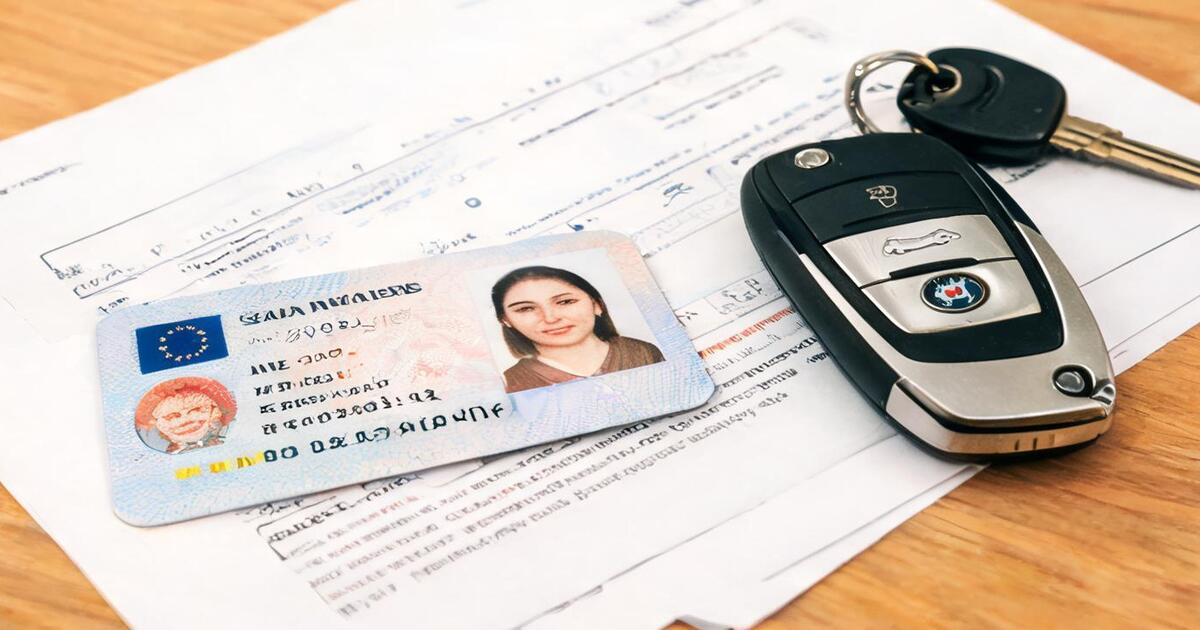
Beyond the standard classes there are special ones: B+E for trailers over 750 kg and F for tractors in agriculture and forestry. Professional drivers additionally need CPC qualification, which every larger driving school in Vienna, Linz, Graz or Salzburg offers. The Austrian license — a plastic card in the EU Scheckkarte format — is recognised throughout the European Union.
Minimum age for each license category
The minimum age is the first filter on the road to a license in Austria. For Category B it is 18 years, but you may start driving school six months before your birthday. The exception is the L17 program, which allows the exam at 17.
Motorcycles follow a three-tier system: A1 at 16, A2 at 18 and A at 24 — or at 20 via progressive access after two years on A2. Mopeds (Category AM) are allowed from 15, as the Jugendinfo Vorarlberg summarises.
For trucks and buses the ages are higher: basic training for C starts at 18, the full Category C exam is possible at 21. For D (bus) the minimum is 24, or 21 with vocational training.
A common misconception: moving to Austria with a foreign license means starting from scratch. Recognition actually depends on where the license was issued — more on that in the exchange section below. Meanwhile, the number of new drivers is falling: the license statistics of Statistik Austria show that only 49,834 people obtained Category B through the regular path in 2023 — the lowest figure since 2006.
Prerequisites: medical check and first-aid course
Before the driving school files your application, three things must be done. The medical certificate (ärztliches Gutachten) confirms your fitness to drive — it costs around €35 and must not be older than 18 months at the time of issue, as autorevue.at notes.
Next comes the first-aid course (Unterweisung in lebensrettenden Sofortmaßnahmen) — six hours for about €60–80. Finally you need a passport photo (35 × 45 mm) that meets the official criteria.
The application for a driving license must be submitted at a driving school. The driving school can be freely chosen anywhere in Austria.
— oesterreich.gv.at, General information on obtaining a driving license
How training works: theory and practice
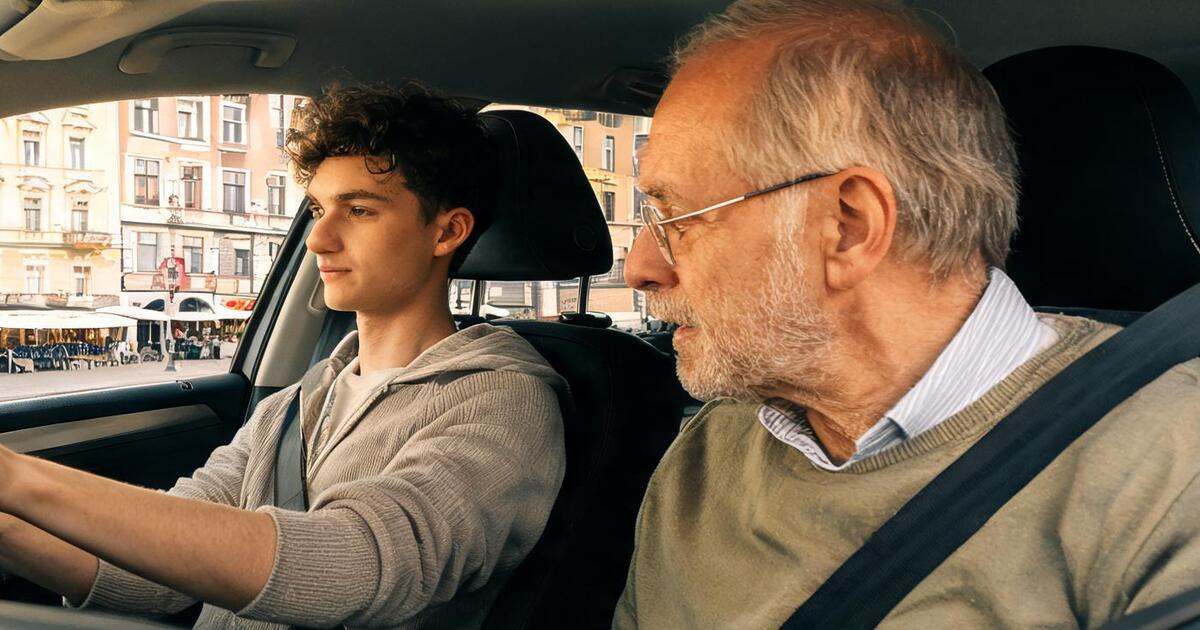
Driver training in Austria consists of a theory part (16 to 32 lessons) and practical training (12 to 18 driving lessons), plus perfection drives and a safety training course.
The computer-based theory exam costs about €5.50 per module, the practical driving test around €60. Each retake is charged again, which quickly inflates the total. The administrative fee for issuing the license has been €90 since 1 July 2025 (previously €60.50), according to ÖAMTC.
The full cycle looks like this: enrol at the driving school → theory course → theory exam on a PC → practical training (minimum 12 lessons) → driving test. Many schools include motorway and night drives in the package. To register for the theory exam you need the medical certificate, first-aid certificate and a photo; for the practical exam the first-aid proof must be on file, as the Verwaltung Steiermark lists in detail for the L17 procedure.
After passing the practical exam you receive a provisional license; the plastic card arrives by post a few days later.
How much does a driving license cost in Austria in 2026?
A Category B license costs on average €2,400–3,200 in Austria. The sum covers the enrolment fee, theory course, 18 driving lessons including motorway and night drives, and the first exam attempts. Fahrschule WienWest, for example, lists €1,825 for the base package — plus the medical check (€35), first aid (€80) and administrative fees.
Comparing with Germany explains why Austrian prices have that reputation: while the full package in Austria starts above €2,400, students in cheaper German states pay under €2,000. A detailed breakdown of all cost items is in our comparison of driving license costs between Austria and Germany.
| Cost item | Austria (2026) |
|---|---|
| Driving school enrolment | €50–150 |
| Theory course + learning materials | €200–450 |
| Practical training (12–18 lessons) | €1,200–1,900 |
| Medical certificate | ca. €35 |
| First-aid course (6 hours) | €60–80 |
| Theory exam | ca. €5.50/module |
| Driving test | ca. €60 |
| License issuance fee | €90 (since 1.7.2025) |
How to save: plan ahead, pass theory on the first attempt and avoid extra lessons — that keeps you at the lower end of the range. The L17 model is another budget-friendly alternative. Some schools offer weekend intensive courses: pricier upfront, but often with guaranteed exam slots and fewer total hours.
L17: driving a car at 17
The Austrian L17 program (“advanced license”) lets you obtain Category B at 17. Training starts at 15.5 and includes 32 theory lessons, 12 driving lessons and 3,000 kilometres of accompanied driving in a private car.
The accompanying person must have held a B license for at least seven years, have driven without serious offences for the last three years, and be a close relative of the student — usually a parent. During training drives a zero-alcohol rule (0.1 per mille) applies and the car must display the L17 sign front and back, as ÖAMTC explains.
After the exam comes a probationary period of at least three years with the strict 0.1 per mille alcohol limit. L17 costs about €1,900–2,300 depending on the school.
Exchanging a foreign driving license: EU and third countries
For newcomers the license exchange (Umschreibung) is the crucial step. Licenses from EU and EEA states are recognised in Austria without exchange — a voluntary swap is possible at any time, but costs €90 since July 2025. The authority queries the issuing state, which can take several weeks, as oesterreich.gv.at notes.
Licenses from third countries (outside EU/EEA) must be exchanged within six months of establishing residence in Austria. Conditions: you lived in the issuing country for at least six months and are 18 years old. Besides the medical certificate, a practical driving test is usually required, taken in a driving school car.
There are exceptions without a test: for all categories — Albania, Andorra, Gibraltar, Guernsey, Isle of Man, Japan, Jersey, Kosovo, Monaco, Montenegro, San Marino, Switzerland, Serbia and the United Kingdom. For Category B additionally Australia, Bosnia-Herzegovina, Hong Kong, Israel, Canada, New Zealand, North Macedonia, South Africa, South Korea, the USA and the United Arab Emirates. The full list is on the ÖAMTC page.
For the exchange you typically need your passport or ID card, the foreign license, a photo, the medical certificate and proof of registration (Meldebestätigung). If the license is not issued in German or English, a translation may be required. The authority also checks with the issuing state — the verification can take several weeks, warns oesterreich.gv.at. Allow enough time and do not drive with the foreign document after the six-month period ends.
Validity and renewal: card license and paper licenses
Since 2013 Austria issues only card licenses in the EU format. Validity is 15 years for categories A and B, 5 years for trucks and buses. Old paper licenses must be exchanged by 19 January 2033 at the latest, as the WKO explains.
Exchanging a paper license costs €73, and a lost card license the same. Note: for travel to certain non-EEA countries you need an international driving permit — issued by clubs like ÖAMTC and ARBÖ, valid one year and only together with the national license.
Few people know: a tourist with a valid foreign license can drive in Austria without restrictions — as long as no residence is established. At police checks the document must be valid and understandable in German or English; otherwise an international permit or certified translation helps. The validity rules for paper licenses and the card exchange details are neatly compiled by the WKO.
New EU rules: what the 2026 reform brings
The new EU Driving Licence Directive 2025/2205 was published on 25 November 2025 and is being phased in until 2030. The main changes for Austria:
- Digital license: From 2030 the license should also work as a smartphone app, as the Bundeskanzleramt announces. The physical card remains available.
- Validity: 15 years for cars and motorcycles, 5 years for trucks and buses — largely matching current Austrian practice.
- Health checks: Member states decide between a medical exam and self-assessment. Mandatory tests for seniors were rejected, reports the WKO.
- L17 becomes EU standard: accompanied driving from 17 will be introduced across the Union — the Austrian model served as the blueprint, notes ÖAMTC.
- EU-wide driving bans: for serious offences such as speeding or drink-driving, the ban applies in all member states.
- Category A1 with a car license: B holders may ride 125 cc motorcycles.
For novice drivers the EU introduces a probationary period of at least two years with an alcohol ban — Austria already has three years today. More on the new rules for learner drivers is in our article on the EU driving licence reform.
For holders of older licenses little changes for now: an indefinite license issued by another EU state must be exchanged for the card by 19 January 2033 if you then live in Austria. Medical checks remain mandatory for renewals of heavy categories C and D, while for A and B a self-assessment may suffice — the details must be set by member states by the end of November 2029.
Probationary period: stricter for new drivers
After passing the exam, every new driver in Austria enters a probationary period of at least three years. During this time the strict alcohol limit of 0.1 per mille applies — a single beer can cost you the license. For speeding and other offences the authorities react faster.
Serious offences during the probationary period can trigger not just a fine but a re-training program or temporary license withdrawal. After three years without serious offences the period ends automatically — no separate application needed. The EU reform sets a Union-wide minimum of two years; Austria stays stricter with three.
Traffic rules, alcohol and fines for license holders
With the license in your pocket, real responsibility begins. Austria applies an alcohol limit of 0.5 per mille, and 0.1 per mille for beginners during the probationary period and the first three years. Above 0.8 per mille the license is withdrawn temporarily.
The points system (Vormerksystem) covers 13 risky offences: the first leads to a note, the second to a measure, the third to license withdrawal for at least three months, as the BMEIA explains. Always carry your license — driving without it at a check results in a fine.
An overview of unexpected fines and typical pitfalls for newcomers is in our guide to 12 unexpected fines in Austria.

Frequently Asked Questions
How long does it take to get a driving license in Austria? With active planning about 3–6 months. Retaking theory or practice and driving school waiting times can stretch it to a year.
Can I drive in Austria with a foreign license? EU and EEA licenses are valid indefinitely. Licenses from third countries are valid for a maximum of six months after establishing residence — then exchange with a practical test is mandatory.
What if my license is not issued in German or English? For trips under six months carry an international driving permit or a certified translation. For the exchange a translation may be required — check with your local Führerscheinbehörde (licensing authority).
Do I need exams when exchanging a license from Russia, Ukraine or Kazakhstan? Yes, CIS countries have no exceptions: a practical driving test is required (no theory). Russian, Ukrainian, Belarusian and Kazakh licenses are not on the no-exam list.
How much does a Category B license cost in Austria in 2026? A full package costs €2,400–3,200 depending on the school and federal state, including theory, practice, exams and administrative fees.
From what age can I ride a motorcycle in Austria? From 16 for A1 (up to 125 cc), 18 for A2 (up to 35 kW), 24 for full A — or 20 via progressive access.
Your next step toward a license in Austria
The road to a driving license in Austria is clearly structured: first the medical check and first-aid course, then enrolment at a driving school of your choice, followed by theory, practice and the two exams. Budget €2,400–3,200 and expect three to six months.
If you already hold a foreign license, first check whether your country is on the no-exam exception list — that saves time and money. Subscribe to our newsletter to stay updated on Austrian traffic law changes, and read our Category A motorcycle guide if you plan to ride a motorcycle.
A license in Austria is not a sprint but a well-planned project — with the right preparation you pass theory and practice on the first attempt.
Stay Up to Date with the Latest Austrian News
The week's top stories — news, guides, and insights about life in Austria. Every Sunday in your inbox.