
German Pension Tax in Austria: Complete Guide 2026
German Pension Tax in Austria: Complete Guide 2026 How to tax your German pension in Austria: DBA treaty, progression proviso, form L1i. Complete guide on German pension taxation for Austria residents in 2026. Topics: Work, Salary & Taxes.
If you receive a German pension and live in Austria, tax on your German pension follows special rules. It all depends on the type of pension: the statutory gesetzliche Rente is taxed in Germany but affects your Austrian tax rate through the progression proviso, while company Betriebsrente pensions are fully taxable in Austria. This guide explains how the Double Taxation Agreement (DTA) works, how to fill out form L1i, and what deductions are available for pensioners in 2026.
How German Pensions Are Taxed in Austria
The key principle: German pension tax for Austria residents depends on the type of pension payments. Austria and Germany have a bilateral Double Taxation Agreement (Doppelbesteuerungsabkommen, DBA) that clearly assigns taxing rights for different types of pension income.
As oesterreich.gv.at explains, if the DBA assigns the taxing right to Austria, foreign pension income must be declared using forms L1i and, if applicable, L17. If the taxing right stays with Germany, the Austrian tax office applies the progression proviso (Progressionsvorbehalt).
There are three main types of German pensions, each with different tax rules. According to the Steuerbuch 2026 from the Austrian Ministry of Finance (BMF), the pension type determines whether income is exempt from Austrian tax or fully taxable.
The Double Taxation Agreement (DTA) Between Germany and Austria
The Doppelbesteuerungsabkommen between Germany and Austria is the key document governing German pension taxation for residents of Austria. It determines which country has the right to tax each type of income.
Under the DTA, one of two methods applies:
- Exemption with progression method — income is taxed only in the source country (Germany) but is considered when calculating the tax rate on other income in Austria.
- Tax credit method — income is taxed in both countries, but Austria credits the tax paid in Germany.
As reported by the German Federal Ministry of Finance, the DTA does not create new tax obligations but merely distributes taxing rights between states to prevent double taxation.
For the German statutory pension, the exemption with progression method applies. This means you do not pay Austrian tax directly on this pension, but its amount increases your tax rate on other income. In 2026, this rule is mandatory for all Austrian residents receiving German gesetzliche Rente.
Statutory Pension (gesetzliche Rente): Exemption with Progression
Gesetzliche Rente — the standard German state pension from Deutsche Rentenversicherung. This is the most common type of German pension.
According to Steuerbuch 2026, German pension payments from statutory social security are exempt from tax in Austria under the DTA. However, Austria considers these amounts when calculating the tax on remaining taxable income (the progression proviso). This is mandatory.
The progression proviso in Austria is mandatory. Therefore, all German pension payments from statutory social security are to be included in the calculation of the tax rate on the remaining income that is taxable in Austria. This creates equality between taxpayers who receive pension income across the border and those who receive one or more pensions from Austrian sources.
— Steuerbuch 2026, Bundesministerium für Finanzen
In practice: if you receive an Austrian pension of €20,000 per year and a German statutory pension of €15,000 per year, the tax rate is determined based on the total of €35,000, but the tax is only collected on the Austrian portion (€20,000). As a result, the effective tax rate on your Austrian pension is higher than if you had no German pension.
For the German statutory pension, use form L1i: code 453 (income) and code 791 (progression), plus code 184 for social security contributions.
Company Pension (Betriebsrente): Fully Taxable in Austria
Betriebsrente — a company pension from a German employer (such as VBL for public sector employees in the Tarifbereich or a pension from a private company). The rules for this type are fundamentally different.
Unlike the statutory pension, a company pension from Germany is fully taxable in Austria. The taxing right belongs to the country of residence — Austria. This is confirmed in an example from Steuerbuch 2026: “A resident of Austria receives pension income from Austria and additional income in the form of a company pension from Germany. Under the DTA, Austria has the right to tax the German company pension. Therefore, both the Austrian pension and the German company pension are fully taxed in Austria.”
If the company pension is paid 12 times per year (without bonuses), it can be entered in form L1i under code 359. Both the pension amount and the social security contributions paid must be declared.

Civil Service Pensions: New Rules from February 2026
For German civil service pensions and supplementary pensions from VBL (Versorgungsanstalt des Bundes und der Länder) and similar church or municipal schemes, an important change occurred in 2026.
On 12 and 18 February 2026 in Berlin and Vienna, Germany and Austria signed a consultation agreement (Konsultationsvereinbarung) to the DTA clarifying the interpretation of Article 18 regarding pensions, annuities, and similar payments. As reported by KPMG, the agreement entered into force on 19 February 2026 and applies to all cases still open at the time of signing.
This agreement resolved years of uncertainty about which country has the taxing right over supplementary pensions for German public sector employees living in Austria. The rules are now clearly defined, allowing pensioners to calculate their tax obligations with confidence.
Form L1i: How to Fill It Out Correctly
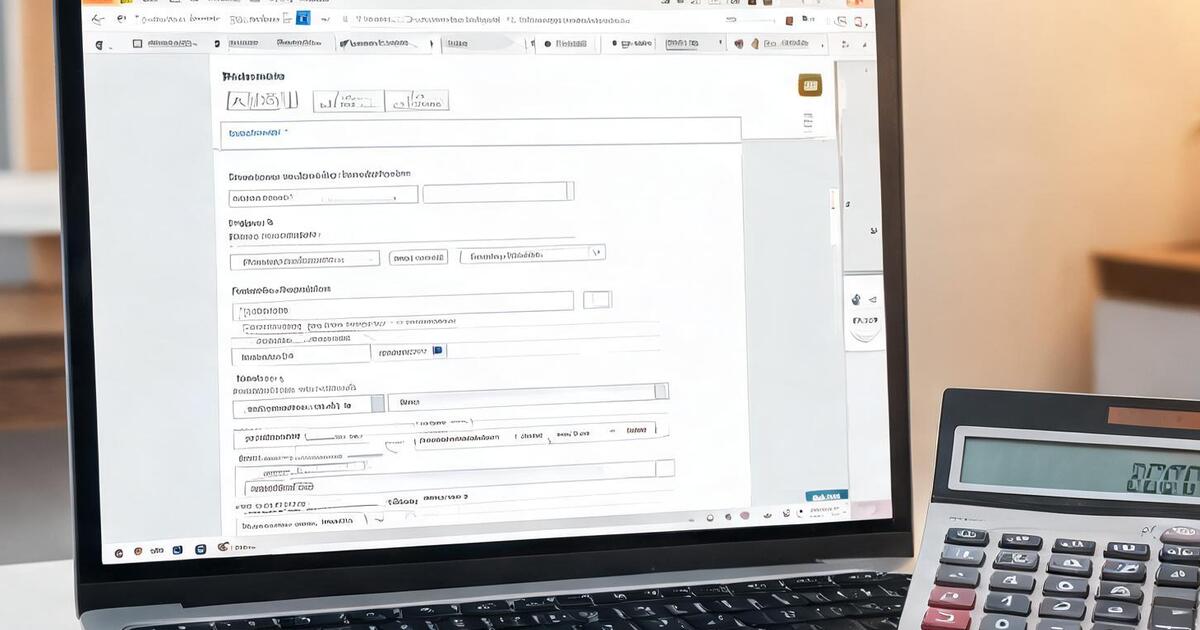
Form L1i is the primary document for declaring foreign pension income in Austria. It is submitted through the FinanzOnline system together with the annual tax return (Einkommensteuererklärung).
Key codes you need for German pension income:
| Pension type | Code | Purpose |
|---|---|---|
| Statutory (gesetzliche Rente) | 453 | Income exempt from tax under DTA |
| Statutory (progression) | 791 | Amount for progression calculation |
| Social contributions | 184 | Contributions considered in taxation |
| Company (Betriebsrente) | 359 | Fully taxable income |
Important: You must check box 4.2 in the form, indicating whether these contributions could have been deducted for tax purposes abroad. If you are subject to unlimited tax liability in Germany, select “Ja” (Yes). If not, select “Nein”.
As TheTax.at notes, Austrian tax residents must declare all foreign income, even if it is not taxable in Austria (as with the German statutory pension).
Pensionistenabsetzbetrag: Tax Credit for Pensioners in 2026
Austria offers a special tax credit for pensioners — Pensionistenabsetzbetrag. In 2026, this credit has been adjusted for inflation.
According to oesterreich.gv.at, the standard credit amount is €1,020 per year for pension income up to €21,614. If your pension income exceeds this threshold, the credit gradually decreases and completely phases out at income above €31,494.
A higher credit (höherer Pensionistenabsetzbetrag) of €1,502 is available for pensioners with income up to €24,616, provided the spouse’s/partner’s income does not exceed €2,720.
Important note: This credit only applies to income that is actually taxable in Austria. Since the German statutory pension is exempt from tax under the DTA, it does not qualify for Pensionistenabsetzbetrag, but it is counted in the income thresholds for progression.
The Progression Effect: How German Pension Raises Your Tax Rate
Progressionsvorbehalt — this mechanism can significantly affect your final tax bill. Even though you do not directly pay German pension tax in Austria, its amount increases the tax rate on your Austrian income.
Example from Steuerbuch 2026:
- Austrian pension: €25,000 per year
- German gesetzliche Rente: €18,000 per year
- Total income for rate calculation: €43,000
- Tax rate determined by the scale for €43,000, but tax is only collected on €25,000
As a result, the effective tax rate on your Austrian pension will be higher than if you only received the Austrian portion. According to the BMF, Austria has over 65 active double taxation agreements, and the progression rule is applied consistently across all treaties.

Step-by-Step Guide: Filing Your Tax Return
To correctly declare your German pension tax in Austria, follow these steps:
-
Determine your pension type: statutory (gesetzliche Rente), company (Betriebsrente), or civil service (VBL/öffentlich-rechtlich).
-
Gather documents: annual statement from Deutsche Rentenversicherung (Renteninformation / Rentenbescheid), confirmation of social security contributions paid in Germany.
-
Log in to FinanzOnline: use your Steuernummer or ID Österreich (available after registration in Austria).
-
Fill out form L1i: enter the correct codes for each income type. For statutory pensions — codes 453 and 791, for company pensions — code 359.
-
Check the progression: ensure the progression effect is calculated correctly. The tax rate should be based on total income, but tax is only applied to the taxable portion.
-
Apply deductions: claim Pensionistenabsetzbetrag if eligible (income up to €31,494).
-
Submit the declaration: through FinanzOnline by 30 June of the following year (for self-filing without a Steuerberater). For the 2026 tax year — by 30 June 2027.
-
Review the tax assessment: after processing, you will receive a Bescheid (tax notice). If errors are found, you can file an appeal.
Frequently Asked Questions
Do I need to pay tax on my German pension in Austria?
It depends on the pension type. The statutory (gesetzliche Rente) pension is exempt from Austrian tax under the DTA but is considered in the progression calculation. Company pensions (Betriebsrente) are fully taxable in Austria.
How do I fill out form L1i for a German pension?
For the statutory pension, use codes 453 (income) and 791 (progression), plus 184 for social contributions. For company pensions, use code 359. Also complete section 4.2 regarding deductibility of contributions abroad.
What changed in 2026 for German pension taxation?
On 19 February 2026, a consultation agreement between Germany and Austria entered into force clarifying Article 18 of the DTA for supplementary civil service pensions (VBL and similar schemes). The Pensionistenabsetzbetrag was indexed by 1.73%.
Is the progression proviso an additional tax?
No, it is not an additional tax. The progression increases the tax rate on your taxable income in Austria, but the German pension income itself is not taxed in Austria.
Can I get a refund of tax withheld in Germany?
Yes, if Germany withheld source tax (Quellensteuer) on income that is taxable only in Austria under the DTA, you can apply for a refund from the German Finanzamt Neubrandenburg (the specialised office for pensioners abroad).
Conclusion
German pension tax in Austria requires careful attention. The golden rule: statutory pensions are exempt but affect progression; company pensions are fully taxable.
Key takeaways:
- Determine your German pension type — all calculations depend on it
- Fill out form L1i with the correct codes (453/791/184 for gesetzliche Rente, 359 for Betriebsrente)
- Account for progression: your German pension increases the tax rate on Austrian income
- File your tax return via FinanzOnline by 30 June of the following year
- Claim Pensionistenabsetzbetrag (up to €1,020 in 2026)
Subscribe to our newsletter to receive the latest updates on taxes and pensions for English-speaking residents of Austria. If you are planning your move, read our guide on salaries and taxes in Austria for a comprehensive overview.
Stay Up to Date with the Latest Austrian News
The week's top stories — news, guides, and insights about life in Austria. Every Sunday in your inbox.