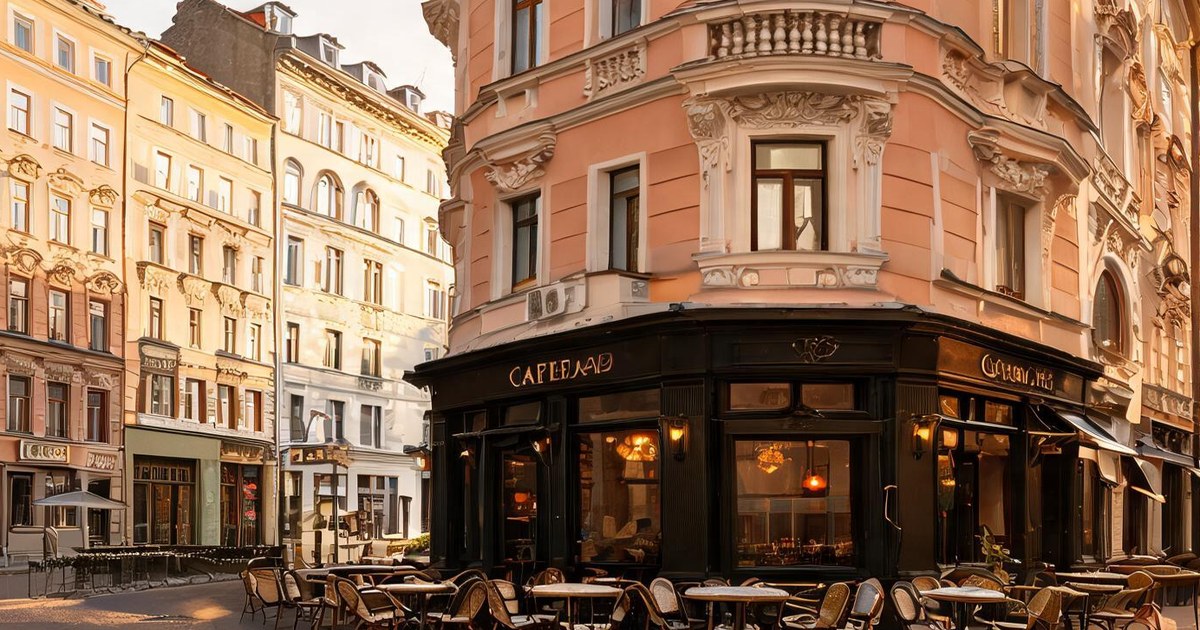
Renting an Apartment in Vienna: Prices by District and How to Actually Get One
Renting an Apartment in Vienna: Prices by District and How to Actually Get One Renting an apartment in Vienna: prices €/m² across all 23 districts, deposit rules, documents, cooperatives and a step-by-step strategy to get the flat. Topics: Daily Life, Housing, Economy.
Renting an apartment in Vienna is a race that rewards the prepared. The average asking rent in the Austrian capital reached €22.4 per square metre in the first quarter of 2026 — the highest figure in the country. Yet the market is not closed off: since 2025 the supply of rentals in Vienna has grown by 10%, and landlords’ requirements are predictable. This guide covers real prices across all 23 districts, the full breakdown of Kaution (deposit) and Mietvertrag (tenancy contract), the routes through cooperatives and municipal housing, plus the strategy that turns a viewing into a signed contract instead of a polite rejection.
What an Apartment in Vienna Costs Right Now
According to the listing analysis by ImmoScout24, the median asking rent in Vienna stood at €22.41 per m² per month in Q1 2026 — a gross rate including operating costs. That is roughly 8% up year on year. Across Austria as a whole the average is €16 per m², and a 70 m² apartment costs €1,126 a month.
One nuance changes the whole picture: the €22.41 figure is the median of listings, which includes new builds and premium units. Older stock (Altbau, pre-1953 buildings) with regulated rents under the Mietrechtsgesetz (tenancy law) rents out considerably cheaper in residential districts — from €11–14 per m². The same “60 m² flat in Vienna” can cost either €700 or €1,500: the district, building year and contract type decide.
There is good news too. Vienna’s rental supply grew 10% over the year while demand fell 4% — for the first time in years the market has cooled slightly. Apartments are still not handed out easily, but a well-prepared applicant now has room to manoeuvre.
Prices by District: Where Vienna Is Expensive and Where It Is Not
Vienna is divided into 23 districts (Bezirk), and the price gap between the Innere Stadt and Donaustadt is twofold. The table below gives indicative asking rates based on the ImmoScout24 listing analysis (Q1 2026) and aggregated housing-stock data. It is a gross benchmark: an individual building can deviate either way.
| Districts (Bezirk) | Character | €/m² gross | 60 m² ≈ |
|---|---|---|---|
| 1, 4, 8, 9 | centre: Innere Stadt, Wieden, Josefstadt, Alsergrund | €23–27 | €1,380–1,620 |
| 3, 6, 7, 18, 19 | premium inner: Landstraße, Mariahilf, Neubau, Währing, Döbling | €19–23 | €1,140–1,380 |
| 2, 5, 13, 14, 17 | urban and green: Leopoldstadt, Margareten, Hietzing, Penzing, Hernals | €16–19 | €960–1,140 |
| 11, 12, 15, 16, 20 | affordable and dense: Simmering, Meidling, Rudolfsheim-Fünfhaus, Ottakring, Brigittenau | €13–16 | €780–960 |
| 10, 21, 22, 23 | outer and family: Favoriten, Floridsdorf, Donaustadt, Liesing | €11–14 | €660–840 |
The spread within each district is enormous. A new build with first occupancy (Erstbezug) in the 22nd district easily commands €18 per m², while a regulated Altbau flat in the 5th district sits at €13. On a tight budget, look at Ottakring (16th) and Favoriten (10th): after the U1 and U2 metro extensions they became far better connected, yet prices remain a third below the centre. Families tend to do best in Donaustadt (22nd) and Floridsdorf (21st) — more greenery, newer buildings and comparatively low rates.
Policy is trying to hold prices down too: from 2026 rent increases in the regulated segment are capped at 1%, and at 2% for 2027 — we explain the mechanism in our guide to Austria’s rent cap. This mainly affects the older stock governed by the tenancy law.
Why Two Identical Flats Can Cost Twice as Much
Two “identical” 60 m² flats in the same district can differ in price by half, and the law explains why — the building’s legal status is what decides. Full Mietrechtsgesetz (MRMG) coverage applies to pre-1953 buildings and most social housing: a benchmark rate (Richtwert) applies there, and rent increases are tightly limited. Post-1953 buildings let at market terms and Erstbezug (first occupancy) new builds cost whatever the market pays — that is what pushes the listing median to €22.41.
The practical takeaway: don’t dismiss Altbau flats with dated interiors. Replacing bathroom fittings and repainting is cheaper than overpaying for glossy first occupancy year after year. Renting an apartment in Vienna in older stock also means softer indexation: the Indexklausel (consumer-price indexation clause) in regulated contracts bites less than the free contracts where landlords raise the rent “per market” every year.
Whether a building falls under MRMG and whether the rate is inflated can be checked in the housing advice of AK Wien (the Austrian Chamber of Labour): the basic consultation is free for members. If the gap between Richtwert and the asking rent is significant, that is a legitimate negotiation argument — or grounds to reclaim overpayments through the courts.
What You Actually Pay: Gross Rent and Running Costs
Viennese listings throw around three figures, and mixing them up is expensive. Nettomiete (net rent) is the base rate. Betriebskosten (operating costs) cover water, waste, stairwells and communal heating; in Vienna they run at roughly €2.8–3.5 per m². Bruttomiete (gross rent) is the first two plus taxes — the number that actually leaves your account each month. Electricity and internet are almost always separate.
Check every line in the contract. If a building falls under the tenancy law, the landlord cannot arbitrarily raise the gross rate above the legal benchmark — control values depend on the building’s age and type. Tenant rights are officially laid out on the government portal oesterreich.gv.at: rent is due by the 5th of the month, and unilateral increases without grounds are unlawful. Watch the Indexklausel (indexation clause) too: in regulated contracts it ties growth to the official consumer price index, while free contracts often allow a yearly increase “at the landlord’s market assessment” — since 2026 such discretion in the regulated segment is capped at 1%.
Per Statistik Austria, housing is the largest budget item for Austrian households after food — so apply the one-third rule: no more than a third of net income on gross rent, plus a willingness to pay extra for a central address.
Deposit, Brokers and Ablöse: Upfront Costs
Beyond the first rent, one-off payments await at the start. The Kaution (deposit) is capped at three gross monthly rents; §16b of the tenancy act forbids demanding more, and the deposit is usually parked in a dedicated savings book (Kautions-Sparbuch) whose interest stays yours. For a 60 m² flat at €1,000 that is €3,000 — have it ready.
The Makler (broker) situation has improved: since 2023 a Bestellerprinzip applies — if the landlord commissioned the broker, the tenant pays them nothing. A commission only arises when you hire the broker yourself, and it is capped by law. We covered this in detail in our piece on broker fees and the Bestellerprinzip.
A separate Viennese reality is Ablöse — paying the outgoing tenant for the kitchen, wardrobes or “the spot itself”: anything from a few hundred to several thousand euros. For regulated flats this is a legal grey zone: demanding Ablöse for the dwelling itself is not permissible, and Viennese cases do reach the courts. Never transfer money for a “reservation” before a contract is signed — the classic scam pattern is described in our guide to rental fraud in Austria.
Fixed-Term or Open-Ended: The Contract Decision That Matters Most
The Mietvertrag comes in two forms, and this is the most consequential line in the document. Befristet (fixed-term) runs for a set period. For housing fully covered by the tenancy law the minimum term is 3 years: if the contract states less, 3 years apply automatically. Unbefristet (open-ended) carries full Kündigungsschutz (protection against termination): the landlord can only end it through the courts and for a serious reason.
Fixed-term contracts hide a plus that landlords rarely mention: after a proper three-year term the tenant is entitled to one extension of another 3 years. The landlord cannot refuse without grounds. That is why lawyers advise caution when offered “a one-year” or “two-year” contract: either the law’s full coverage does not apply, or you are being set up to be vacated “naturally” at term end.
Landlords like fixed terms because the flat becomes free without an eviction procedure. For the tenant, an open-ended contract means stability: school, doctors, the internet provider and tax benefits all hang on your registered address. The official rundown of tenant rights and termination grounds is published on oesterreich.gv.at in the section on contract rights and duties.
Cooperative, Municipal or Private: Three Routes into a Flat
Route one is private renting: the listings market, fast decisions, market prices. Most newcomers to Vienna land here.
Route two is the Genossenschaftswohnung (cooperative flat). You join a housing cooperative and pay Eigenmittel (equity contribution for shares) — typically €2,000–20,000 depending on the project — and then rent at Kostmiete (cost-based rent), noticeably below market. Waiting lists run for years, but they do move: for anyone planning 10+ years in Vienna this is the best deal, and the contribution is returned when you move out.
Route three is the city’s own municipal housing — around 220,000 flats at social rates. You need the Wiener Wohn-Ticket (application with income and residency checks). If you are unemployed, our guide on renting while unemployed explains which doors stay open.
A practical combo for newcomers: take a private flat to start and in parallel join cooperative waiting lists and apply for the Wohn-Ticket. Within 2–4 years you either move into a cheaper cooperative or municipal flat, or stay on the private market — but now with a Viennese payment history.
The Documents Landlords Expect
The standard package (Bewerbungsunterlagen) is identical across Vienna landlords and agencies. Prepare it before viewings — preparation alone is an edge.
- Einkommensnachweis (proof of income): the last 3 Lohnzettel (payslips) or your employment contract. The unwritten broker rule: net income of at least 3× the rent. For €1,000 gross rent expect about €3,000 net per household; partners’ incomes are summed.
- Bonitätsauskunft (creditworthiness report): a KSV1870 self-disclosure or an entry from the consumer association. Ordered online for a few euros.
- Mietschuldfreiheitsbestätigung (debt-free confirmation) from your previous landlord — if you have rented in Austria before.
- A passport or ID photo; for non-EU nationals the residence permit (Aufenthaltstitel).
- The completed Meldezettel (registration form): after moving in you must file it within 3 days, as described on oesterreich.gv.at.
Without an Austrian employment contract the odds drop but don’t vanish: an enlarged deposit, a Bürgschaft (guarantee from a third party) or paying a quarter upfront all work — by mutual agreement and within the law. If a landlord demands “the full year paid in advance” to a private account instead of a contract, that is a fraud red flag.
Where to Search: Platforms That Actually Work
Vienna’s main marketplace is willhaben: its Vienna rental section carries thousands of live listings, and new objects appear here fastest. Set up a Suchabonnement (search subscription) with notifications — the best flats are gone within 24–48 hours.
Second in importance is ImmoScout24: more agency stock, better filters and price analytics; the national mechanics of the search — documents to negotiations — are covered in our guide to renting in Austria. Add immobilien.net, bazar.at and listings by Hausverwaltung (property management companies), which post vacancies directly and commission-free.
Seasonality matters too. The competition peaks in September and October (the student influx) and June–July (moving season). From November to February the market is calmer: listings stay up longer, landlords compromise more, and the applicant gains choice. If your move-in date is flexible, schedule the search for the low season — it saves both money and nerves.
Do not ignore offline channels: paper notes in Altbau stairwells (Alsergrund, Währing, Hietzing), district messenger groups and diaspora communities. If the budget is very tight, entering through a WG-Zimmer (room in a shared flat) is a legal way to get registered while saving for your own flat — how it works is covered in our guide to renting a WG room. For the broader national picture, see our guide to renting in Austria.
Vienna has some of the strongest tenant protection in Europe, but at the entrance the market is tough: a good flat draws 20–30 applications. The winner is not the highest bidder but the one whose document folder was ready and whose application came first.
— Real estate market expert, Vienna
How to Actually Win the Flat: A Viewing Strategy
Step 1. Build the folder first. The documents above as one PDF, sendable in a single click. Speed wins in Vienna: replying within the first hour beats any negotiation later.
Step 2. Write short and concrete. First line: “Interested, I can come today or tomorrow. Document folder ready, income at 3× rent confirmed.” Landlords get dozens of empty messages — specifics stand out.
Step 3. At the viewing, be an answer, not a question. Bring the printed folder, introduce yourself in two sentences (what you do, how long you plan to stay), fill in the application form on the spot. Do not haggle openly over the price — in Vienna it flags you as a problem tenant.
Step 4. Inspect before signing. Photograph the meters, check for mould, listen to the street noise in the evening, look at the boiler. Record every defect in the Übergabeprotokoll (handover protocol) — this protects your deposit at move-out.
Step 5. Read the contract. Verify term and extension, the indexation clause (Indexklausel), who pays for what, and the deposit-return conditions. Model tenancy contracts and your rights are described on oesterreich.gv.at. If a regulated rate looks inflated, the free housing consultation of AK Vienna compares it with the legal benchmark rate (Richtwert) — the check regularly uncovers overpayments of dozens of euros a month.
Frequently Asked Questions
How much does an apartment in Vienna cost on average?
The median asking rate is €22.41 per m² gross (ImmoScout24, Q1 2026). A practical benchmark: centre €23–27 per m², affordable districts (10, 11, 15–23) €11–16 per m². Regulated Altbau runs 30–50% below new builds.
What is the maximum deposit (Kaution) in Austria?
Three gross monthly rents (rent plus operating costs). Anything above that is void. The deposit goes into a Kautions-Sparbuch whose interest belongs to the tenant.
Do tenants have to pay the broker (Makler)?
No, if the landlord commissioned the broker — since 2023 the Bestellerprinzip applies. A commission is only due when you hired the broker yourself, and it is capped by law.
How risky is a fixed-term contract (befristeter Mietvertrag)?
At term end it lapses without explanation. But the minimum term is 3 years, and after a proper first term the tenant can demand one 3-year extension. An open-ended contract gives full judicial protection.
How do I tell an asking rent is inflated?
Compare the flat with 5–10 similar listings in the same district on willhaben and ImmoScout24. For buildings under the tenancy law there are legal benchmark rates (Richtwert): the free AK Vienna consultation will show the gap. Overpayments above the legal level can be reclaimed through the courts, but the limitation period is short — don’t delay.
Your Action Plan
Vienna is expensive but transparent: district prices are public, the rules are written in law, and supply has been growing since 2025. To make renting an apartment in Vienna end with a signature rather than a month of unanswered messages, work the checklist:
- Set the budget: gross rent ≤ a third of net income, plus €3,000–4,000 for deposit and moving costs.
- Pick 2–3 districts from the price table and subscribe to alerts on willhaben and ImmoScout24.
- Assemble the PDF folder: income proof, credit report, ID, debt-free confirmation.
- Reply within the first hour; arrive at viewings with the folder ready and a decision made.
- Read the contract: 3-year or open-ended term, indexation clause, handover protocol.
- Apply for the Wohn-Ticket and join 1–2 cooperatives in parallel — long-term rent below market.
The earlier you join cooperative waiting lists, the cheaper your Vienna housing becomes a few years from now. Start viewing today — and subscribe to our newsletter to get guides on life in Austria before they surface in search.
Stay Up to Date with the Latest Austrian News
The week's top stories — news, guides, and insights about life in Austria. Every Sunday in your inbox.