Apartment Viewing in Vienna: What to Bring, Ask and Check
Apartment Viewing in Vienna: What to Bring, Ask and Check Apartment viewing in Vienna: a full checklist — documents to bring, what to check (heating, windows, noise, mold) and which questions to ask the landlord. Topics: Daily Life, Housing, Economy.
An apartment viewing in Vienna (Wohnungsbesichtigung) lasts 15–30 minutes, and in that window you either win the flat or go back to the listings. The median asking rent in the capital hit €22.41 per square meter in the first quarter of 2026, so dozens of candidates show up for every good listing — and showings often run for groups at once. This guide gives you the complete checklist: which documents to prepare, what to inspect (heating, windows, noise, mold, water hardness, internet), which questions to ask about Betriebskosten (operating costs) and the contract, and how to decide on the day of the viewing so you don’t lose the apartment.
Why the viewing decides everything in Vienna
Vienna’s rental market is a speed race, not a luck contest. According to the listing analysis by ImmoScout24, the median rent in Vienna reached €22.41 per m² in Q1 2026 — the highest level in Austria. Even though the supply of rental apartments has grown by roughly 10% since 2025, current listings in mid-priced districts disappear within days.
Showings usually happen as a scheduled Besichtigungstermin (viewing appointment, booked online or directly) — and almost always in groups. You arrive alongside five, ten, sometimes twenty other candidates, inspect the flat for 15–30 minutes, and decide on the spot whether to apply. The owner or the Makler (broker) usually decides the same evening. That means the winner is not the person the landlord “liked most” but the one who came prepared: with documents, a list of questions, and the readiness to say yes.
Preparation starts before you book a slot. It helps to know first what rent actually costs across the city: our guide to renting an apartment in Vienna with prices for all 23 districts breaks it down. Once you know the market range, you can instantly tell a fair price from an inflated one at the viewing.
How to book a viewing and stand out from other candidates
Booking the viewing is already the first selection round. For popular listings, brokers don’t invite everyone: they filter on two or three signals from your message. Reply within the first minutes after a listing goes live — fresh objects usually appear on weekday mornings, and by evening the visitor lists are closed.
Keep the message short and specific: your name, who will be moving in, income source and amount, your earliest move-in date, and readiness to pay the Kaution (deposit) and Maklerprovision (broker fee). One sentence — “my documents are ready, I can come at any time” — removes the broker’s biggest fear: a wasted time slot. A call works better than a message, but only during working hours and without pressure.
Book several viewings in one day, in the same district. After the second flat you are comparing, not admiring; if the first object fails your checklist, you have a backup for the same day instead of another week of waiting. Arrive 10 minutes early and study the courtyard: parking, bicycle racks, a playground, the nearest supermarket. Five minutes of surroundings tell you as much as the inspection itself.
What to bring: your document folder
A complete document package is your biggest competitive advantage at a Vienna viewing. Second chances are rare: if the owner gets your application “right away” while everyone else promises to “send papers tomorrow,” the flat goes to you. Put these items into one folder (or cloud storage with an offline copy).
- Passport or ID card (Reisepass / Ausweis). For non-EU citizens: your Aufenthaltstitel (residence permit) or proof of your right to stay.
- The last three payslips (Gehaltszettel) and your employment contract (Dienstvertrag). Landlords’ rule of thumb: rent should not exceed one third of net income.
- Meldezettel (residence registration form) — your current one, to confirm where you live now. Our guide to moving to Austria covers registration rules.
- Mieterzeugnis (a statement from your previous landlord confirming you paid on time and caused no problems) — brokers in Vienna frequently ask for it and even verify it.
- Selbstauskunft (tenant self-disclosure form): name, household members, income, current address. Many brokers hand it out at the viewing — fill it in in advance.
- Proof of income for freelancers and the self-employed: a tax assessment (Einkommensnachweis) or three months of bank statements.
If you are looking for your first home in Austria and your income is not yet stable, there are workarounds — see our breakdown of renting without a job in Austria. A lighter alternative with fewer documents is a room in a WG (shared flat).
Inspection checklist: rooms, windows, mold
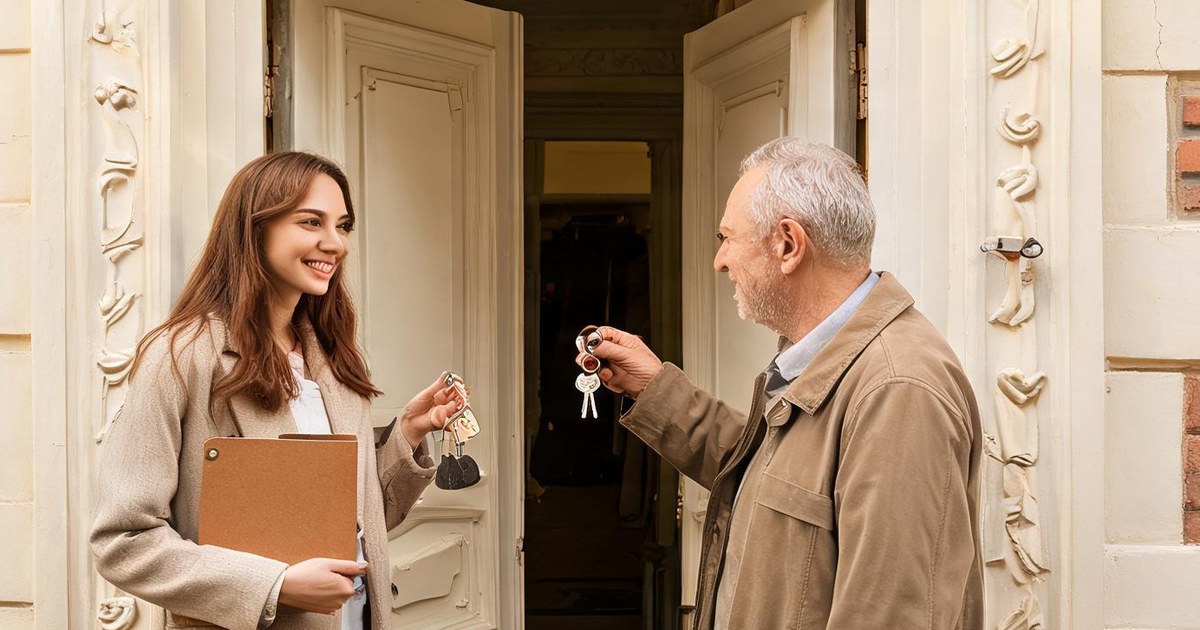
You have 20 minutes and dozens of checkpoints. Move through the flat from entrance to bathroom, and don’t hesitate to look into corners — experienced candidates always do.
- Entrance area and front door: condition of the door, locks, intercom (Haustürsprechanlage), space for a stroller or bicycle.
- Windows: age and type of glazing. Double or triple glazing means warmth in winter and quiet all year. Open one window: the frame should move smoothly, without a draft at the edges.
- Walls and ceiling: dark patches in corners, peeling paint, a damp smell — signs of Schimmel (mold). Check bathroom corners, window reveals and the area behind radiators.
- Flooring: parquet worn down to the base is not a dealbreaker, but ask about renovation. Note uneven spots and creaking.
- Noise: listen to the flat in silence for 30 seconds. The street below, the neighbor’s courtyard, the elevator behind the wall. Ask whether windows face the street or the courtyard (Innenhof).
- Bathroom: water pressure, limescale on taps, ventilation (a window or an extractor), the condition of tile joints.
- Kitchen: hookups for a washing machine and dishwasher, and which appliances stay.
- Extras: a Keller (basement storage unit), an in-flat storage room (Abstellraum), a shared laundry (Waschküche), a parking spot and bike storage in the courtyard. Storage space changes daily life in a 55 m² flat more than five extra meters of room.
Also weigh the “seasonal” risks. A flat shown in November has never survived a winter — ask about glazing type and when the windows were last replaced instead of trusting the room temperature. A summer viewing, in turn, stays silent about winter sun: an east-facing window is pleasant in June and cold and dim in January. If the listing has a floor plan (Grundriss), compare it against reality on the spot.
Whatever you couldn’t inspect physically, turn into questions. A good habit: note every “but” in your phone — later these points become your negotiation leverage or your reason to walk away.
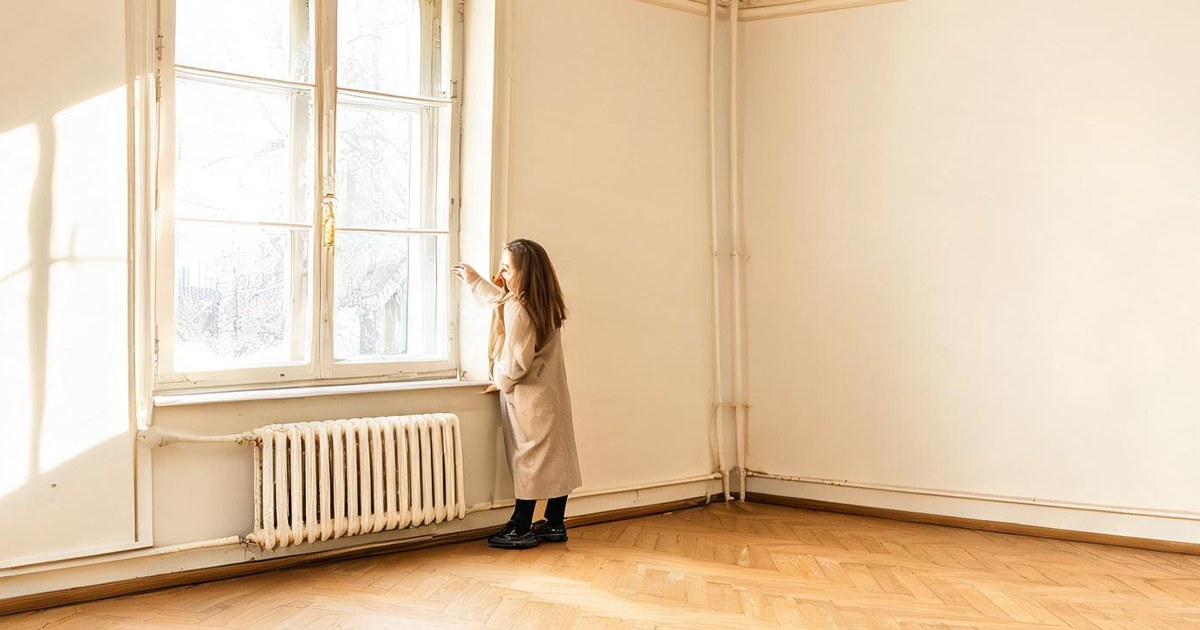
Heating, water and internet: what almost everyone misses
Three things that never show up in listing photos but eat into your budget later. First, heating. Ask which type the flat has: Fernwärme (the city’s district heating network), a gas boiler in the flat, or electric panels. In older buildings heating is often included in the Betriebskosten, which makes winter bills predictable. If the flat has its own gas system, ask how old the boiler is: an old unit means cold rooms and repair bills. Arbeiterkammer Wien explains how heating bills are calculated in Vienna buildings using Fernwärme as the example.
Second, water hardness (Wasserhärte). It sounds trivial, but it determines how long your washing machine and dishwasher last and how you set them. Good news for Vienna: according to the city’s portal, Vienna tap water has a hardness of 6–12 °dH (up to 20 in some districts) — soft to medium. Still ask whether the building has old pipes: that affects taste and future repairs.
Third, internet. Check in advance which providers serve the address and whether fiber (Glasfaser) is available. If the owner doesn’t know, request the exact address and check provider websites before you apply. Some older Vienna addresses still lack fast internet — a dealbreaker for remote work.
Ask for the Energieausweis (building energy certificate) as well. It is mandatory for objects shown to new tenants, and its efficiency class hints at your winter bills. Cover the small things that surface right after moving in too: does the kitchen extractor work, does the balcony door open properly, are there blinds or curtains, how many keys you will get and what a lost one costs.
Money: Betriebskosten, Heizkosten and the BK-Abrechnung
The key question block at any viewing is payments. Vienna listings almost always show Nettomiete (base rent), Betriebskosten (operating costs) and sometimes Heizkosten (heating): together they form the Bruttomiete (gross rent). The real price of the flat is the Bruttomiete — the gap between a “cheap” Nettomiete with high extra costs and an honest total can reach hundreds of euros.
Ask the owner or broker these five questions:
- How much are the Betriebskosten and what do they include? Heating, waste collection, elevator, stairwell cleaning.
- What did the BK-Abrechnung (annual operating-cost statement) look like last year? A refund or an extra charge in summer is normal — silence is not.
- Kaution (deposit): how much? The Vienna standard is three gross monthly rents. Arbeiterkammer Vienna has a dedicated explainer on deposit returns.
- Is there a Maklerprovision (broker commission)? For a new lease the maximum is two monthly rents.
- Übernahmekosten (payment for items left behind): if the flat comes with a kitchen or furniture, ask for a written Wertverrechnung (value offset) — an itemized list with amounts.
By law, the landlord must send the operating-cost statement within three months after the end of the business year. If the broker avoids questions about last year’s statement, take it as a warning sign: the actual costs may be higher than the listing suggests. And remember: an attractively low price paired with an upfront payment before the viewing is a classic pattern of rental fraud in Austria.
Clarify the Wertsicherungsklausel (indexation clause) as well — how rent is tied to the price index. A neutral wording is “consumer price index, once a year.” What should raise eyebrows is frequent indexation or “a fixed percentage increase every year”: in high-inflation years such a contract gets expensive faster than the market itself. Also ask about Umsatzsteuer (VAT): private flats are rented out without VAT, while flats owned by companies can add 10% to the rent — which again changes the real total.
The contract: Befristung, Kündigungsfrist and pets
The contract block decides what your life in the flat will look like in a year. Ask whether the contract is unbefristet (unlimited) or befristet (fixed-term), what the Kündigungsfrist (notice period) is, and whether pets are allowed.
- Befristung: under the tenancy law (Mietrechtsgesetz, MRG), a first fixed-term contract may run for a maximum of 5 years, with extensions up to 10 and then 20 years. Since 1 June 2024, the “investor clause” that let investor landlords terminate unlimited contracts without cause is banned. The full rules are in the Mietrechtsgesetz on RIS.
- Kündigungsfrist: if you want to move out, the standard notice is 3 months to the end of a quarter (§29a MRG). A fixed-term contract simply ends — and only continues if both sides agree.
- Pets: under §13a of the Austrian Civil Code (ABGB), cats, caged birds and fish cannot be prohibited — even if the contract says “no pets.” Dogs and larger animals need the landlord’s consent.
- Rent increases: ask how and when the landlord plans indexation (the annual Wertsicherungsklausel — a clause tying rent to the price index).
At a viewing, the landlord may only ask questions that help assess your ability to pay — occupation and income. Questions about your origin, religion or family plans are not allowed.
— housing law advisory, Arbeiterkammer Wien
How to win the apartment on the day of the viewing
In Vienna practice, the decision is made the same evening after the showing. A “let me think for a week” strategy almost always means the flat is gone. Act like this:
- Decide before the viewing ends. If your checklist shows no red flags, say: “This works for me, I’m ready to sign.” That sentence is worth more than any follow-up email.
- Hand over the full package immediately. Leave copies on the spot or email them to the broker within the hour, with a short cover note: who you are, your income, your move-in date.
- Be flexible on the move-in date — another point in your favor. If the owner wants someone from the first of the month and you can match that, you’re automatically ahead.
- Negotiate only after your “yes.” You can ask about a discount, but secure your interest first — otherwise the owner picks whoever committed earlier.
- Pay nothing before the contract is signed and you have seen the flat itself. Upfront payments “to hold the apartment” follow the same rental fraud pattern described above.
In the evening of the same day, send a short follow-up: “Hello, this is [name] from today’s viewing at [street]. The flat works for us, documents are attached, we can move in from [date].” Three sentences, zero polite fog — and you are on the shortlist: all the broker has to do is pick up your application and pass it to the owner. If there is no reply within 24 hours, call: in practice, a phone conversation moves an application faster than any repeated email.
Tenant rights before signing the contract
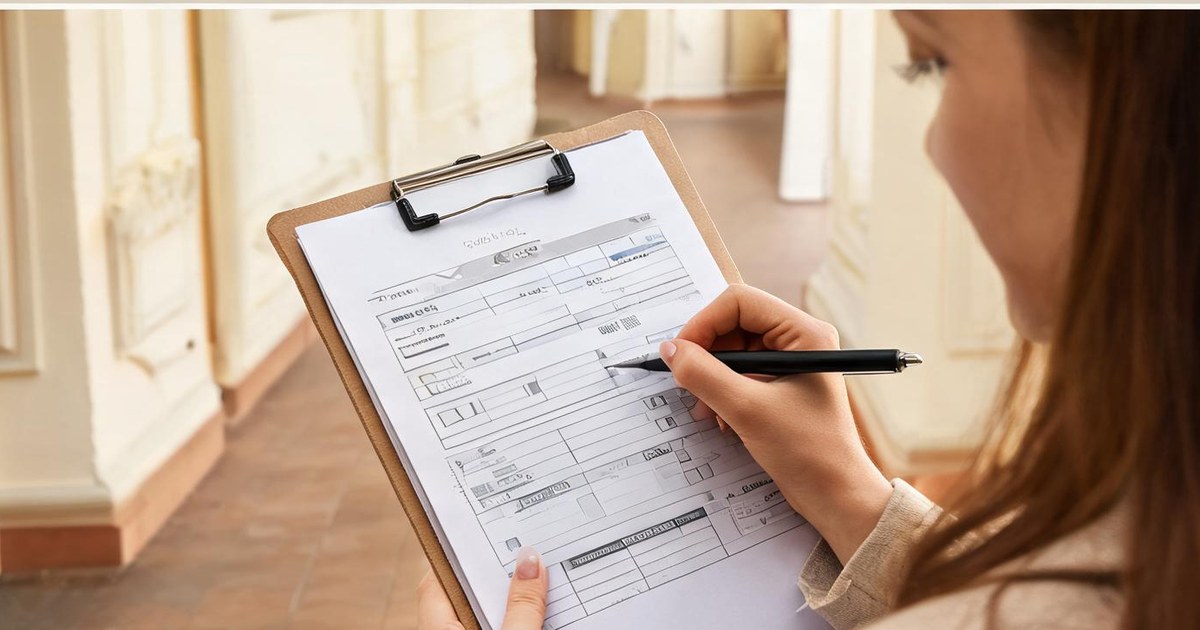
A viewing is not an exam, and candidates have rights. First, you may receive the contract for review before signing and read it calmly at home. If the broker pushes you to “sign now, read later” — decline: in a normal deal you get time to read.
Second, check whether the MRG (tenancy law) applies to the flat. It protects most of Vienna’s older housing stock (Altbau, buildings pre-1953) and cooperative flats: rents are capped, the landlord cannot raise the price arbitrarily, and termination is only possible on legal grounds. For investor-owned flats with high rents, ask whether the price exceeds the legal cap: Arbeiterkammer Wien offers a free Mietencheck for Altbau flats, and its tenancy advisory page lists tenant organizations.
Third, keep a short checklist while reading the contract: the attached Grundriss (floor plan) must match reality; the Inventarliste (handover list) records every lamp and curtain; the Wertsicherungsklausel describes indexation; the contract term and start date match what was discussed at the viewing; and everything promised verbally — from wall repair to old furniture removal — must appear in the text. Verbal promises carry almost no legal weight in Austria.
Fourth, keep alternatives in mind if the viewing and negotiation fall through. Renting directly from a private owner is often faster than going through an agency — our guide to renting an apartment privately in Vienna shows how it works, and listings on willhaben remain the biggest source of fresh offers in the city.
Frequently Asked Questions
How long does an apartment viewing in Vienna take?
Usually 15–30 minutes, often in scheduled groups. Arrive 5–10 minutes early: look at the courtyard, stairwell and street — they are part of the assessment.
Can I take photos during the viewing?
Yes, but ask the owner or broker for permission. Photos of walls, windows and meters help you compare impressions later and prepare questions before signing.
Can I negotiate the rent?
Yes, especially if the price is clearly above the district average or the flat is in a rent-regulated Altbau. Refer to comparable listings and the legal rent level; the free Mietencheck from Arbeiterkammer helps verify the rate.
What if dozens of people come to the viewing?
Decide on the spot and hand over documents immediately. In the evening, send a short follow-up message: who you are, your income, your move-in date. Candidates who “took the step today” get picked more often.
After the viewing: your short action plan
Winning an apartment viewing in Vienna takes preparation, not luck: a document folder, an inspection checklist, five questions about money, three about the contract — and the decision on the same day.
- Prepare documents: passport, Aufenthaltstitel, three Gehaltszettel, Meldezettel, Mieterzeugnis.
- Check windows, mold, noise, heating, water and internet on site.
- Ask about Betriebskosten, the BK-Abrechnung, Kaution, Maklerprovision and Übernahmekosten.
- Clarify Befristung, the Kündigungsfrist and pet rules.
- Say yes on the day and send your documents within the hour.
After signing, don’t forget the Meldezettel (residence registration) — you have only 3 days for it. To stay on top of new guides about housing, work and Austrian bureaucracy, subscribe to our newsletter — and start with our complete guide to renting an apartment in Vienna if you are just entering the market.
Stay Up to Date with the Latest Austrian News
The week's top stories — news, guides, and insights about life in Austria. Every Sunday in your inbox.