Postgraduate Law Studies (Aufbaustudium Jura) and Civil Protection (Zivilschutz) in Austria: A Practical Guide
Postgraduate Law Studies (Aufbaustudium Jura) and Civil Protection (Zivilschutz) in Austria: A Practical Guide Postgraduate law studies in Austria: costs, LL.M. formats, nostrification and career value. Plus civil protection: siren signals, AT-Alert and ZIVA app. Topics: Daily Life, Career & Education, Politics.
Sooner or later, life in Austria brings you face to face with two concepts that never fit into the moving suitcase: postgraduate law studies, known locally as Aufbaustudium, and the civil protection system, called Zivilschutz. The first opens doors to further degrees such as the LL.M. for lawyers and professionals from other fields. The second decides whether you will know, in an emergency, what a rising and falling siren wail actually means. Both topics look like niche knowledge, yet both appear right in the middle of daily life: at university, at work, and on the first Saturday of October. This guide explains both systems step by step, with costs, legal foundations and concrete instructions. It also shows why this knowledge separates confident action from confused guessing.
What postgraduate law studies (Aufbaustudium Jura) really are
An Aufbaustudium is a postgraduate programme built on a completed first degree. In Austria, such programmes are legally organised as Universitätslehrgänge, university courses under Paragraph 56 of the 2002 Universities Act. They lead to their own academic degrees such as Master of Laws (LL.M.) and are not the same as the regular diploma programme in law.
The regular Austrian law degree covers 240 ECTS credits over eight semesters and ends with the Mag. iur. degree. A continuation course usually takes one to two years, runs part-time alongside work, and awards a further-education degree. Under Paragraph 56(2) of the Universities Act, university courses can also be set up as non-standard master programmes with 120 ECTS that are equivalent to regular masters. As JUSLINE explains in the current version of the law, such degrees can even open access to doctoral studies under certain conditions.
For postgraduate law studies this means: you get targeted legal depth without repeating the full degree. But anyone aiming to become an attorney or judge still needs the full law degree. The course adds to your education, it does not replace it.
The range of courses is manageable but varied. Nearly every law faculty lists its continuing education programmes on its website. Compare focus areas, lecturers and the share of in-person days. The examination format matters as well, because oral exams cost more time than written ones. A small comparison table with costs, volume and degree saves weeks of back and forth.
Who benefits from postgraduate law studies in Austria
Three groups gain the most from postgraduate law studies. First, lawyers with a foreign degree who need Austrian private law, administrative law or tax law. Second, professionals without legal training whose work involves legal questions: compliance, human resources, real estate management or construction. Third, law graduates aiming at a focused specialisation, for example EU law or construction law.
The course strengthens a CV because it proves a concrete competence. In daily work it helps with contracts, deadlines and dealings with authorities. As our guide on working in Austria shows, such extra qualifications matter most in salary negotiations. And if you are considering the full legal path, our article on studying law in Austria describes the route from the first semester to the Mag. iur.
The boundary stays important: an LL.M. alone does not make anyone an attorney. The bar examination requires a full law degree. The course provides depth, vocabulary and confidence in legal texts, but it does not substitute for the degree itself.
Career changers often underestimate how valuable partial legal knowledge is on the job market. HR departments look for people who can review employment contracts, answer data protection questions and talk to lawyers on equal terms. A course certificate signals exactly this competence. It is also a realistic entry route for working professionals who cannot commit to a second full-time degree.

Costs, duration and the legal basis of the courses
University courses are self-funded programmes. The rectorate sets participant fees itself and, under Paragraph 56 of the Universities Act, bases them on actual costs. In practice, course fees usually run to several thousand euros. Regular student financial aid does not normally apply to these courses.
Duration depends on the format. Many programmes run part-time on weekends or online, others as compact modules over one or two years. Admission almost always requires a completed degree, sometimes plus work experience. If you are starting from scratch, the basics of enrolment are covered in our guide to university admission in Austria.
Before enrolling, check three things: the total cost, the volume in ECTS credits, and whether the awarded degree fits your career goals. A 120-ECTS degree under Paragraph 56(2) carries more weight than a short certificate course. Ask the programme office for examination rules and a sample of the degree certificate.
Foreign law degrees: the route through nostrification
Anyone who wants to work in Austria as an attorney or notary with a foreign law degree needs formal recognition of the diploma, commonly called Nostrifizierung. A university checks whether the foreign programme matches the Austrian one in substance. Missing modules are completed, followed by the recognition examination. Our step-by-step guide to nostrification in Austria explains the procedure in detail.
Postgraduate courses and nostrification pursue different goals. The course deepens knowledge but does not recognise a foreign diploma. Nostrification establishes formal equivalence and opens access to professional examinations. For a career in an Austrian law firm, the recognition route is mandatory.
Even so, the course is worth it here as well: it teaches Austrian legal terminology and methodology while the recognition procedure is still running. Those who work in parallel gain practical context before the formal process closes. The two paths combine well.
Plan realistically, because nostrification takes time. First you submit certified documents to the university, then the substantive review of your curriculum begins. Missing areas are defined as additional examinations, which you sit over the coming semesters. From the first request to the final decision, several months to more than a year can pass. Build this period into your career planning and seek advice early.

What civil protection (Zivilschutz) means in Austria and who runs it
Civil protection (Zivilschutz in German) covers the protection of the population during disasters, crises and emergencies. Austria organises it as a joint system: the federation coordinates, the federal states direct, the municipalities execute. Nationwide coordination sits with the Federal Ministry of the Interior, which bundles crisis management, population protection and civil defence.
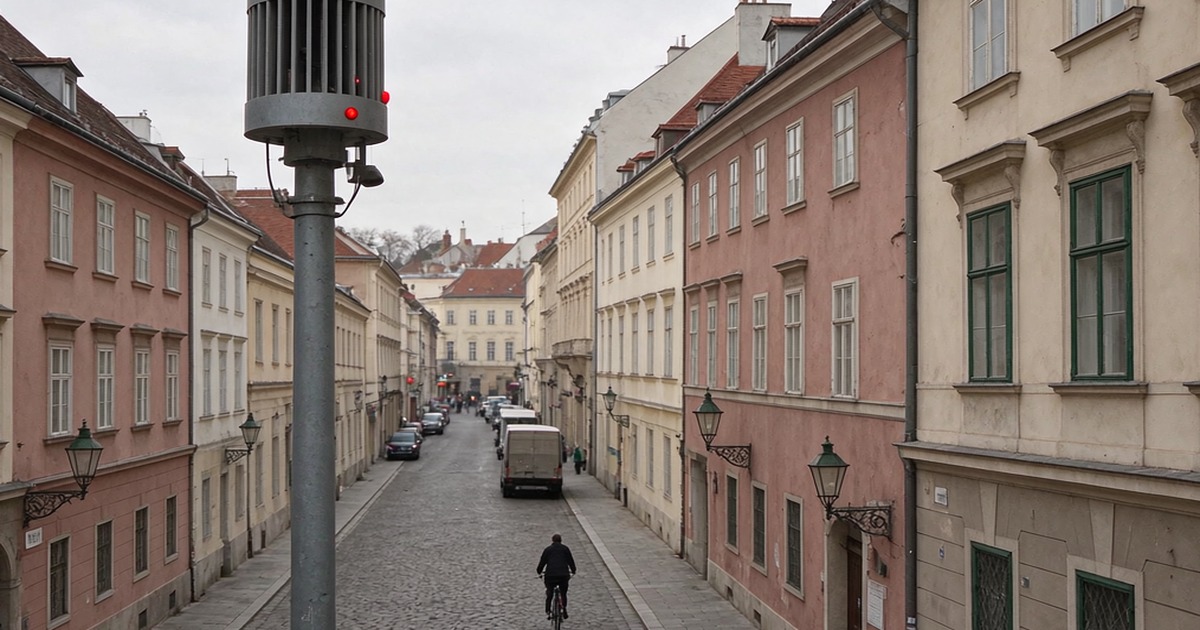
The heart of the warning system is the federal warning centre (Bundeswarnzentrale) in the situation centre of the Interior Ministry. It can activate sirens across the whole country, while activation within a federal state is handled by the state warning centres. According to oesterreich.gv.at, more than 8,300 sirens are available nationwide. On the ground, civil protection associations, fire brigades, the Red Cross and, when needed, the army work hand in hand.
For newcomers, civil protection in Austria is invisible at first. It surfaces during floods, heavy rain and the annual test alarm. That is exactly when knowledge of the system decides whether a siren triggers panic or a calm, precise reaction. Knowing the signals is part of everyday competence in Austria.
The four siren signals and what they mean
The warning system knows four signals that are easy to tell apart. A siren never sounds without reason, so the rule is simple: hear the signal, switch on the radio, follow the instructions. The table below summarises the official signals as defined on the population warning page of the Interior Ministry and by the state of Lower Austria.
| Signal | Sound | Duration | What to do |
|---|---|---|---|
| Warning (Warnung) | steady continuous tone | 3 minutes | Switch on radio or TV (ORF), follow announcements |
| Alarm | rising and falling wail | 1 minute | Take shelter, close windows and doors, follow instructions |
| All clear (Entwarnung) | steady continuous tone | 1 minute | Danger over, keep following announcements |
| Fire alarm | three times 15 seconds continuous tone | 45 seconds | Leave the building calmly |
The warning signal means danger is approaching: it calls for information, not flight. The alarm signal is the highest level: immediate danger, seek protected rooms. The fire alarm belongs to firefighting and is not a civil protection warning for the whole population. Whoever knows the difference stays capable of acting instead of feeling unsettled.
Test alarm: when Austria checks its warning system
Every year on the first Saturday of October, between 12:00 and 13:00, the nationwide civil protection test alarm takes place. As the Interior Ministry announces, the siren test signal is followed by the three civil protection signals: warning, alarm and all clear. The test alarm is not a sign of any impending danger.
There is also a routine that confuses many newcomers: every Saturday at noon, except in Vienna, a short siren test runs. These test signals check whether the installations are technically ready. And after the first Saturday of October, you additionally know how the signals sound in your municipality, so you can place them without alarm.
The test alarm has a practical side effect. It is the ideal moment to review your own emergency plan: restock supplies, test the torch, agree on a family meeting point. Whoever schedules this once a year keeps their preparedness automatically up to date.
AT-Alert and ZIVA: how Austria warns digitally
Alongside the sirens, Austria is expanding its digital warning channels. AT-Alert is the population warning system based on cell broadcast: warnings appear automatically on all compatible mobile phones in the affected area. No registration and no app download are needed, and the process works fully anonymously without personal data.
AT-Alert is to be seen as a complement to the sirens and will not replace this proven warning system. The aim of this additional channel is to reach as many affected people as possible directly on their mobile phones when an incident occurs.
- Federal Ministry of the Interior, oesterreich.gv.at
In addition, the Interior Ministry and the civil protection association launched the ZIVA app. It assesses the hazard situation for your specific address, sends real-time warnings and creates individual checklists for blackout, flood or storm scenarios. We tested how the app works, what data it requests and where its limits are in a dedicated piece on the ZIVA civil protection app.
Check in advance whether your device supports cell broadcast. Older phones or devices from other networks sometimes lack AT-Alert compatibility. The settings are usually found under notifications or emergency alerts. Five minutes of checking today saves you silent warnings in the worst moment. Anyone living across several countries should also know the regional apps of neighbouring states.
In an emergency all channels work together: the siren for everyone, AT-Alert on the phone, ZIVA for the personal risk picture. You do not need all three, but you should know they exist. A phone without cell broadcast support stays silent in a warned area.
Personal preparedness: what every household should stock
Civil protection does not end with sirens. The recommendations of the civil protection associations revolve around self-preparedness at home. That includes a battery-powered emergency radio, drinking water for several days, long-life food, medication, a torch and a charged power bank. The ZIVA app turns this into an individual checklist for your household.
Just as important is planning in your head: a meeting point with the family in case mobile networks fail, and a written contact outside the region. In severe weather, fast and correct behaviour decides: avoid basements and underground garages, do not use lifts. As our report on heavy rain after the drought shows, such events hit Austria even outside classic flood zones.
Check the batteries, the expiry dates of supplies and the first aid kit twice a year. Twenty minutes of effort, two dates in the calendar, and your household is prepared for the most common scenarios. Preparedness in Austria is not panic, it is an everyday routine.
Why niche knowledge makes everyday life in Austria easier
Both topics share one idea: whoever knows the system decides faster and better. Legal basic knowledge saves real money, in tenancy contracts, employment references or objections to official decisions. Knowing the warning signals and household preparedness protects health and property in an emergency. That is why this niche knowledge pays off even for those planning to move to Austria soon.
For immigrants, language plays an additional role. A course teaches Austrian professional German, from legal filings to disaster plans. And whoever knows that a siren at Saturday noon is only a test avoids unnecessary panic calls. Niche knowledge builds confidence in your own actions in a new environment.
Start small: one evening for the siren signals, one weekend for supplies, one week of research into suitable courses. None of it costs more than attention, and all of it pays back instantly when needed. Knowledge is the only insurance that charges no premium.
Frequently Asked Questions
Is postgraduate law studies the same as a law degree?
No. A postgraduate course builds on a completed degree and leads to further education degrees such as the LL.M. The regular diploma programme in law with 240 ECTS and the Mag. iur. degree remains the requirement for the bar examination and a judicial career. The course adds to your education, it does not replace it.
How much does a university course (Universitätslehrgang) cost in Austria?
Courses are self-funded programmes: the rectorate sets fees based on actual costs, usually several thousand euros. Regular student financial aid does not normally cover them. Before enrolling, ask for the total cost, payment plans and examination rules.
What does the alarm siren signal actually mean?
The rising and falling wail for one minute is the alarm signal: it announces immediate danger. Take shelter in protected rooms, close windows and doors, and switch on radio or television. The steady continuous tone for three minutes is only the preliminary warning level.
Do I need to register for AT-Alert or ZIVA?
Not for AT-Alert. The system uses cell broadcast and reaches all compatible phones anonymously in the affected area, without an app. The ZIVA app is voluntary but worthwhile for its individual hazard assessment and emergency checklists for your household.
Conclusion: niche knowledge is the cheapest insurance in daily life
Postgraduate law studies and civil protection show two sides of the same principle: Austria regulates a lot in detail, and whoever knows the details wins time, money and safety. The key points as a checklist:
- Clarify your goal: a course for knowledge, nostrification for a legal career, ideally a combination of both.
- Check the costs: fees under Paragraph 56 of the Universities Act, total volume in ECTS, the awarded degree.
- Learn the signals: warning (3 minutes continuous tone), alarm (1 minute wail), all clear, fire alarm.
- Build your supplies: battery radio, water, medication, power bank, family meeting point.
- Set up the apps: AT-Alert runs automatically, ZIVA adds the personal risk picture.
Next, read our guide to studying law in Austria and install the ZIVA civil protection app for a preparedness check. Also subscribe to our newsletter so you do not miss important explainers about life in Austria. Whoever knows the rules makes better decisions, in everyday life and in an emergency.
Stay Up to Date with the Latest Austrian News
The week's top stories - news, guides, and insights about life in Austria. Every Sunday in your inbox.