Food Delivery in Austria: Can You Still Order from Lieferando, Foodora and Wolt?
Food Delivery in Austria: Can You Still Order from Lieferando, Foodora and Wolt? Food delivery in Austria under scrutiny: BWB probes Foodora, Lieferando sacked all riders. What ordering really costs and how to order fairly and safely. Topics: Daily Life, Food & Shopping.
Ordering sushi with one tap while it rains outside feels normal and convenient. But can you still order from a food delivery service in Austria without guilt or risk? The market for food delivery in Austria has had a rough 18 months: from mass layoffs at Lieferando to a formal antitrust probe by the BWB against market leader Foodora.
In this premium guide you will learn: how Lieferando, Foodora (formerly Mjam) and Wolt actually differ, why the Austrian Federal Competition Authority (BWB) opened an investigation on 31 August 2026 for suspected abuse of a dominant position, how much you overpay when you order via the app and what bogus self-employment means for riders. Plus hygiene, price reality and a clear checklist for your next order.
What happened to food delivery in Austria in 2025–2026
For food delivery in Austria the past 18 months were a turning point. After Uber Eats exited in 2019, only two players shared the market until 2023 — Foodora (formerly Mjam, Delivery Hero) and Lieferando (Just Eat Takeaway). In May 2023 Finnish Wolt (DoorDash) entered Vienna and has expanded to further cities, but according to the BWB sector inquiry of 31 August 2026 it still holds under 5 % market share.
The inquiry surveyed around 2,500 restaurants in Vienna — result: Viennese venues earn 25–30 % of total revenue via platforms (as of 2023). Platforms are no longer an add-on but critical infrastructure. As wien.ORF.at reports, this dependency triggered the formal investigation against Foodora. The market is split geographically: Foodora dominates Vienna with 50–60 %, Lieferando the rest of Austria with 40–50 %. This duopoly is why the title question matters — is ordering still fair?
Why the BWB is investigating Foodora — and what it means for you
Food delivery in Austria is now watched not only by foodies but by competition authorities. As summarized by Die Presse, the Federal Competition Authority (BWB) closed its sector inquiry running since March 2023 on 31 August 2026 and immediately opened proceedings for suspected abuse of a dominant position — according to wien.ORF.at exclusively against Foodora, although both majors were criticized.
At the core are contract terms for restaurants. First, exclusivity agreements: for better commissions restaurants pause their offer on competing platforms — especially during discount campaigns. BWB data shows the number and scale of such campaigns at Foodora rose sharply around the Wolt market entry.
Second, narrow best-price clauses: venues may not offer the same dishes cheaper on their own channels. The BWB openly questions the economic necessity of this clause per wien.ORF.at. Third, unilateral contract changes and penalties up to 10.00 euros for longer preparation times or rejected orders — deemed excessive by respondents.
Fourth, reachability: Around one third of the 2,500 surveyed businesses complained about poor platform support. Hence the BWB forwarded material to KommAustria for review under the Digital Services Act (DSA). The presumption of innocence applies, but the message is clear: market power has become so entrenched that the competitive balance is at risk, as BWB Director Natalie Harsdorf stressed.
Lieferando sacked all riders — the end of the collective agreement
The moral side of can you still order is explained by Lieferando. Until spring 2025 Lieferando was the only one of the three to employ riders as regular employees under the Collective Agreement for Bicycle Couriers (Kollektivvertrag für Fahrradboten). As Der Standard reported exclusively, on 18 March 2025 the company announced it would wind down operations by end of June and close the entity by end of July.
Numbers differ: works council 966 affected, company around 600 permanent plus 250 fixed-term. Fact: Since August 2025 Lieferando, like Foodora and Wolt, rides only with freie Dienstnehmer (freelance contractors). Reason from the Amsterdam HQ (Just Eat Takeaway): level playing field — they tried to set benchmarks for years, no competitor followed. Delivery fees covered personnel costs only to a small extent.
What was lost matters. Since 2023 the collective agreement set 1,730 euros gross per month for 40 hours — just above the at-risk-of-poverty threshold of 1,572 euros for a single household (Statistik Austria 2023) per ORF. On top came 14 salaries per year, paid vacation, Christmas bonus, Sunday/night premiums, continued pay when sick and paid overtime. As ORF explains, freelance contracts drop all of that: sick pay only from day 4 at 50 % of the assessment base, no paid vacation, no continued pay, taxes and insurance on the rider, no pay during order lulls.
Bogus self-employment and the July 2025 financial police raids
Switching to freie Dienstverträge is not just paperwork. Union vida calls it Scheinselbständigkeit (bogus self-employment): rider wears company jacket, gets jobs via the Courier App, is tracked by GPS and has fixed targets — but legally counts as an «entrepreneur» without protection.
How serious this is was shown by a nationwide operation in mid-July 2025. According to Arbeit&Wirtschaft, 224 financial police officers with the Austrian Health Insurance Fund (ÖGK) simultaneously inspected 69 locations across Austria. Finding: again couriers were not registered, some simultaneously drew unemployment benefits (Arbeitslosengeld) or lacked a labour market permit.
In Vienna around 3,000 couriers are on the road daily. At Foodora only about 88 of ~3,000 riders are genuine employees, down by 40 since spring 2024. The economics are blunt: firms save on non-wage labour costs, risks like illness, accidents or idle time fall on the rider. As quoted via Arbeit&Wirtschaft, with a normal employment the employer pays 8 weeks of continued remuneration when sick; for freelancers the ÖGK pays from day one — the public subsidises the model.
The EU has responded: the Platform Work Directive 2024 reverses the burden of proof — the platform must prove self-employment. It must be transposed by December 2026. Until then every order is a vote for a business model.
How much more you really pay via the app
Food delivery in Austria via an aggregator is almost always more expensive than ordering direct. Typical pattern: venue mark-up 15–30 % on the platform plus delivery fee 2.90–4.90 euros plus service fee and, for small baskets, a minimum-order surcharge.
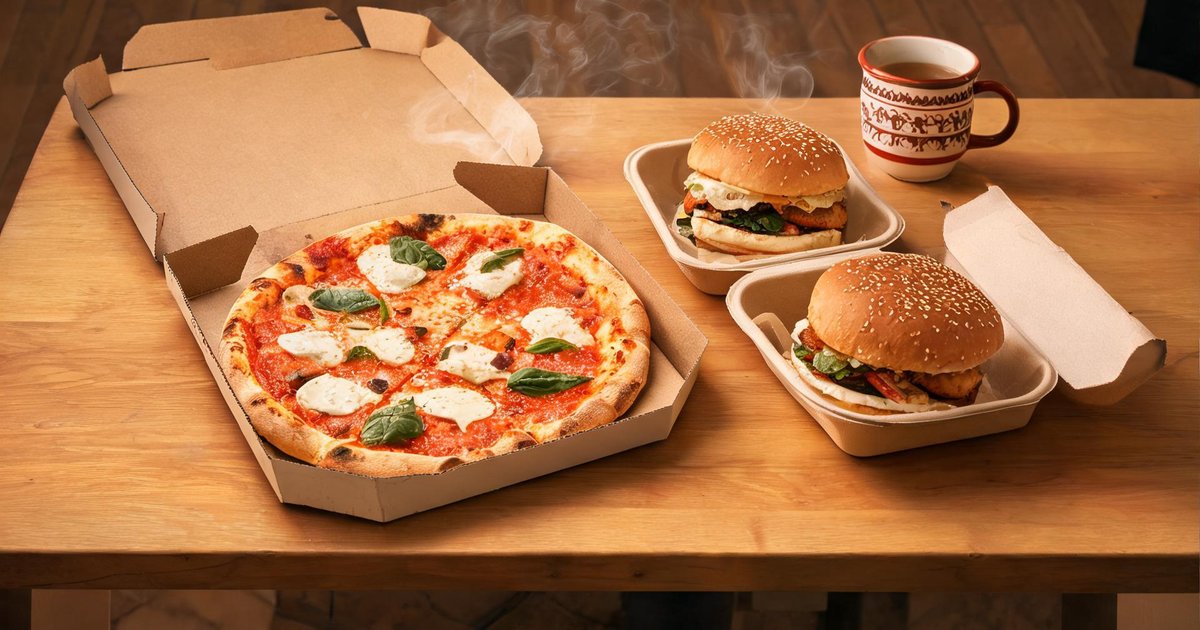
Example: Pizza Margherita on the pizzeria site 11.50 euros, in the app 13.90 euros (+21 %), plus delivery 3.49 euros and service 0.99 euros = 18.38 euros vs 11.50 euros (plus maybe free delivery from 20 euros direct). The restaurant pays 20–30 % commission to the platform, hence the higher price. The BWB survey confirms this: 25–30 % revenue runs via platforms, margins shrink.
In total you pay 30–45 % more. With two orders of 20 euros per week that is 600–900 euros per year extra. Alternative: direct order by phone/website or pickup with often –10 % discount. That spares your budget and leaves more for the Beisl (traditional Viennese tavern). Our guides to working in Austria and salaries in Austria show how tight many households already budget.
Hygiene and food safety — what to watch
Legally, food delivery in Austria falls under EU Regulation 852/2004, the Food Safety and Consumer Protection Act (LMSVG) and ordinances like the one consolidated on RIS. Core rule: cold chain — hot food above 65 °C, cold below 4 °C, transport as short as possible.
The Vienna Chamber of Labour (Arbeiterkammer) regularly tests food deliveries: already in the April 2021 lockdown and later, 50 % of platform orders did not arrive with the branded rider but with a neutrally dressed driver of the restaurant — who is liable for temperature and integrity only becomes clear at the door. Plus single-use packaging often holds heat for only 20–30 minutes.
If a rider cycles 25 minutes through heat or frost, pizza loses 10–15 °C in the box. Ghost kitchens (delivery-only kitchens without a dining room) add opacity — you never see the kitchen, app reviews are curated. No need to panic, but choose venues with high hygiene ratings, recent reviews and a short delivery radius (up to 3 km).
The three providers compared — Lieferando, Foodora and Wolt
So you can decide whether food delivery in Austria is still worth it — status August 2026:
| Criterion | Lieferando | Foodora (Mjam) | Wolt |
|---|---|---|---|
| Coverage | Nationwide in all cities | 40 cities with own fleet + 400+ via partners | Vienna + gradual expansion since 2023 |
| Market share | 40–50 % (stronger outside Vienna) | 50–60 % (stronger in Vienna) | <5 %, growing |
| Rider model | Since 08/2025 only freie Dienstnehmer (before 1,000+ employees) | Mostly freelancers, ~88 employees of ~3,000 | Only freelancers, full flexibility |
| Rider pay | Before 1,730 € gross KV; now per order | 13.20 €/hour gross excl. tips (Foodora figure) | Per order + mileage |
| Customer plus | Widest selection, order partly without account | Fast Vienna coverage, now focus on retail | Strong UX, tracking, entry discounts |
Since summer 2025 working conditions are virtually identical across the three — freelance riders without collective-agreement protection. On price and choice, Wolt often undercuts on entry, but the BWB shows discounts also serve to tie restaurants.
When you should better not order — red flags
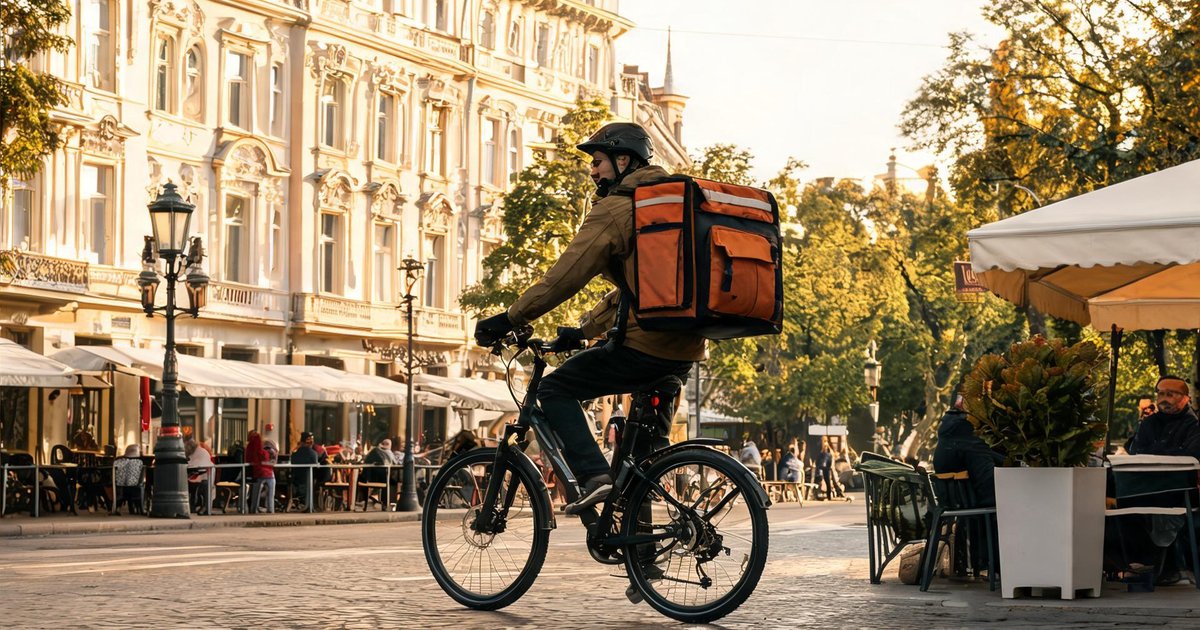
Not every order via food delivery in Austria is a good idea. Minimum order above 25 euros for one person plus aggressive upsells? Rather call direct. Missing imprint or contact of the restaurant in the app? You will not find anyone accountable if something goes wrong.
Stock photos instead of real dishes, missing allergen labelling per LMIV and no unit prices for drinks? Caution. Rating below 4.0 with >100 reviews and complaints about cold food / >60 minutes wait? Skip. Delivery distance >5 km? Food cools and the rider rushes — risk for all.
Extra note on weather: At >30 °C heat or black ice, riders cycle without occupational protection and without pay for idle time. If you want to support the restaurant on such days, choose pickup or direct delivery with the restaurant’s own car. Faster and fairer.
How to order fairly and without overpaying — checklist
Food delivery in Austria can be convenient and responsible with a few steps. First check if your favourite restaurant has its own website or phone number — direct orders save 15–30 % and leave the full margin with the business. Compare the dish price in the app vs. on the site — the gap shows the platform mark-up.
Bundle orders: One order of 35 euros with 3.49 euros delivery is cheaper than three of 12 euros with three fees. Use pickup — often –10 % and no heat loss. Tip 5–10 % — with all three providers tips go entirely to the rider (cash or in-app).
Rate fairly and concretely: Delays are usually due to kitchen or dispatch, not the rider — penalties up to 10 euros hit the restaurant per BWB, not you. Leave constructive feedback and prefer venues that deliver themselves or still pay by collective agreement — off-platform you can still find them.
Food delivery has become critical infrastructure for gastronomy — a quarter of revenue depends on it. When that dependency turns into market power, not only prices suffer but the working conditions of thousands of riders who pedal daily without basic protection.
— Labour law expert, Vienna Chamber of Labour
Frequently Asked Questions
Can you still order via Lieferando, Foodora and Wolt in Austria? Yes, it is legal and possible, but order consciously. Since summer 2025 all three use freelance riders, and the BWB has investigated Foodora since 31.08.2026 for suspected abuse of dominance. If fairness and hygiene matter to you, order directly from the restaurant, keep distances short and tip.
How do Lieferando, Foodora and Wolt differ on price and terms? Foodora dominates Vienna (50–60 %), Lieferando the provinces (40–50 %), Wolt is the newcomer (<5 %). In the app you pay 15–30 % more than direct plus 2.90–4.90 euros delivery and service fees. Since August 2025 rider terms are freelance contracts without KV protection at all three.
Why did Lieferando sack all riders in 2025? As Der Standard reports, the firm cited competitive disadvantage: rivals always used freelance contractors and saved non-wage costs. The collective agreement secured 1,730 € gross, 14 salaries, vacation and sick pay — now pay is per order.
Is delivery hygienically safe? Yes if the cold chain per LMSVG and EU Regulation 852/2004 is kept. Risk rises with >30 minutes delivery time, heat/frost and ghost kitchens without a dining room. Choose venues with rating from 4.2, recent reviews and delivery up to 3 km — or pickup.
What does bogus self-employment of couriers mean and why should I care? Bogus self-employment means the rider is formally «self-employed» but de facto dependent — company clothing, app orders, GPS tracking. No minimum wage, vacation, dismissal protection or full insurance. Every order backs a model — direct delivery from the restaurant is often fairer.
Conclusion — yes you can order, but do it wisely
Food delivery in Austria has not become «forbidden», but it is no longer carefree. The Foodora (50–60 %) and Lieferando (40–50 %) duopoly, 25–30 % revenue dependency, exclusivity clauses and penalties up to 10 euros, the switch of all providers to freelance riders in summer 2025, raids at 69 locations and the BWB case of 31.08.2026 paint a mature picture.
If you want to order today, take this checklist:
- Compare price in app vs. website — 15–30 % gap decides
- Order direct by phone/website or choose pickup –10 %
- Keep distance up to 3 km, at extreme weather pick up yourself
- Tip 5–10 % — goes entirely to the rider
- Rate fairly and prefer venues with own delivery
That keeps convenience, supports your favourite restaurant and does not reward the worst industry practices. For more no-clickbait analysis — subscribe to our newsletter and also read our guide to working in Austria and salary in Austria.
Stay Up to Date with the Latest Austrian News
The week's top stories — news, guides, and insights about life in Austria. Every Sunday in your inbox.