Drought and Weather Extremes in Austria: What We Will Eat in 20 Years Drought Austria food future: How climate change, heat and weather extremes will reshape our diet by 2045 – what disappears and what lands on our plates. Topics: Daily Life, Food & Shopping, Economy.
Drought in Austria and weather extremes are reshaping food faster than most people realise. Farmers already harvest 20–30 % less grain in dry years, and supermarket prices are climbing visibly. In this guide you will learn which foods will become scarce in the next 20 years, which new crops offer hope, how much more expensive food will be by 2045 and what you as a consumer can do today.
What do drought and weather extremes mean for food in Austria?
Drought and weather extremes mean for food in Austria that harvests become unreliable, food gets more expensive and supermarket choice changes. According to Geosphere Austria, 2024 was the warmest year on record — +2.8 °C above pre-industrial levels. The Federal Ministry of Agriculture (BML) reported crop losses of 18 % for grain maize and 12 % for wheat in 2024 due to drought. For you that means less domestic grain and more imports.
Extremes are not just heat. They are late frost, heavy rain, hail and drought in quick succession. As ORF citing Hagelversicherung reported, drought and hail damage in 2024 exceeded €250 million. Hardest hit are Weinviertel, northern Burgenland and Marchfeld — Austria’s breadbaskets. In Vienna this already shows in potatoes (Erdäpfel), which became 23 % more expensive in 2023, as Statistik Austria documented.
The good news: Austrian agriculture is adaptable. Traditional varieties are being replaced by drought-tolerant ones, and technologies like precision irrigation save yields. But the transition needs time and money — and it changes what we cook. Read also how heat is changing our lives and what a 40-degree summer in Austria means for daily life.
How much has Austria’s climate already changed?
Austria’s climate has already changed dramatically and hits food directly. Austria is warming twice as fast as the global average. According to Geosphere Austria Climate Status Report 2024, mean annual temperature rose by 2.1 °C since 1960, in the east by 2.4 °C. The number of hot days above 30 °C in Vienna rose from 9 days (1961–1990) to 23 days (2014–2023).
For agriculture, averages matter less than extremes. Days without rain in summer in the east increased by 15 % since 2000, according to AGES. At the same time heavy rain gets more intense: 40 litres per square metre in one hour is no longer rare, as Der Standard on the 2024 floods reported. This swing — first drought, then flood — destroys soils and harvests.
The Danube shows the scale: low water on the Danube in 2022 and 2024 caused maize losses of up to 40 % in Marchfeld, as we detailed in our article on low water on the Danube and the economy. Transport also suffers — as the report on heat and rail infrastructure shows, food logistics struggle in extreme heat too.
Which foods will disappear from our plates first?
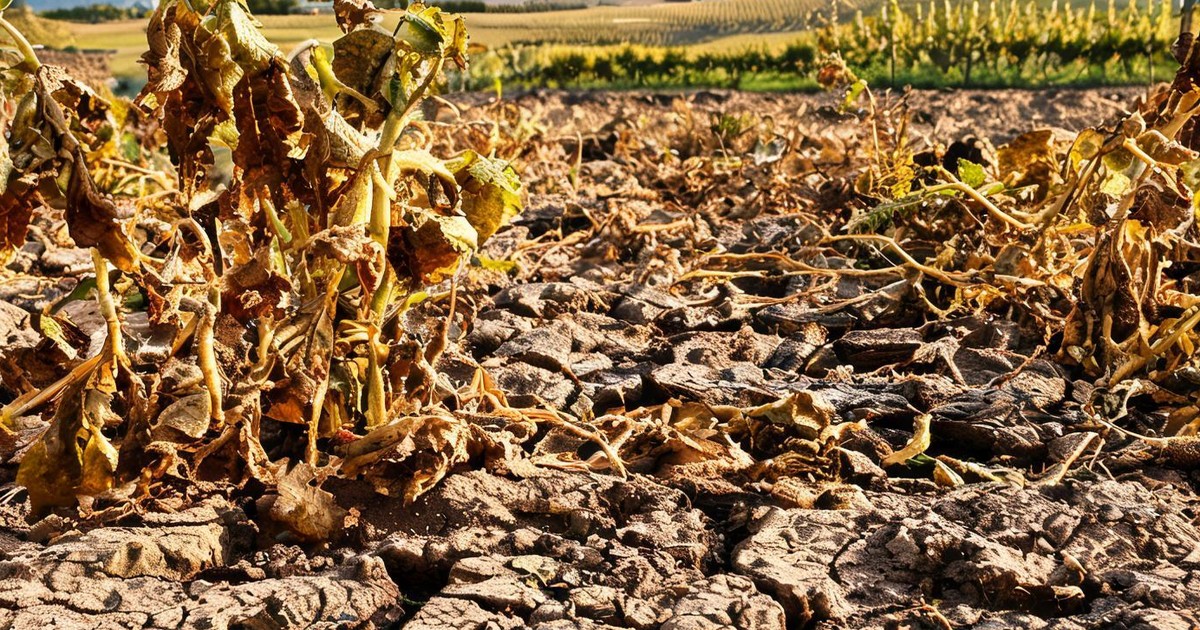
Most at risk from drought in Austria are potatoes, wheat, sugar beet and grassland for dairy cattle. These crops need a lot of water at the wrong time. According to Statistik Austria Harvest Survey 2024, the potato harvest in 2024 fell to 520,000 tonnes — –22 % versus the five-year average. Sugar beet lost –17 %. Grassland, covering 55 % of farmland, yielded a third less feed in the dry year 2022.
Milk and meat follow with a delay. Less grass means less milk: milk deliveries fell by 4.2 % in 2023, reported WKO Agrarhandel. Beef gets more expensive because feed must be imported. Wachau apricots and Burgenland wine also suffer: late frost in April 2024 destroyed up to 70 % of apricot blossoms, as ORF Niederösterreich documented.
What does not disappear outright becomes more expensive and less available. Potatoes from Waldviertel, now €1.80 per kilo, could become 35–50 % more expensive by 2035, according to WIFO Agricultural Forecast 2024. Imports from Germany and Poland fill the gap, but with higher carbon costs and unstable quality. How prices shift in gastronomy is visible in food delivery in Austria.
What grows better in heat and drought?
In heat and drought, millet, sorghum, chickpeas, lentils and soy win — drought-tolerant crops that will expand sharply in Austria by 2045. According to AGES variety trials 2023–2024, millet in Weinviertel yielded 4.2 tonnes per hectare with 30 % less water than maize. Sorghum delivered 5.1 tonnes, maize only 3.8 tonnes in the drought year 2024. The BML subsidises these crops since 2023 with €180 per hectare conversion premium.
Chickpeas and lentils are making a comeback. Austria today imports 92 % of its pulses, but trials at the University of Natural Resources BOKU Vienna show chickpeas in Lower Austria yielding 1.8 t/ha — comparable to France. Soy is already a winner: area rose from 38,000 ha (2015) to 82,000 ha (2024) — up 116 %, per Statistik Austria.
Mediterranean crops move north. Rice from Seewinkel has been tested since 2022, sweet potatoes in Burgenland grown commercially since 2020. Olive groves already exist near Klagenfurt — unthinkable ten years ago. According to the European Environment Agency, the cultivation zone for wine and olives will shift 150–200 km north by 2040.
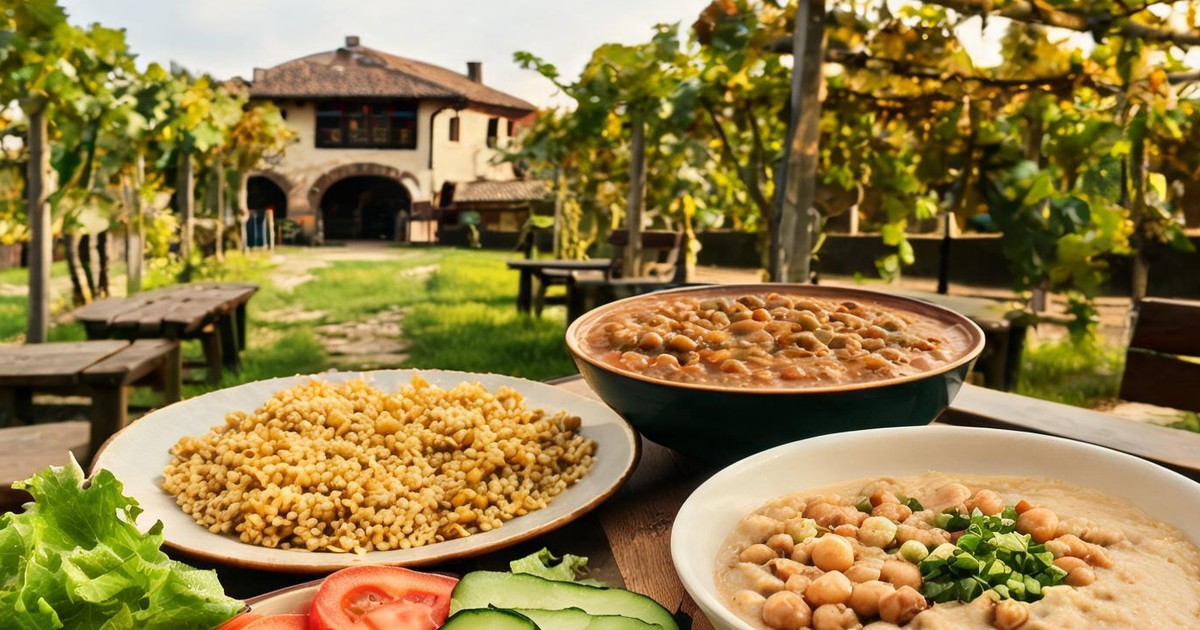
For consumers this means more millet bread, lentil stew, hummus from domestic chickpeas and soy from Marchfeld instead of Brazil. Taste changes, but nutrition stays — millet contains 11 % protein and plenty of iron.
How expensive will our food be by 2045?
Our food will be 25–40 % more expensive by 2045 if drought and extremes continue — especially domestic staples. According to WIFO Inflation Forecast 2024, food prices in Austria rose by 9.8 % in 2023 and 4.1 % in 2024 — well above overall inflation of 3.4 %. Statistik Austria HVPI data show: bread +18 % since 2021, milk +22 %, vegetables +15 %. Drought adds on top.
An example: a family today spends €620 per month on food (Konsumerhebung 2023). With +2.5 % annual increase due to climate effects, that is €980 in 2045 — €360 more per month. Import dependence worsens it: Austria imports 47 % of its food calories, for fruit and vegetables 68 %, per BML Supply Balance 2023.
| Food | Price 2024 (avg.) | Forecast 2045 | Reason |
|---|---|---|---|
| Potatoes (1 kg) | €1.80 | €2.60–€3.00 | Drought, lower yield |
| Wheat flour (1 kg) | €1.40 | €1.90–€2.20 | Crop failures, imports |
| Milk (1 l) | €1.35 | €1.90–€2.10 | Feed shortage |
| Millet/lentils (1 kg) | €3.20 | €2.80–€3.00 | More cultivation, stable |
| Tomatoes (1 kg) | €3.50 | €4.80–€5.50 | Irrigation costs |
As Der Standard on inflation analysed, inflation hits low-income households twice as hard. Drought aid for farmers cushions losses but costs end up with consumers. Those who save energy in a 40-degree summer should also plan for food — stocking and seasonal buying protect the budget.
What role does Austrian agriculture play today?
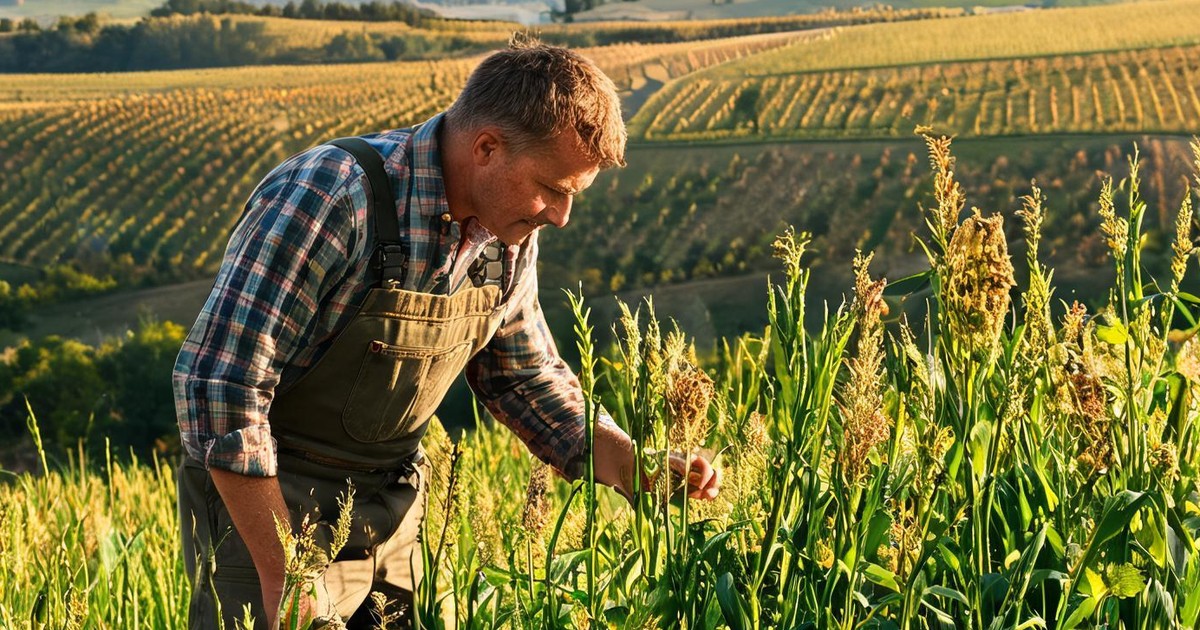
Austrian agriculture today secures around 55 % of food supply while farming only 32 % of the area at high risk. According to BML Green Report 2024, there are 105,000 farms, of which 27 % organic — EU leader. Self-sufficiency is 86 % for milk, 92 % for beef, but only 52 % for vegetables and 41 % for fruit. So staples are fine, vitamins are not.
Small scale is both strength and weakness. Average farm: 19 hectares, versus 62 ha in Germany. Adaptation is harder because irrigation costs €3,000–8,000 per hectare, per the Austrian Chamber of Agriculture. Many farms in the east have no irrigation — only 14 % of arable land is irrigated, in Marchfeld 38 %, in Waldviertel 4 %.
Subsidies help but not enough. The Common Agricultural Policy (CAP) pays €1.1 billion per year to Austria, of which €280 million for environmental measures. Drought compensations in 2024 totalled €62 million, per BML Drought Aid — covering at most 30 % of damage. Many farms consider quitting: 3.2 % closed in 2023, rising, per Statistik Austria Farm Structure Survey.
An underestimated factor is soil itself. Humus-rich soils store up to 200 litres of water per square metre, depleted ones only 80 litres. Per BOKU Soil Science 2023, Austrian arable soils lost on average 0.8 % humus since 1990 due to intensive farming and erosion after heavy rain. Building humus (cover crops, compost) raises drought resilience by 30 % without extra irrigation — the cheapest adaptation of all.
Adaptation is no longer optional — it is a necessity. Those who do not invest in soil-conserving, water-saving systems today will not be competitive in ten years.
— Dr. Sophie Kaufmann, Head of Crop Production, AGES
Which new technologies secure the harvest?
New technologies secure harvests through precision irrigation, drought-tolerant varieties, agroforestry and digital early-warning systems. Precision irrigation with soil-moisture sensors saves up to 40 % water and raises yields by 15–20 %, as trials at BOKU Vienna 2023 in Marchfeld showed. Cost: €1,200 per hectare for sensors and controls, payback in 3 years.
Breeding is the second pillar. AGES has tested since 2021 wheat varieties that lose only –8 % yield at –30 % rainfall instead of –22 %. CRISPR varieties are not yet approved in the EU, but conventional breeding already delivers: millet variety ‘Kornberger’ was approved in 2024, sorghum ‘Alföldi’ in 2023.
Agroforestry — trees on fields — cuts evaporation by 25 % and protects from wind. In Weinviertel pilot projects with walnut trees and millet have run since 2022, funded by BML with €450 per hectare. Drones and satellites warn of drought 14 days earlier, per Geosphere Austria Drought Monitor.
A third lever is protected cultivation. Polytunnels and greenhouses with rainwater harvesting deliver tomatoes and cucumbers year-round with 60 % less water than open fields at risk of downpours. In Seewinkel and Marchfeld greenhouse area grew from 520 ha (2020) to 680 ha (2024), per Statistik Austria Horticulture 2024. Investment of €180,000 per hectare pays off through higher winter prices and stable yields despite extremes.
Logistics also matters: heat and rail infrastructure and low water on the Danube show how food transport must be rethought for climate change.
How will our menu change by 2045?
Our menu by 2045 will be more Mediterranean, more plant-based and more local — less potato and beef, more millet, lentils, soy and vegetables from protected cultivation. According to the Austrian Nutrition Society ÖGE Forecast 2023, meat consumption will fall from 62 kg per person per year today to 42 kg (2045), while pulses rise from 1.2 kg to 8 kg. This is not only climate but health — the WHO recommends at most 300 g meat per week.
Concretely:
- Breakfast 2045: Millet porridge with domestic berries instead of wheat bread with imported jam. Millet grows in drought, wheat does not.
- Lunch 2045: Lentil stew with sorghum, chickpea curry from Weinviertel, soy schnitzel from Marchfeld.
- Dinner 2045: Grilled vegetables from the greenhouse (year-round, water-efficient) plus millet beer.
Tradition stays but becomes rarer and pricier: Wiener Schnitzel from domestic veal becomes a Sunday dish, not daily. Potato goulash is only seasonally fresh, otherwise from storage. Wine changes: Grüner Veltliner moves higher into the mountains, Zweigelt is complemented by heat-tolerant Merlot.
Gastronomy already adapts: even food delivery in Austria offers more vegetarian options — a trend that will accelerate. Those who follow Hofer and sustainable shopping see: consumers want local and climate-fit.
What can consumers do today?
Consumers can already do a lot to secure food despite drought: buy seasonal and local, waste less and choose drought-tolerant products. Every Austrian throws away 133 kg of food per year, of which 58 kg avoidable, per Statistik Austria Waste Survey 2023. That is €1,400 per household in the bin. Halve waste and you save €700 and relieve agriculture by 15 %.
Concretely:
- Buy seasonal: Store potatoes in autumn (cool, dark, keep 6 months), preserve tomatoes in summer. Seasonal local produce is 20–30 % cheaper and needs no irrigation from Spain.
- Choose pulses: Lentils, chickpeas, millet from Austria are already available — e.g. at Ja! Natürlich and Alnatura. They cost €3–4 per kilo, keep dry for 2 years and need hardly any water.
- Save water: One kilo beef needs 15,000 litres water, one kilo lentils 1,300 litres — factor 11. Less meat = less drought pressure.
- Stock up: Flour, rice, pulses stored dry — keep 1–2 years and protect against price spikes.
Engagement helps too: support Community Supported Agriculture (SoLaWi) — 87 farms in Austria offer harvest shares for €250–400 per season, per SoLaWi Network Austria. That secures farmer income even in drought years.
Frequently Asked Questions
Will potatoes really disappear from Austria? No, potatoes will not disappear but become rarer and pricier. Area fell from 22,000 ha (2010) to 18,500 ha (2024), yields fluctuate strongly. By 2045 BOKU expects self-sufficiency to fall from 78 % to 55 % without expanded irrigation. Imports from cooler regions fill the gap.
Will food become unaffordable? Not unaffordable, but noticeably more expensive. Staples rise 25–40 % by 2045, meat more than pulses. Low-income households spend 18 % of budget on food vs. 11 % average, per Statistik Austria Household Budget Survey. State aid like drought aid for farmers cushions but does not prevent price rises.
Can Austria feed itself? Theoretically yes, practically only with change. Today calorie self-sufficiency is 55 %, with heavy meat and dairy. With plant-based diets and new crops (millet, soy) it could rise to 75 %, per BML Scenario 2040. Without irrigation and new varieties it falls to 40 %.
Is organic more climate-fit? Partly. Organic soils store 20 % more water and are more drought-resilient, but yields are 15–20 % lower. Per FiBL Austria, organic is more stable in drought but needs more area. Combining organic principles with precision tech is best.
How does vegetarian eating help with drought? A lot. A vegetarian diet based on domestic pulses is the most climate-resilient option by 2045. It needs 70 % less land and 60 % less water than meat-heavy diets, per the ÖGE Future Study. Skipping two meat meals per week saves €450 per year and cuts your drought footprint by 28 %.
Conclusion: Securing food in Austria despite drought
Drought and weather extremes will irreversibly change food in Austria, but we can shape the change. Key facts: –22 % potato harvest 2024, +2.1 °C since 1960, €360 more food costs per month by 2045 without adaptation — but also +116 % soy area since 2015 and 40 % water savings via precision tech show solutions exist.
Your 5-point plan for the next 20 years:
- Buy seasonal and local — try domestic millet, lentils, chickpeas
- Halve food waste — saves €700 per year and relieves harvests
- Less meat, more pulses — 11× less water
- Stock and store — autumn potatoes keep 6 months, protect against price spikes
- Support SoLaWi or direct marketing — secure farmers even in drought years
Those who act today will still eat well, diversely and affordably in 2045 — just differently than today. More Mediterranean, more plant-based and more conscious. Start with your next shop: pick millet from Weinviertel instead of imported rice. Your plate and Austria’s fields will thank you.
Subscribe to our newsletter — we send monthly tips on seasonal shopping and climate-fit eating in Austria.
Stay Up to Date with the Latest Austrian News
The week's top stories — news, guides, and insights about life in Austria. Every Sunday in your inbox.