Golden passport: how the rich buy citizenship – and what counts in Austria
Golden passport: how the rich buy citizenship – and what counts in Austria Golden passports: citizenship by investment from $120,000. Why small states earn billions, why the EU stopped Malta – and why Austria never sells passports. Topics: News, Citizenship, Economy.
The Austrian passport grants visa-free access to 185 countries and is rightfully considered one of the strongest in the world. That is exactly why it has become a status asset: wealthy people assemble portfolios of citizenships much like investment portfolios. Industry estimates put the global investment migration market above $20 billion in 2025. Caribbean states sell passports for $120,000–400,000, small countries bake the revenue into their budgets, and the EU shuts down the most aggressive schemes. Austria does not play this game: there is no official “passport for investment” program, and rare investors obtain citizenship only for extraordinary merit – with €3 million in real contributions as a rough entry point. Below we break down the prices, the St. Kitts and Nevis case, the EU court verdict on Malta, and the legal routes to Austrian citizenship.
How much a second passport costs
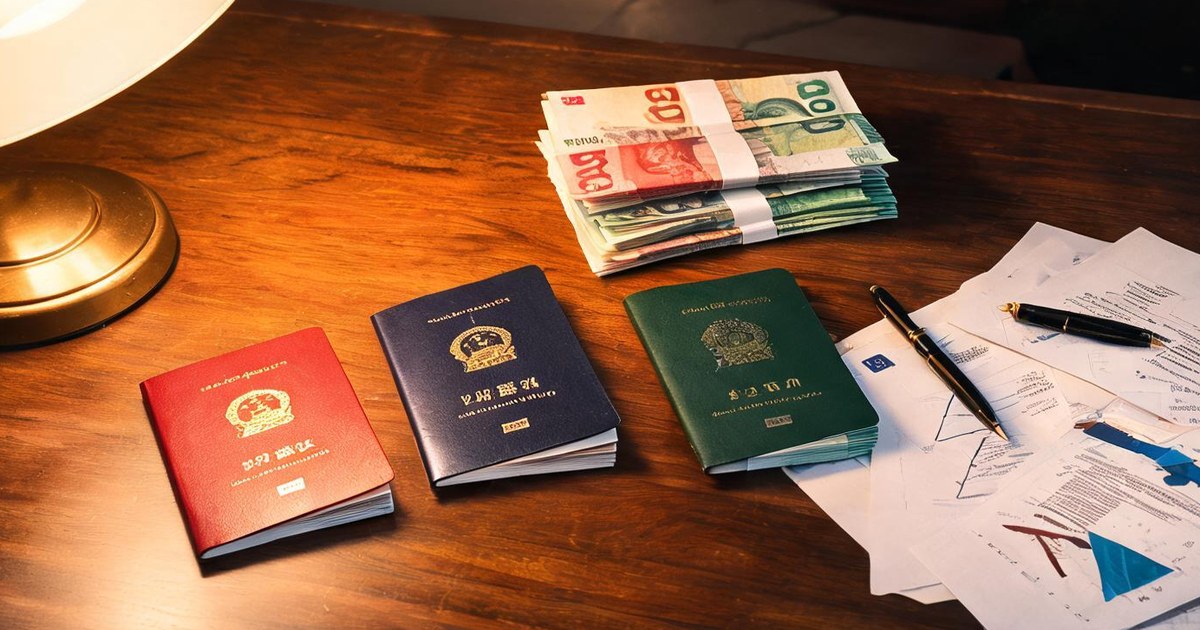
The price range is enormous: a golden visa (residence by investment) in Latvia starts at €50,000, while residency in the Bahamas or the Cayman Islands costs $1 million and up. Citizenship by investment is more expensive: the Pacific state of Nauru sells its passport for $95,000 until the end of the year, after which the price rises to $120,000. Grenada and Antigua & Barbuda ask $200,000 or more, Turkey requires at least $400,000 in real estate. As Die Presse reports, the money either flows into earmarked state funds or is invested in real estate and local businesses.
| Country | What is sold | Price from |
|---|---|---|
| Latvia | golden visa (residence) | €50,000 |
| Nauru | citizenship | $95,000 → $120,000 |
| Grenada, Antigua & Barbuda | citizenship | $200,000 |
| Turkey | citizenship | $400,000 (real estate) |
| Bahamas, Cayman Islands | residency | $1,000,000 |
St. Kitts and Nevis: the country that lives off selling passports
St. Kitts and Nevis launched the world’s first citizenship-by-investment program back in 1984. The scale is striking: according to the European Commission, between 2015 and 2025 alone the island state issued more than 50,000 passports to foreign investors – roughly as many as it has inhabitants. For small countries this is not a luxury but a pillar industry: per the IMF, program revenues made up 26% of GDP of St. Kitts and Nevis in 2022. By 2025 they had fallen to 5.3% of GDP, after the islands raised prices in 2023, tightened source-of-funds checks and closed the program to citizens of Russia and Iran. Nevis Premier Mark Brantley believes the industry “will survive, but change qualitatively” – and rejections now exceed 40% of applications.
Why wealthy people want a second passport
Buyers’ motives differ: some optimise taxes, some shield their children from military conscription, some plan education and the family’s future home. According to Günther Dobrauz-Saldapenna, head of Henley & Partners’ European business, most clients never relocate at all – they build a “plan B and plan C” in advance. Procedures take anywhere from months to years, so buying options early beats hunting for a passport in the middle of a crisis. The most surprising fact: Henley & Partners’ largest client group comes not from an authoritarian state but from the USA, and demand in Germany is growing fastest.
Why the EU stopped the sale of citizenship
The European Court of Justice scrapped Malta’s golden passport program in 2025: systematic naturalization for pre-defined payments amounts to an impermissible commercialization of citizenship. Brussels is also squeezing golden visas: under the European Commission’s report, such schemes may open the Schengen area to irregular migrants, tax evaders and potentially dangerous individuals. Vanuatu is a telling case: after the saga of influencer Andrew Tate’s golden passport, the EU scrapped visa-free travel for its citizens back in 2024. Rejection rates on Caribbean programs remain low – in Antigua and St. Lucia they sit in the single-digit percentages – and that is precisely what worries Brussels.

Can you buy Austrian citizenship as an investment?
The direct answer: no, there is no official investment program. Tellingly, market leader Henley & Partners offers only two EU passports – the Maltese and the Austrian – and the Austrian one strictly as a “passport for merit”. The exception is naturalization for extraordinary merit (§ 10 Abs. 6 StbG – the Austrian Citizenship Act): in 2025, 50 people received citizenship this way, and their names are published on the website of the Federal Chancellery. They are mostly artists, athletes and scientists – but occasionally investors. Industry insiders put the entry threshold at €3 million minimum, provided the investment creates jobs or boosts exports. One important nuance: Austria usually requires you to renounce your previous citizenship – see our guide to dual citizenship rules.
Citizenship is not for sale. Anyone who wants to become an Austrian citizen must become part of society, make a contribution, and respect our rules and values.
— Wolfgang Hattmannsdorfer, Federal Minister of Economics of Austria
Frequently Asked Questions
How much does the cheapest golden passport cost?
Nauru sells citizenship for $95,000 until the end of the year, then $120,000. Caribbean programs start at $200,000, Turkey at $400,000 in real estate. Austrian citizenship is not sold for a fixed price at all.
Can you get Austrian citizenship by investment?
There is no dedicated program. Only the extraordinary merit route exists (§ 10 Abs. 6 StbG): it brought 50 people a passport in 2025. An investor needs a real contribution – roughly €3 million or more, creating jobs and export.
What are the requirements for regular naturalization in Austria?
The standard is 10 years of lawful residence (6 in exceptional integration cases), German at B1 level, and a society knowledge exam: the Austrian citizenship test has 33 questions, and you need 18 correct answers. Stable income and a clean record are also required.
What to do if you want an Austrian passport
The path to Austrian citizenship runs through classic naturalization, not through a purchase. A short checklist:
- do not spend money on “buying a passport” – no official program exists, and after the Malta verdict none will appear;
- count the years: 10 years of residence, starting from a lawful Aufenthaltstitel (residence permit);
- prepare German B1 and the values test in advance;
- check your income, insurance and criminal record before applying;
- rely on the “extraordinary merit” exception only with truly major investments or international renown.
The first step is choosing the right residence permit: we break down all types of residence permits in Austria. The full route to the passport is in our Austrian citizenship guide. If you want analyses like this regularly, subscribe to our newsletter – the essentials on migration and life in Austria, in short form.
Stay Up to Date with the Latest Austrian News
The week's top stories — news, guides, and insights about life in Austria. Every Sunday in your inbox.