Austria Package Tax: Why Your Parcel Often Costs More Than the Product
Austria Package Tax: Why Your Parcel Often Costs More Than the Product The new Austria package tax adds €2.40 per parcel since October 2026. A €0.91 lip balm now costs €3.31. We break down the absurd math and how to avoid overpaying. Topics: News, Economy.
Since October 1, 2026, Austria has a new Paketsteuer (package tax): €2 for every parcel or order at major online retailers. With 20% VAT, that is €2.40 for shoppers. Sounds like pocket change? Not for a €1–2 item. On Amazon, a single lip balm priced at €0.91 now costs €3.31 — the tax is 2.5 times the price of the product itself. This article explains how the Austria package tax works, which examples already look absurd, and what buyers can do.
What Is Paketsteuer and When Did It Start
Paketsteuer is Austria’s national package tax, introduced on October 1, 2026. It applies to large online retailers and marketplaces whose annual Austrian online revenue exceeds €100 million. The rate is €2 per parcel or per order, plus VAT. Books benefit from a reduced 10% VAT rate, so the tax there is €2.20.
The tax was designed to offset something: since July 1, 2026, Austria has cut VAT on groceries, costing the budget roughly €400 million per year. The Ministry of Finance expects the package tax to bring in about €280 million annually. As Kurier reports, the levy is a direct part of the same reform that also raised court fees and the E-Card fee.
This is a key difference from the European trend: the EU introduced its own €3 tariff on parcels from China and the US in July, but that one only covers non-EU goods. Austria’s tax, by contrast, hits everyone — Amazon.de, Zalando, and local shops alike. Read more about the EU levy in our article on the EU import tax on small parcels.
Who Is Affected: 16 Platforms and 4,000 Sellers
The list of affected platforms is limited but broad. According to the Austrian Handelsverband (Retail Federation), 16 major players fall under the tax: Amazon, Temu, Zalando, Otto, Shein, AliExpress, eBay, Mediamarkt, Apple, Universal, Ikea, Shop Apotheke, Best Secret, XXXLutz and Refurbed. An additional 4,000 Austrian businesses that sell through these large marketplaces are also affected.
An important detail: each merchant chooses whether to charge per parcel or per order. Amazon, Otto and Zalando opted for per-order — if you buy five items that arrive in three boxes, you pay €2,40 once. Retailers that charge per parcel, however, can add the fee for every single box. This means that, under certain conditions, combining orders into one genuinely saves money.
The Absurd Math: When the Tax Beats the Product Price
Here is what krone.at highlighted on day one of the law:
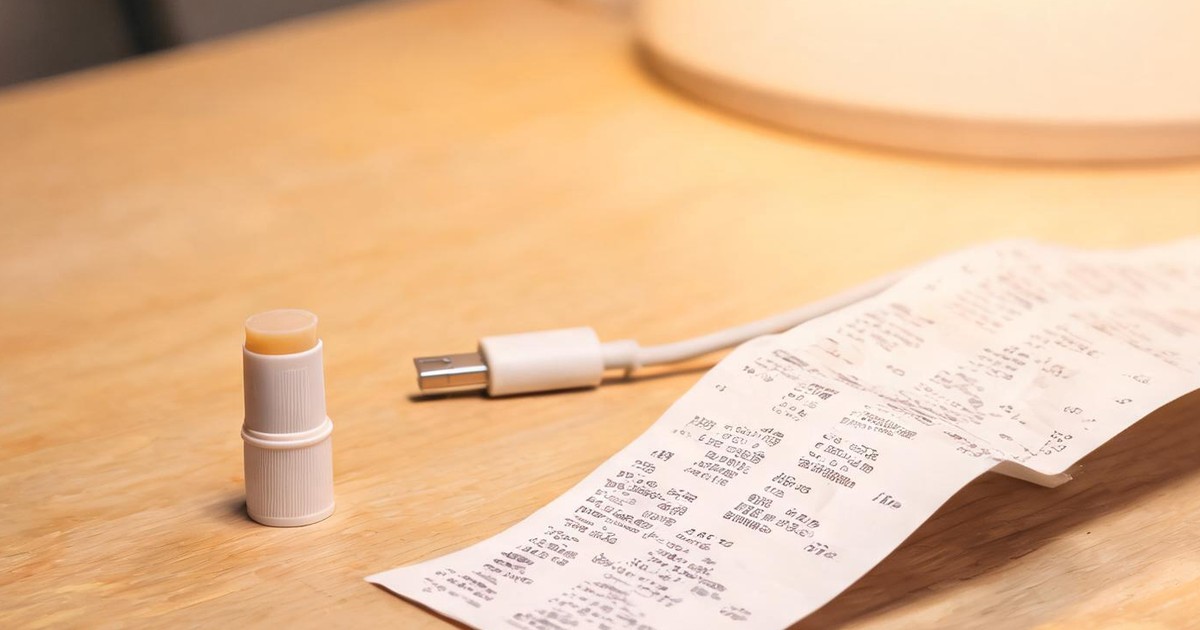
- Sebamed lip balm at €0.91 — on Amazon checkout it becomes €3.31. The tax is 2.5 times the product price.
- Mannerschnitten (75 g) at €1.02 — total €3.42. The tax share of the final price is about 75%.
- USB cable at €1.10 — the price jumps to €3.50. The tax makes up nearly three-quarters of the receipt.
- VARTA button cell at €1.46 — total €3.86; tax burden 68.5%.
- UHU glue tube at €3.28 — final €5.68, taxes 51.9%.
Counting VAT on the product itself as well, the picture is even starker: for the same lip balm, the combined tax component reaches 77% of the final price. For a typical €20 order, the parcel tax adds 12%, while the total tax burden is around 25.6% of the receipt.
Amazon Prime Makes the Absurdity Worse
The paradox is that free delivery is exactly what makes the Austria package tax so visible. Cheap items on Amazon Prime used to have an anchor — shipping costs were comparable to the product price. Now shipping is free, but a fixed government tax of €2.40 appears instead.
The result: a buyer orders a single €1 tube, and the biggest line item is neither the product nor logistics — it is the tax. As economists note, a fixed levy works as a regressive charge: it hits cheap and expensive purchases equally hard in absolute terms, but for the cheap ones it is a catastrophe in percentage terms.
What Is Not Taxed
Not every online purchase became more expensive. Excluded:
- Private sales — Willhaben, Vinted, Kleinanzeigen.
- Small shops with Austrian turnover below €100 million.
- Click & Collect — ordering online and picking up in-store or at a pickup point.
- Food delivery and groceries in non-parcel packaging (pizza boxes, grocery bags).
- Parcels heavier than 31.5 kg — large home appliances, furniture.
Another key point: the tax is triggered not by delivery date but by payment date. Paid on September 25, received the box on October 3 — no tax. Paid on October 2 — tax applies.
Returns, Lawsuits and What Comes Next
Returning a product does not cancel the tax — the obligation arises at the moment of payment. But two major players have responded: Otto and Zalando announced they will refund the Paketsteuer on full and timely returns. How Amazon will handle it remains unclear.
Retailers are unhappy. Otto Österreich CEO Harald Gutschi expects a 3% revenue drop and has already filed complaints against the tax assessments. Zalando calls the law “unconstitutional and incompatible with EU law”. Amazon also raised doubts about its legality. The Handelsverband, together with the European Ecommerce Federation, is preparing a complaint to the European Commission.
And starting November 1, 2026, the EU plans to introduce its own Union Handling Fee — another €2 per unique item in parcels from third countries. As Industriemagazin notes, combined with Austria’s tax and the EU’s €3 tariff, total extra costs on a single parcel from China could reach €7.40. For a €2 item, that is no longer a surcharge — it is a multiple of the price.
A fixed tax on cheap goods turns the government levy into the dominant item on the bill — the tax share reaches 77% of the final price.
— krone.at analysis based on Amazon data, October 1, 2026
What Buyers Can Do Right Now
Practical steps to reduce the impact of the Austria package tax:
- Bundle orders. If the shop charges per order (Amazon, Otto, Zalando), one large purchase beats five small ones.
- Check the final total before paying — a “Paketsteuer” or “Parcel Tax” line should be visible in the cart.
- Choose Click & Collect — the tax does not apply.
- Buy from small shops and second-hand platforms — they fall outside the law.
- Watch your returns — Otto and Zalando refund the tax; ask other retailers’ support teams.
In the context of Austria’s broader fee increases — from court fees to the grocery VAT cut — the parcel tax looks like a logical piece of one big fiscal reform. But for anyone ordering a single tube of lip balm, the budget logic is cold comfort.
Frequently Asked Questions
How much is the Austria package tax in 2026? €2 plus VAT, so €2.40 for consumers (€2.20 for books). The rate is fixed and does not depend on the product price.
Does it apply to every online shop? No. Only to those whose Austrian online revenue exceeds €100 million per year — just 16 platforms. Small shops and private sellers are exempt.
Is the tax refunded on returns? By law, no — the obligation arises at payment. But Otto and Zalando voluntarily refund the tax on full returns.
How does the Austria package tax differ from the EU €3 tariff? The EU tariff only applies to goods from third countries (China, the US) and is calculated per goods category. The Austrian tax covers all orders at large retailers, including German and Austrian ones.
Package Tax in Austria: How to Avoid Overpaying
The Austria package tax is not a customs whim — it is a budget tool: €280 million a year should offset the grocery VAT cut. But the fixed €2.40 rate works against cheap goods — in them, the tax reaches 77% of the final price. While retailers challenge the law in court and the EU prepares new fees from November, shoppers should get used to two habits: checking the final cart total and bundling orders.
Also read what changes in Austria with the new tax reforms and subscribe to our newsletter so you never miss tax and law updates.
Stay Up to Date with the Latest Austrian News
The week's top stories — news, guides, and insights about life in Austria. Every Sunday in your inbox.