Innsbruck–Vienna flights under threat: Tyrol weighs the case for rail
Innsbruck–Vienna flights under threat: Tyrol weighs the case for rail Innsbruck–Vienna flights under threat: Austrian Airlines calls the route loss-making. What Tyrol, WIFO and the rail lobby argue — and when a decision is due. Topics: News, Transport, Economy.
Innsbruck–Vienna flights are under threat once again: in summer 2026, Austrian Airlines confirmed that the route runs at a loss and put it under review. Tyrol’s business community wants the connection kept, economists at the WIFO institute call short-haul flights ecologically unjustifiable, and the train is presented as a genuine alternative. We break down each side’s arguments, the key numbers — from CO₂ emissions to aviation tax breaks — and when a decision is expected.
Why the Innsbruck–Vienna route is at risk
In summer 2026, Austrian Airlines announced that the Innsbruck–Vienna flight generates losses and is therefore under review, as ORF Tirol reports. The airline slipped deeper into the red this year, and the domestic link became a candidate for cancellation. Previously the carrier had called the connection secured — but only until the end of the winter timetable.
The route currently operates twice daily in summer and three times daily in winter. That is modest for a business corridor, but enough for the link to be part of Tyrol’s everyday logistics: the flight takes about an hour and ties the state capital to the federal centre. Final negotiations on continuing the flights are ongoing, with no concrete terms published yet.
What Tyrol’s business community says
Tyrol’s state councillor for economy, Mario Gerber (ÖVP), calls the Vienna connection indispensable — both for business and for the province’s scientific institutions. He says he has been working for weeks to secure flights beyond the winter timetable. Gerber argues for departures at the edges of the working day, so the plane complements rather than competes with the train, and believes a corresponding solution is within sight.
The economic argument is straightforward: a fast morning link to Vienna allows same-day business trips. The alternative — the train — costs noticeably more door-to-door time, especially with transfers to and from Vienna’s main station. For Gerber, keeping the flights is about keeping Innsbruck competitive as a location for headquarters and research institutes.
The WIFO case against state aid for aviation
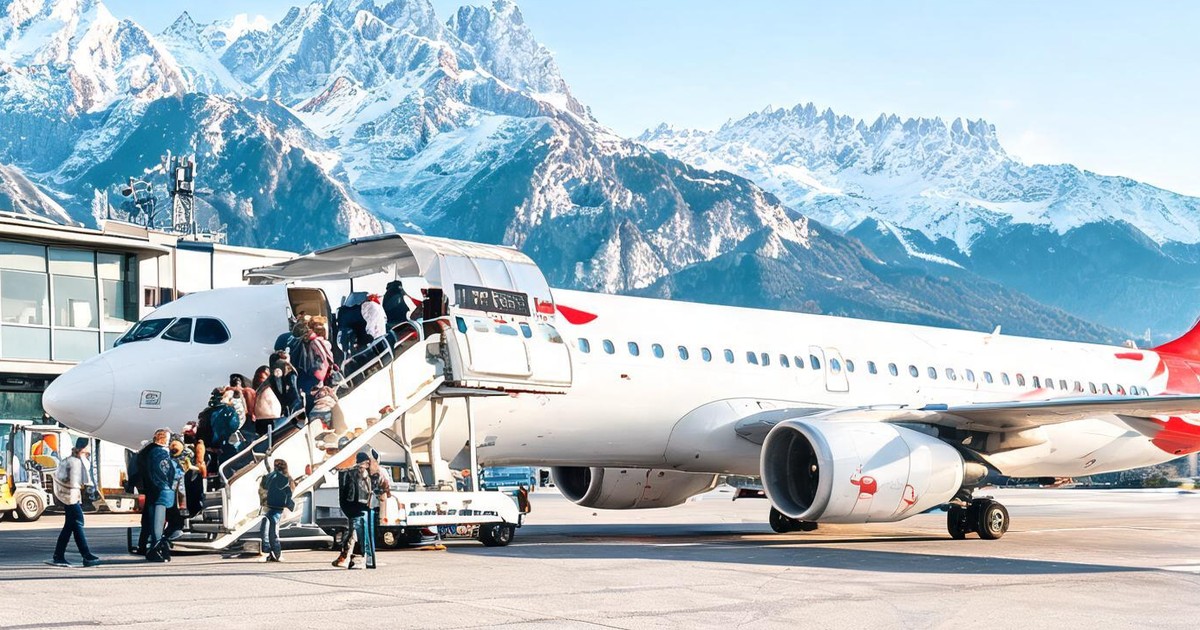
The federal government has promised the aviation industry €30 million per year for the next two years, but how the money will be spent is still open. WIFO economist Daniela Kletzan-Slamanig opposes state support for air transport: rising CO₂ emissions, climate targets and potential budget consequences from the EU make subsidising the sector — still the fastest-growing driver of the greenhouse effect — unjustifiable, she argues.
By her estimate, a flight between Vienna and Innsbruck produces 10 to 15 times more CO₂ than the same journey by train. Take-offs and landings are especially energy-intensive, which matters most on short routes: the actual cruise phase is minimal while the acceleration phase dominates.
A flight between Vienna and Innsbruck produces 10 to 15 times more CO₂ emissions than travelling by train. Take-offs and landings are extremely energy-intensive compared with cruising at altitude.
— Daniela Kletzan-Slamanig, economist at WIFO
Why flying is often cheaper than the train
Kletzan-Slamanig points out that an air ticket often looks cheaper than a rail ticket not because of route economics, but because of tax policy. Kerosene for aviation is not taxed, and domestic flights in Austria are charged the reduced VAT rate of 13 % instead of 20 %. In effect, the state indirectly subsidises the most carbon-intensive mode of transport on short distances.
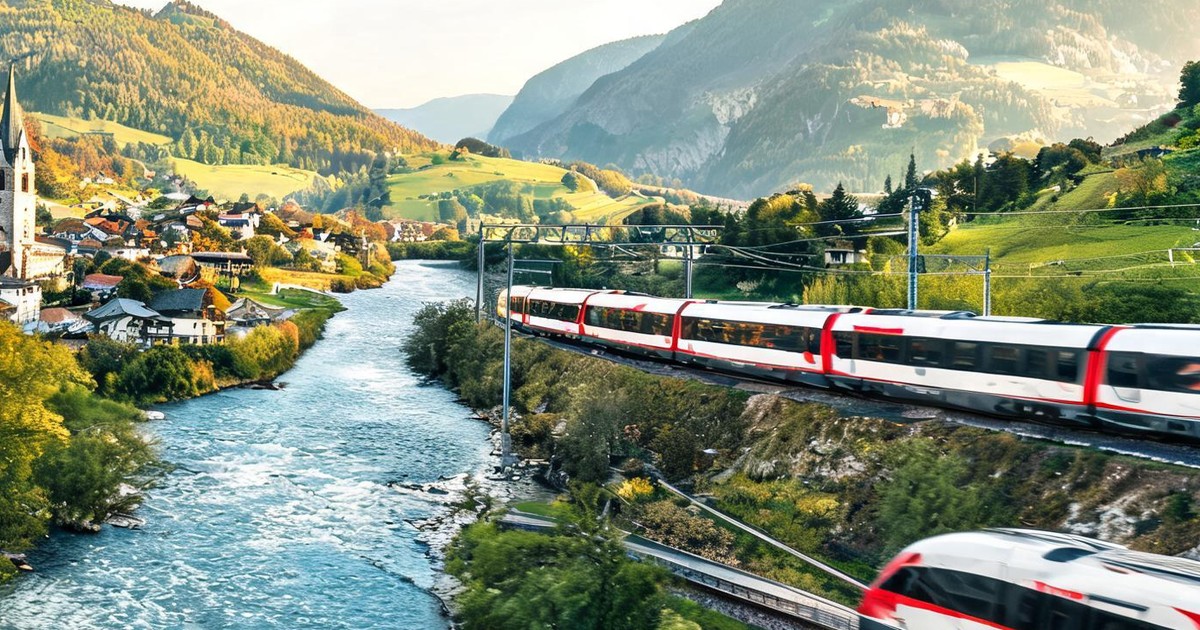
The railway, meanwhile, is a genuine alternative: according to WIFO, total door-to-door travel time is only slightly longer than the full door-to-door time of flying, once check-in and airport transfers are counted. But the train has to become more attractive, above all on price. Reliability is on the agenda too: the compensation regime for train delays is meant to make ÖBB answer for service quality, while extreme heat is forcing infrastructure upgrades — both factors shape whether passengers are ready to give up the plane.
What will be decided in the coming weeks
The final call on whether the connection survives the winter — and in what form — is expected from the talks now in their final stage, within weeks. The fate of the federal €30 million is equally open: it is unclear whether the money will support domestic routes such as Innsbruck–Vienna.
For context, Vienna’s Schwechat airport is enjoying a record summer season — aviation in Austria as a whole is growing, and this debate is about one loss-making route and the principle of state support, not the entire sector. If negotiations stall, passengers will have to switch to trains — which is precisely the ecologically sound scenario WIFO proposes.

What this means for passengers
The debate over Innsbruck–Vienna flights is a debate about balancing Tyrol’s accessibility for business against Austria’s climate commitments. Until a decision is made, plan ahead:
- Watch the timetable: if flights are cut or cancelled after winter, book early — ÖBB Railjet trains run year-round between Innsbruck and Vienna.
- Compare full costs: a cheap airfare wins partly thanks to tax breaks — compare door-to-door prices including airport transfers.
- Factor in the environment: the CO₂ gap between plane and train on this route is 10 to 15 times, WIFO reminds us.
To catch more analyses like this, subscribe to our newsletter — we follow the Innsbruck–Vienna decision and the broader plane-versus-train contest in Austria.
Stay Up to Date with the Latest Austrian News
The week's top stories — news, guides, and insights about life in Austria. Every Sunday in your inbox.