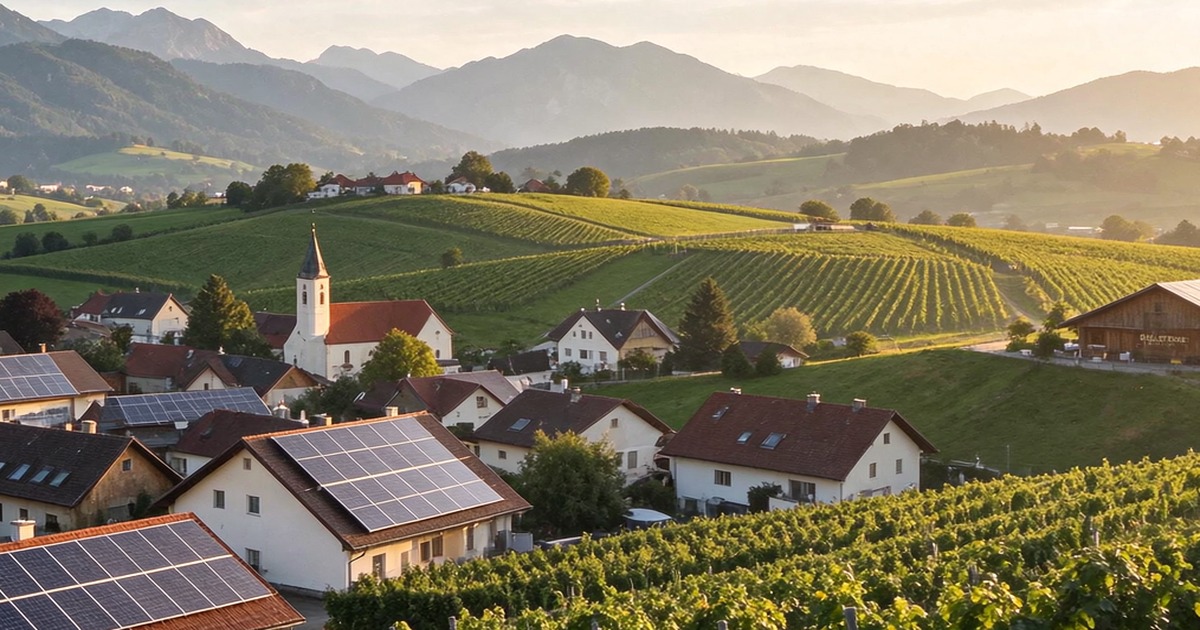
Solarbonus & PV subsidies in Austria: current grants for solar panels
Solarbonus & PV subsidies in Austria: current grants for solar panels Solarbonus & PV subsidies in Austria: how much the state paid for solar panels in 2026, how the last funding round ran and what changes for homeowners in 2027. Topics: Daily Life, Economy, Housing.
If you are thinking about solar panels in Austria, you have probably come across the word Solarbonus. It is the informal name for the national PV subsidy paid under the Erneuerbaren-Ausbau-Gesetz (the Renewable Energy Expansion Act). The last funding round of 2026 handed out 38.5 million euros, attracted more than 40,000 applications and awarded 7,007 grants. From January 2027 the whole system is being rebuilt: instead of the ticket lottery there will be a storage system bonus with applications filed only after installation. This guide explains how much the last round actually paid, which bonuses apply to European components and batteries, and how to prepare your project for the new rules.
What the Solarbonus means and how the Austrian PV subsidy works
The Solarbonus is not an official programme but a popular label for the investment grant for photovoltaics. The legal basis is the Erneuerbaren-Ausbau-Gesetz listed on RIS. The money is administered by OeMAG, the EAG funding agency, on behalf of the economics ministry BMWET. Grants cover new or extended systems up to 1 MWp, from family homes to commercial rooftops.
The EAG entered into force in 2021 and consolidated solar funding at federal level for the first time. Before that, each province distributed its own money under its own rules, which made the market confusing. Centralised processing through OeMAG created a single point of contact for every system operator.
The principle is simple: a non-repayable top-up on your investment costs. The amount depends on system size, mounting type and how much money per kilowatt-peak you request. Good news for households: the federal grant can be combined with funding from provinces and municipalities, something the economics ministry BMWET confirms explicitly.
There is a macro goal behind all this. Austria wants its electricity supply to run on 100 percent renewables by 2030 and to be climate-neutral by 2040. Photovoltaics is the flagship tool of that strategy, although its role is shifting: panels have become much cheaper, so state money is moving towards storage and grid integration.
How much money the last funding round paid out
The third funding call of 2026 was the biggest of the year at 38.5 million euros. The funding ordinance had originally budgeted only 8 million; the rest came from leftover funds of earlier calls where projects had failed to materialise. As the ministry BMWET stated in its press release, this was not new budget but recycled money.
Demand broke every record. Within the first 10 minutes the OeMAG portal issued around 43,300 tickets, almost double the summer figure. In total the agency counted more than 40,000 complete applications, but only 7,007 projects ended up with a funding commitment. Those figures were published by the funding agency on 11 November 2026.
The gap between applicants and money is huge, and it became the core argument for reform. We covered the closing round in detail in our news piece on the last subsidy lottery. For comparison, in summer 2026 around 28,000 applications competed for funding worth roughly 3,000 projects.
Categories and real grant rates for solar panels
Grants are split into four categories by system size. Small rooftops up to 20 kWp were ranked by submission time, larger systems by the amount requested per kilowatt-peak. The less you asked for, the better your odds. The table shows where the cut-offs fell in the last round.
| Category | System size | Ranking method | Cut-off in the last call |
|---|---|---|---|
| A | up to 10 kWp | by submission time | quota exhausted after 29 seconds |
| B | over 10 to 20 kWp | by submission time | quota exhausted after 18 seconds |
| C | over 20 to 100 kWp | by requested amount | up to 97 euros per kWp |
| D | over 100 kWp | by requested amount | up to 94 euros per kWp |
The supply-demand gap is visible in category A: 19,310 applications arrived, but only 3,159 received money. The storage trend stands out even more. 17,403 of 19,310 applications, roughly 90 percent, included a battery storage system. That confirms the ministry strategy: storage has become the standard, not an option.
Full statistics for every category are available in the official results of the third call. They also show how many kilowatt-peaks and storage kilowatt-hours were ultimately funded.
For context: kilowatt-peak (kWp) describes the peak output of a system. A family home typically runs 5 to 10 kWp, roughly 12 to 25 modules on the roof. If you know your annual consumption, you can place yourself in the right category without help.
Not every system is treated equally. Innovative photovoltaic systems receive a 30 percent top-up on the grant rates. That covers building-integrated PV, floating solar on lakes, solar carports from 10 parking spaces, installations on noise barriers and vertical agri-PV setups.
The reverse also applies: agricultural and greenfield sites carry a 25 percent deduction. It disappears if the site was already built up beforehand, such as former landfills, industrial or military locations. Planning a carport or a facade installation? The innovation bonus clearly improves the economics.
This differentiation shows the logic of the whole system: subsidy money should go where the market alone will not invest. A normal roof pays off in 2026 even without a grant, a floating solar project does not yet. Run that calculation before applying, so you do not wait months for a commitment that never comes.
The Made-in-Europe bonus: ten percent extra
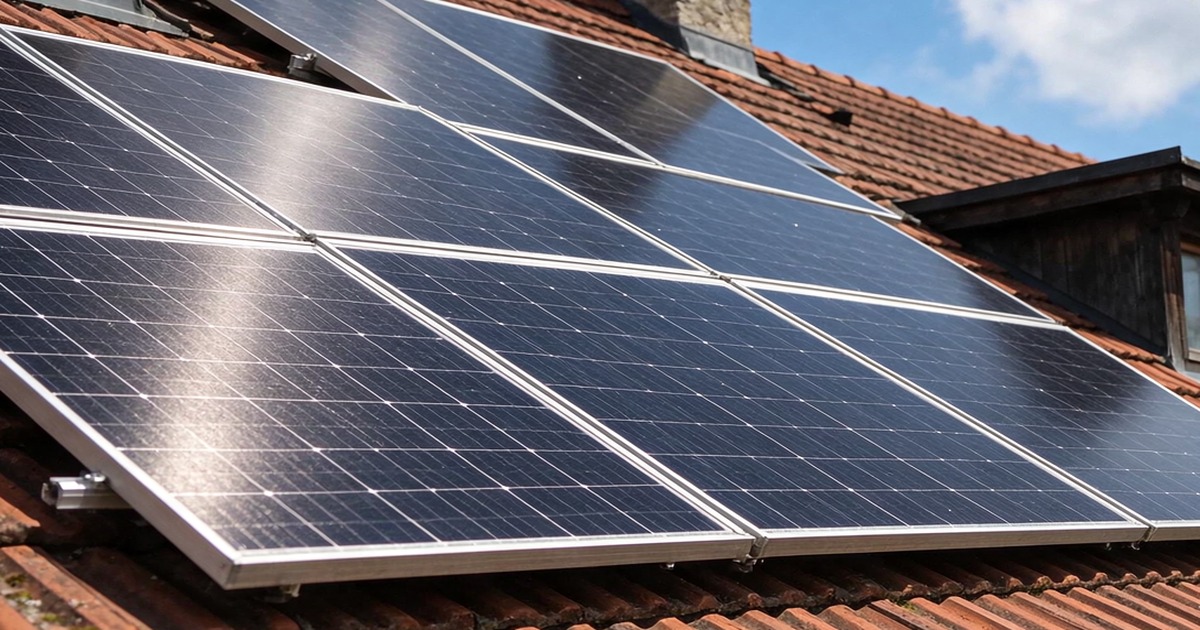
Since the second funding call of 2025 there has been a top-up for European value creation. The Made-in-Europe bonus adds 10 percent to the grant if the modules are produced in Europe. Another 10 percent applies to inverters from the EU, the EEA or Switzerland, plus 10 percent on top of the storage grant.
The legal basis is the EAG investment grant ordinance, BGBl. II No. 76/2025 on RIS. The key document is the public list of qualifying components maintained by the funding agency. Check your exact model against that list before buying, otherwise the bonus is lost.
For a typical roof with European modules and an inverter, the bonus adds up to 20 percent of extra funding. If the battery is also European, another 10 percent applies to its share. On a 10 kWp system that quickly translates into several hundred euros.
The rules for battery storage subsidies
Households adding a battery storage system must follow several rules. A maximum of 50 kWh net capacity is funded, and the minimum size is 0.5 kWh per kWp of installed PV. A 10 kWp roof therefore needs at least a 5 kWh battery to qualify.
The crucial condition is the coupling with photovoltaics: the storage application can only be filed together with an application for a new or extended PV system. Standalone battery expansions without panels are not funded. This logic will carry over into the 2027 system, where storage becomes the centrepiece of the entire programme.
If you want to squeeze the most out of your system, our article on improving solar power plant efficiency has practical tips. A properly sized battery lifts self-consumption from a typical 30 percent to over 70 percent. Your electricity bill drops noticeably, with or without the state subsidy.
How the OeMAG ticket lottery application worked
The procedure was a two-stage sprint. First you grabbed a ticket in the funding portal, allocated by lottery. Then ticket holders had a deadline to submit the complete application with quotes. The third call opened on 8 October 2026 at 5 p.m. and closed on 22 October.
The official timestamps show how tight it was. The category A quota was exhausted at 5:00:29 p.m., just 29 seconds after the start. Category B followed after 18 seconds. One second later in categories C or D meant rejection if your requested grant exceeded the cut-off of 97 and 94 euros per kWp.
Why the system had to change is something we explained in the piece on the last lottery. Tens of thousands of people hit the portal at the same moment, and nine out of ten still walked away empty-handed. That is exactly what pushed the ministry towards an application model without races.
After the funding commitment, the practical phase begins. You sign the funding contract with the agency, the system gets installed, and afterwards you submit the final settlement with all invoices through the portal.
The payout only happens once the final settlement passes review. Invoices must be issued to the applicant, so document any advance payments carefully. Anyone keeping a tidy folder from day one avoids follow-up questions and delays.
This exact step becomes the core of the system in 2027: apply only after completion, with a complete invoice set. The settlement structure stays familiar, only the timing of the application flips around.
Why the zero VAT rate for solar panels ended
A second major change affected taxes. From 1 January 2024 to 31 March 2025, systems up to 35 kWp with storage benefited from a zero VAT rate, meaning no value-added tax at all. As part of budget consolidation the exemption was ended early.
Contracts signed before 7 March 2025 could still use the zero rate until the end of 2025. Everyone buying afterwards pays the standard 20 percent VAT again. For a 10 kWp system that is several thousand euros compared to the subsidy-friendly year 2024.
The combination of a lost tax break and falling module prices explains why the ministry is questioning broad panel subsidies. Our report on the slowdown of photovoltaic growth in Austria shows how the cost per kilowatt-peak has fallen since 2022. Subsidy money now works harder in storage than in panels themselves.
What the Speichersystembonus changes in 2027
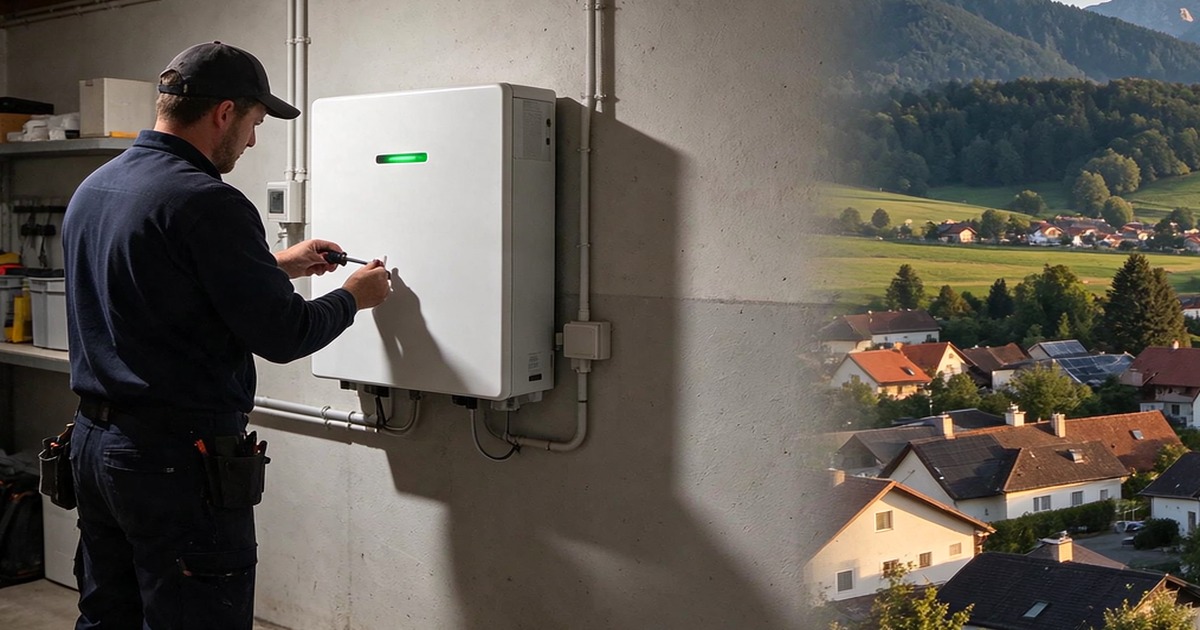
From 2027 the PV subsidy follows a completely new logic. The centrepiece is a storage system bonus that funds batteries on new systems and, for the first time, retrofits of existing ones. Until now, owners of already-built systems had no access to federal money at all.
The second pillar is a technical requirement: an intelligent energy management system becomes a condition for funding. The battery should decide when to store, consume or feed power into the grid based on what the overall energy system needs. Third, the funding calls disappear: instead of a seconds-long race there will be a continuous model where you apply only after completion, together with the invoice and all documentation.
The concrete bonus amounts and technical criteria are still being finalised, the ministry says. Amending the EAG requires a two-thirds majority in parliament. Anyone planning a 2027 grant should watch the funding calendar on the agency website and its newsletter until the new funding ordinance is published.
Going forward, we want to focus support more on storage, intelligent control and better use of the solar power we generate.
- Elisabeth Zehetner, State Secretary for Energy at the BMWET
Combining the federal grant with provincial and municipal funding
The federal grant is only part of the puzzle. Every province, and many cities and municipalities, run their own programmes for photovoltaics and storage. These can be combined with the EAG grant, that much is explicit. In practice the stack covers 30 to 50 percent of project costs.
Conditions differ widely between provinces. Some pay fixed amounts per kWp, others offer low-interest loans or free energy consultations. All of this presumes you have a roof of your own, for example a house rather than a rented flat; our guide on renting an apartment in Vienna helps with the housing side. Renters without their own roof can join energy communities instead and buy cheap solar power collectively.
For systems above 10 kWp there is also the market premium, a running feed-in payment awarded through auctions. The third PV auction of 2026 was awarded on 21 October 2026. For a family home, though, the investment grant together with provincial money is usually the bigger lever.
Common mistakes that cost you the grant
The most frequent mistake concerns categories C and D: requesting too much per kWp. Anyone above the cut-off of 97 or 94 euros fell out of the quota even with a valid ticket. Run a realistic calculation of your grant request before applying.
The second mistake is a missing battery in the application or one below the minimum of 0.5 kWh per kWp. The storage share of the grant disappears completely. Third, components were never checked against the Made-in-Europe list, and the bonus quietly evaporates.
Fourth, overlooked provincial funding. Many households file only the federal application and leave their province’s programmes untouched. And if you are renovating anyway, review other recurring household costs, because small savings add up to real money over a year.
Frequently Asked Questions
How much does the state pay for solar panels in Austria?
The amount depends on the grant requested per kWp and the remaining quota. In the last call, category C funded applications up to 97 euros per kWp and category D up to 94 euros per kWp. Small systems in categories A and B were ranked by submission speed, and the quota vanished within seconds. The Made-in-Europe bonus can raise the payout by up to 20 percent on top.
Can you still apply for a PV subsidy in 2026?
No, the third funding call closed on 22 October 2026 and was the last one under the old rules. From 2027 the new model starts: a storage system bonus with applications filed after installation. Until the new ordinance is published, watch the funding calendar of OeMAG. For systems above 10 kWp, the market premium auctions may remain an interim option.
What is the Speichersystembonus from 2027?
A grant that funds battery storage on new PV systems and, for the first time, the retrofitting of existing systems. An intelligent energy management system will be a mandatory condition. You apply after installation, submitting the invoice and all documents. The bonus amount will be set by the new funding ordinance, which is still being drafted.
Can federal and provincial subsidies be combined?
Yes, that is explicitly allowed. The federal EAG grant can be stacked with programmes under provincial and municipal law. If you are planning storage or panels, always check your province’s programmes too. The same principle applies to other household costs, such as the ORF fee exemption, which many people simply do not know about.
How to get ready for the new PV subsidy
The Solarbonus helped thousands of households switch to solar in 2026, but the era of ticket lotteries is over for good. The 2027 system will reward those who plan their installation with storage and smart management from day one. Your checklist for the coming months:
- Get the project ready before year-end: roof check, collect quotes, size the battery at roughly 0.5 kWh per kWp as a floor.
- Check component lists: European modules, inverters and batteries will keep earning bonus percentage points.
- Watch the funding calendar: the new ordinance with bonus amounts arrives in 2027, and the agency will announce it via newsletter.
- Check provincial programmes in parallel: stacking federal, provincial and municipal grants remains legal.
- Book an energy consultation: many provinces offer it for free, and it will cover the new energy management requirement.
Anyone who documents their project carefully now has a clear advantage in the application-after-installation system. What counts there is no longer clicking speed but a clean dossier for a completed installation. And the bottom line: solar power in Austria pays off even without subsidies these days, the grants just widen the gap. Subscribe to our newsletter to hear the first details of the storage system bonus as soon as they land.
Stay Up to Date with the Latest Austrian News
The week's top stories - news, guides, and insights about life in Austria. Every Sunday in your inbox.