Vienna greens 600 more metres of tram tracks in 2026
Vienna greens 600 more metres of tram tracks in 2026 Wiener Linien will green 600 more metres of tram tracks in Vienna in 2026: lines 1, 11, 18 and 71, sedum instead of lawn, and 12 km of green rails already. Topics: News, Transport.
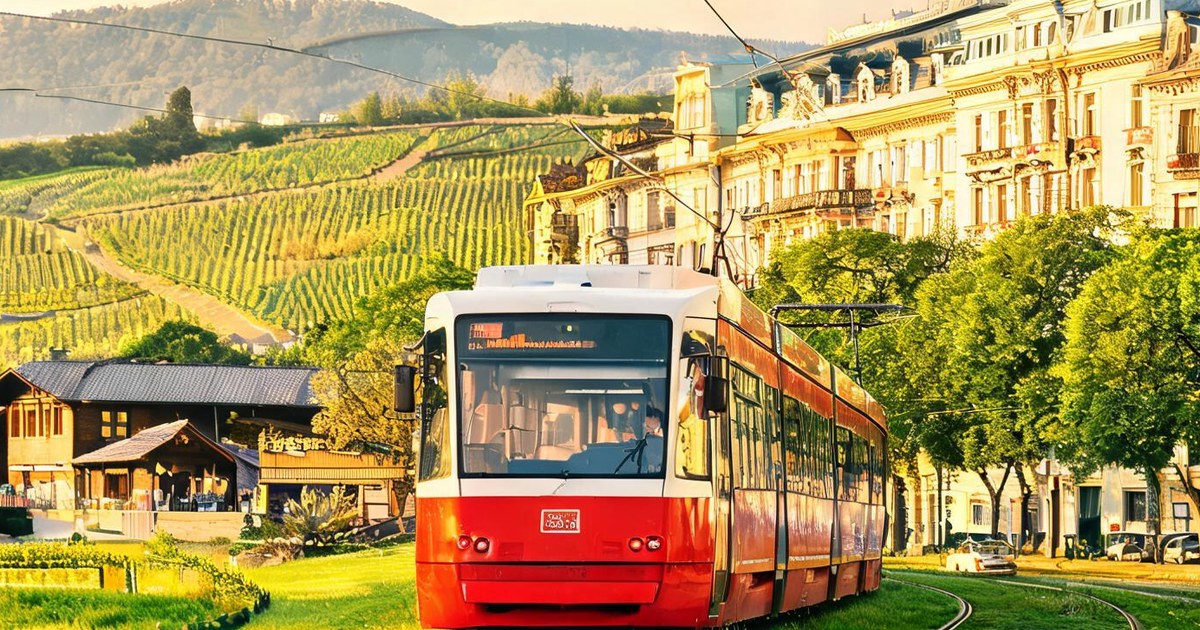
Vienna’s tram tracks are slowly turning into narrow city parks. Wiener Linien, the municipal transport operator, will create another 600 metres of green tram tracks during 2026 — sections where plants grow between the rails. The city already has about 12 kilometres of such green rails across fourteen tram lines. One new section is already finished: 70 metres of green track bed near the Ernst-Happel-Stadion on line 18. The remaining works are under way on lines 1, 11 and 71 and are due for completion by the end of October 2026. Here is why Vienna keeps greening its rails, why sedum is becoming the default planting, and which tracks can never go green.
What Wiener Linien is building in 2026
Wiener Linien is building 600 metres of new green tram tracks (Grüngleise) on several lines in 2026. As vienna.at reports, the first section is already complete: around 70 metres of green track bed near the Ernst-Happel-Stadion on line 18.
The other sections are being built right now: on line 1 in Windtenstraße and on lines 11 and 71 — in Pantucekgasse and along Simmeringer Hauptstraße. Works have started, and according to Wiener Linien all four projects will be finished by the end of October 2026. This is not a one-off action but a continuation of a long-running programme: every new section adds to the city’s total length of green rails.
How many green tram tracks Vienna already has
Vienna currently operates around 12 kilometres of greened tram track on lines 1, 2, 6, 11, 12, 18, 25, 26, 27, 31, 62, 71, O and D. The constructions differ. About 8.5 kilometres is classic Rasengleise (grass track bed — lawn between the rails), roughly 2 kilometres uses perforated plates with planting (Lochplatten), and almost another 2 kilometres is planted with sedum.
Much of this network appeared during the construction of lines 27 and 12, as well as at Frödenplatz and along Rechte Wienzeile / Margaretengürtel. The trend is clear: green rails used to be a curiosity, and today they are a standard option in every major track project.
Why greened rails cool the city and catch rain
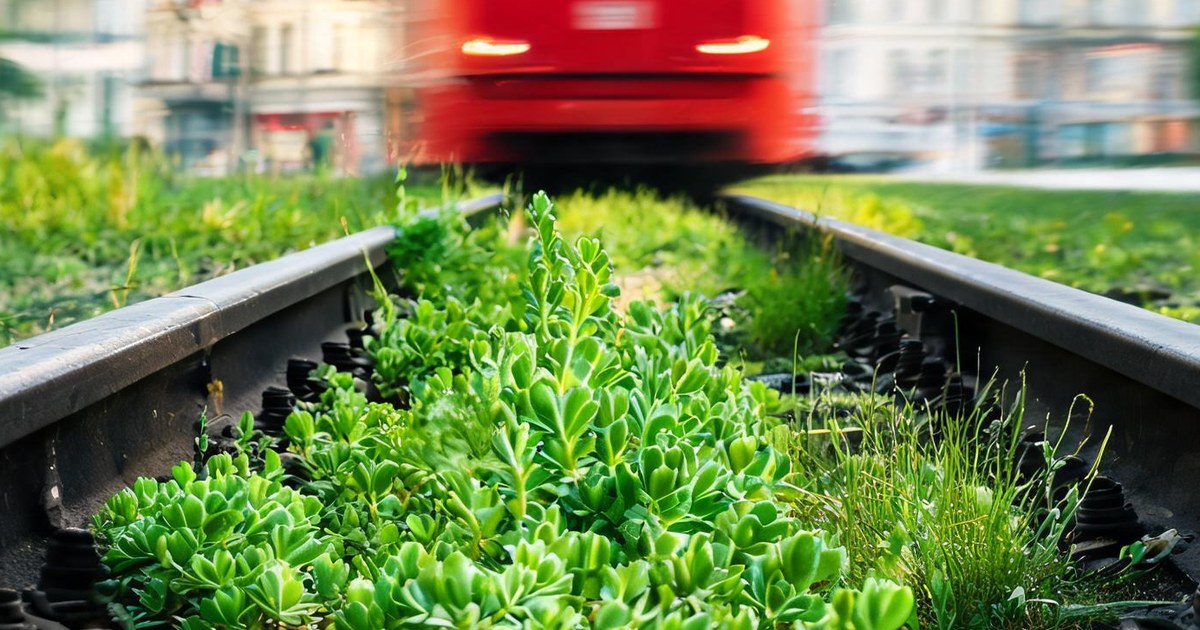
Greening tram tracks is not just decoration. According to Wiener Linien, the planted surface absorbs and stores rainwater, and the subsequent evaporation creates additional cooling. That matters on hot summer days: Vienna regularly fights heat waves, and every square metre of greenery helps lower city temperatures. We covered Austria’s wider climate-adaptation push in our article on 40-degree summers in Austria.
A second effect is extra green surfaces on land that would otherwise be fully covered by rails and technical paving. Depending on the construction, the plants also bind dust and reduce noise spread. All of this fits Vienna’s goal of climate neutrality by 2040, which we touched on in our coverage of the new waste-treatment plant in Donaustadt.
Greened rails turn pure technical infrastructure into an active climate surface: they take in rainwater, cool the air through evaporation, and give the city extra green patches without allocating separate plots.
— Wiener Linien’s position as reported by vienna.at
Why sedum is becoming the default planting
Sedum is the main trend in Vienna’s next wave of tram-track greening. These succulents stay low and form a dense carpet, which is critical for rail infrastructure: the vegetation must not obstruct tram operations or maintenance. The second property is drought tolerance: sedum stores water in its leaves and survives longer dry periods better — an increasingly decisive factor in Central Europe’s changing climate.
Wiener Linien plans to use sedum more often in future construction and modernisation projects. Today it covers about 2 kilometres out of the total 12, but the share of succulent planting will grow — especially on dry, sun-exposed track beds. Grass remains the baseline option, but it requires watering and mowing.
Which tram tracks can never be greened
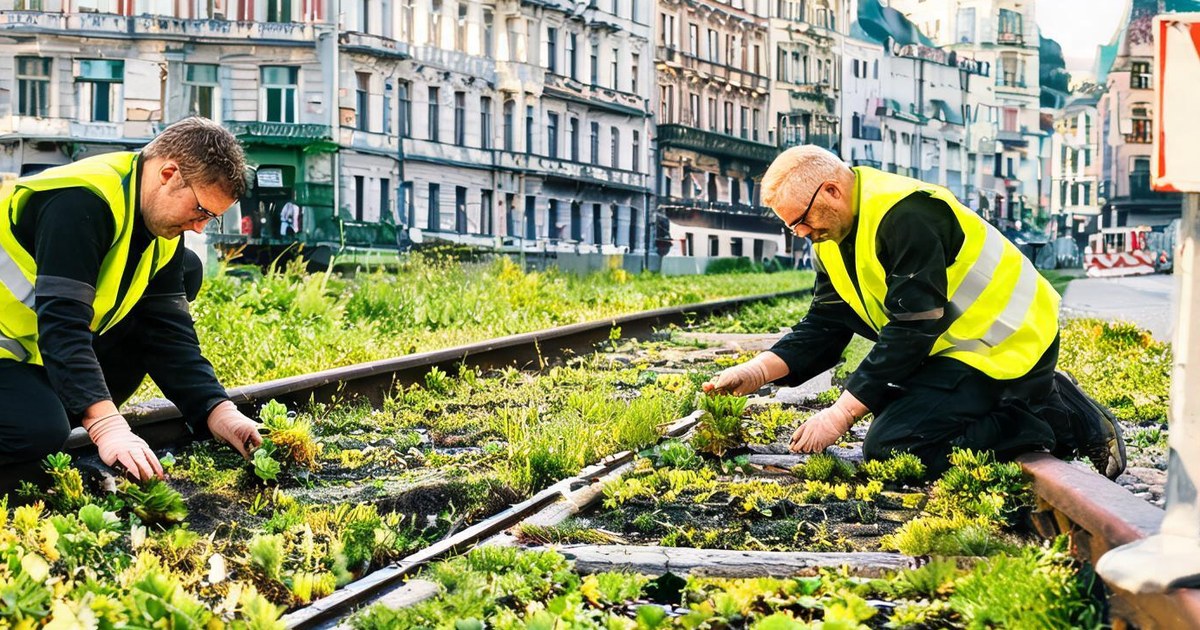
Not every tram line can be converted. The key requirement is a separate track body (selbstständiger Gleiskörper): the tram must not share its rails with road traffic. Regular trips by buses, emergency vehicles and cars would damage the plants and make the greening pointless.
Stops, intersections, turnouts (Weichen) and underpasses (Unterführungen) are also unsuitable. That is why green track bed cannot run continuously along a whole route — only in separate segments. With every new construction or modernisation project, Wiener Linien assesses local conditions: whether greening is possible on a given stretch and which technology — grass, perforated plates or sedum — fits its operation best.
What this means for Vienna residents
For residents, track greening is about everyday quality of life. Green strips along tram routes lower local temperatures in summer, reduce dust and visually soften urban infrastructure. If you are choosing a district to live in, such details are part of the overall package of amenities, alongside parks and schools (see our coverage of the Vienna Stammstrecke night closure from 2028 and the Augarten park).
The practical takeaway is simple: Wiener Linien’s programme continues, new sections appear every year, and by 2040 — when Vienna aims to reach climate neutrality — there will be even more green rails. The easiest way to keep track of updates is to subscribe to our newsletter.
Frequently Asked Questions
What are Grüngleise? Grüngleise are greened tram tracks where plants grow between and around the rails: grass (Rasengleise), planting in perforated plates (Lochplatten) or sedum succulents. Vienna has around 12 km of such sections in operation.
Where will the new green sections appear in 2026? On four lines: 18 near the Ernst-Happel-Stadion (70 metres, already finished), 1 in Windtenstraße, 11 in Pantucekgasse and 71 on Simmeringer Hauptstraße. The total is 600 metres, completion due by the end of October 2026.
Why can’t all tram tracks be greened? Greening is only possible on a separate track body without car traffic. Stops, intersections, turnouts and underpasses do not qualify: vehicles damage the plants, and maintenance there is technically difficult.
Stay Up to Date with the Latest Austrian News
The week's top stories — news, guides, and insights about life in Austria. Every Sunday in your inbox.